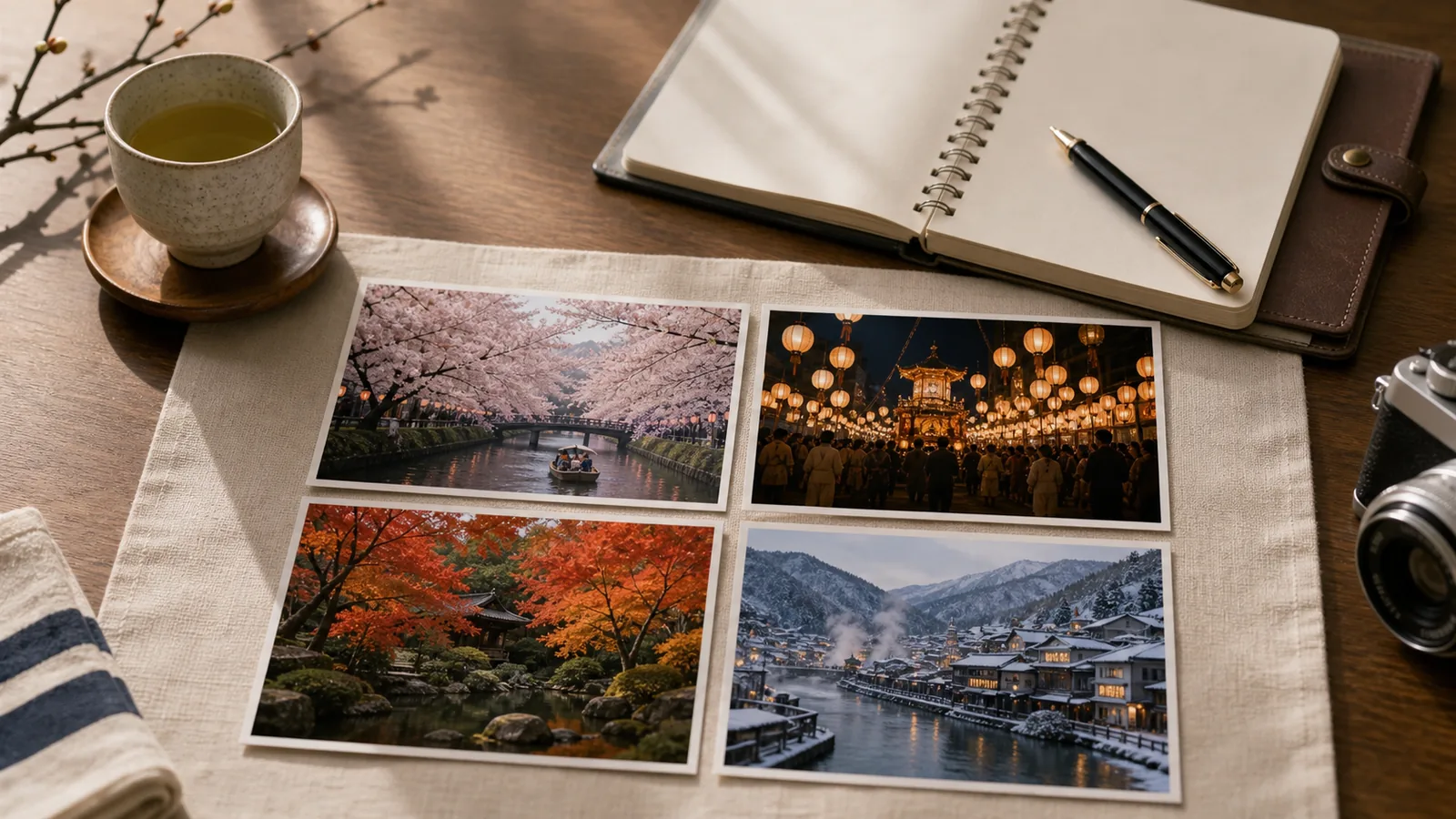
Many travelers assume Japan is "about the same any time of year." It is not. Japan is one of the few destinations where the four seasons create radically different experiences. Kyoto in early April with cherry blossoms, late August with the Gion Festival, mid-November with autumn leaves, and January under snow are essentially four different cities. Choose the wrong season and you may spend 100,000 yen to look at bare trees.
Spring (late March to early May): the core of "hanami" Japan
This is Japan’s peak tourist season and also the most volatile. Cherry blossom viewing follows the famous "sakura zensen" (cherry blossom front) from Kyushu in late March, through the Kanto region in early April, the Tohoku region by mid-April, and finally Hokkaido by early May. Peak bloom typically lasts only 5 to 7 days and is often ruined by continuous rain. Check the official Weather News forecast a week before departure.
In late April comes Golden Week (GW), a 9-day consecutive holiday that we strongly discourage for foreign tourists — shinkansen tickets sell out instantly, hotel rates double or triple, and major sights become impassable. See our separate GW guide.
Summer (June to August): festivals and brutal heat
June is the "tsuyu" rainy season, with three weeks of continuous rain — the least recommended month. After the rains end in early July, summer arrives abruptly. Tokyo averages 32-35°C in July and August with humidity above 75%, making daytime sightseeing feel like walking through a steamer.
The compensation is the festival calendar: Kyoto Gion Matsuri (all of July), Aomori Nebuta (August 2-7), Osaka Tenjin Matsuri (July 24-25), and the Tokyo Sumida River Fireworks (late July). Attending a local festival in a yukata is the soul of Japanese summer and worth tolerating the heat.
Hokkaido and the Tohoku region are the top choices for summer escapes. Sapporo averages 21°C in July — cool and pleasant.
Autumn (late September to late November): "momijigari" and the best weather
September is still hot and prone to typhoons. True autumn begins in October. Peak "momiji" (maple) and "icho" (ginkgo) foliage runs in the reverse direction of the cherry blossom front: Hokkaido in early October, the Tohoku region by late October, Kyoto in mid-to-late November, and Kyushu by late November or early December.
Kyoto in November (Arashiyama, Eikando, Tofukuji) is Japan at its most beautiful, but the crowds rival cherry blossom season. To avoid them, arrive on weekdays at the 7am opening.
Winter (December to February): snow viewing, hot springs, and ski season
December across most of Honshu is dry, cold, and sunny. Tokyo sees snow fewer than 5 times a year on average. Late-December New Year traditions, such as the first shrine visit at Meiji Jingu, offer rich cultural experiences. January and February peak for "yukimi onsen" (snow-viewing hot springs) and ski season — Shirakawa-go gassho-zukuri village, Ginzan Onsen, Nagano Shiga Kogen, Niseko in Hokkaido. The Sapporo Snow Festival takes place for a week in early February with the country’s top snow sculptures.
Winter advantages: fewer crowds, flights and hotels 30% cheaper (except over New Year), more clear days, and the rare "early winter" golden week in early December when Kyoto holds both autumn leaves and a dusting of snow.
The bottom line — how to choose?
If you can only visit once: mid-to-late November Kyoto (foliage plus cool weather plus cultural atmosphere) or early April Tokyo (peak cherry blossoms while avoiding GW).
If you want to skip the crowds: late June Hokkaido (Honshu is rainy, Hokkaido is dry) or early December Kansai (just after foliage, before New Year).
The two periods Taiwanese travelers most often regret booking: August (heatstroke weather) and GW (the whole country is packed).
Before planning your next Japan trip, pick the season first and the region second. Reversing that order will significantly degrade the experience.
Frequently Asked Questions
What is the best month for a first Japan trip?
Early April, late October, and November are usually easiest. April offers blossoms, while autumn gives comfortable weather and foliage, but book early in popular areas.
Is summer a good time to visit Japan?
Yes if you want festivals, fireworks, and night markets. If you dislike heat, avoid long daytime sightseeing or choose Hokkaido, Tohoku, or mountain areas.
Should I go to Tokyo for snow?
No, not as the main snow destination. Hokkaido, Tohoku, Nagano, Niigata, and Shirakawa-go are more reliable for snow scenery.
Do cherry blossoms and autumn leaves need forecasts?
Yes. Timing changes with weather every year. Check fresh forecasts one to two weeks before departure instead of relying only on month ranges.