Tadorimichi × Japan Travel
Travel Japan Like a Local
Etiquette · Practical Tips · Cultural Depth — so you skip the tourist traps
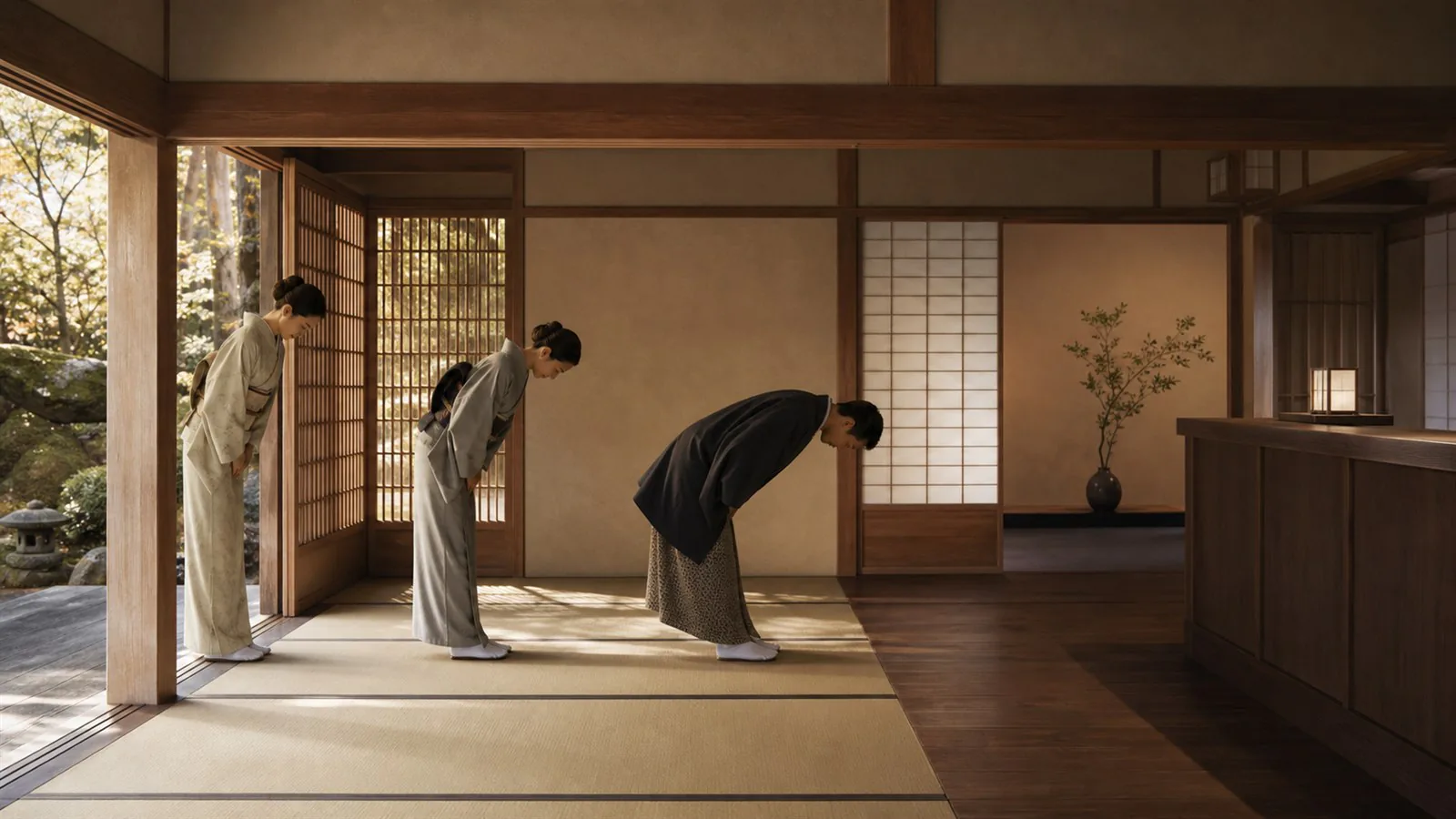
The Three Bows of Japan — Decoding 15, 30, and 45 Degrees
The Japanese bow is not one move but three. This guide decodes the 15-degree casual eshaku, 30-degree business keirei, and 45-degree apology saikeirei, plus the Edo samurai roots that shaped them. Learn correct hand positions for men and women, common tourist scenarios, and why over-bowing actually feels awkward.
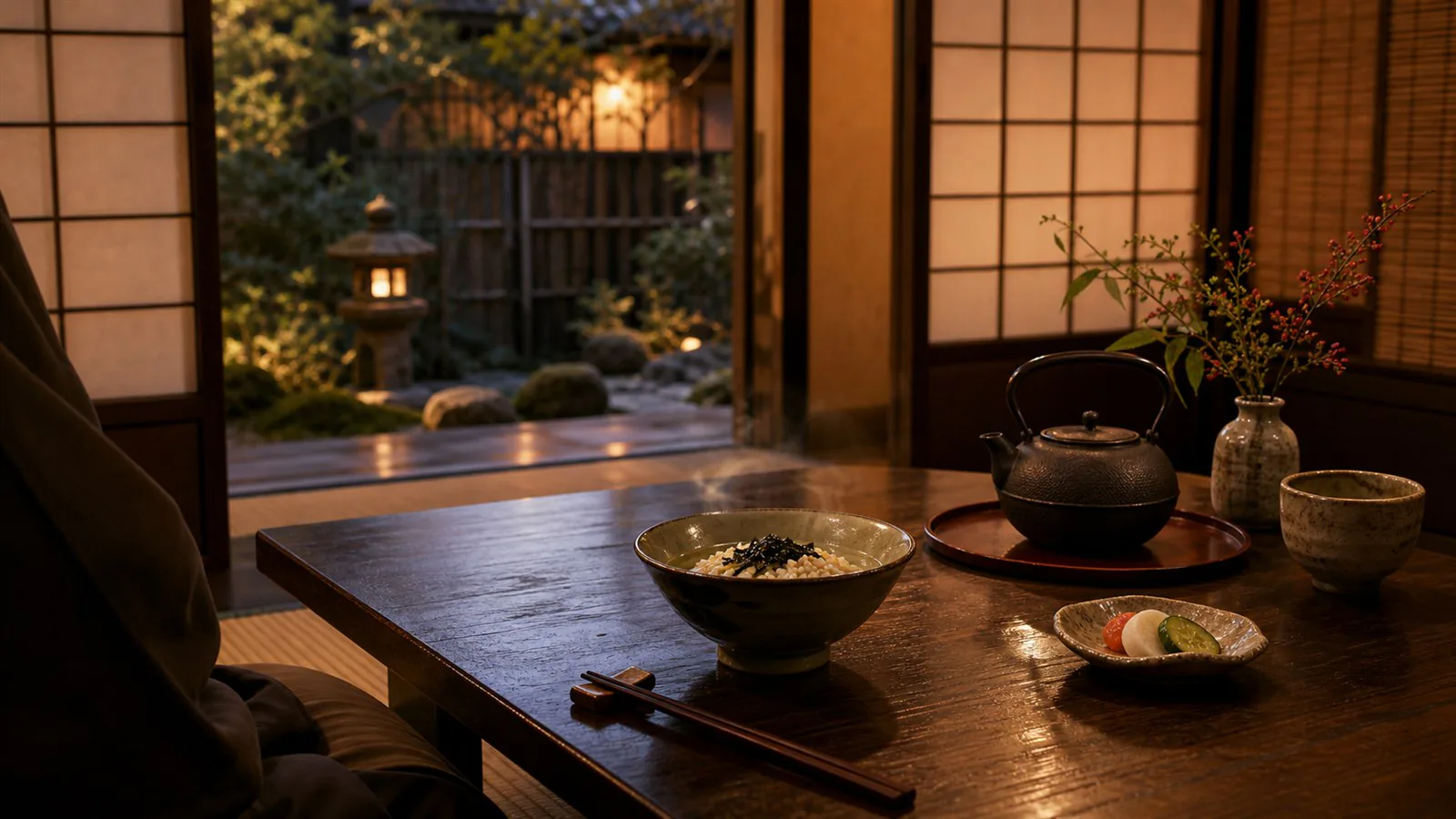
The Bubuzuke Question — Kyoto Politeness Decoded
Asking a guest if they want bubuzuke tea-rice in Kyoto supposedly means please leave. But 70 percent of Kyoto locals deny ever using it that way. This guide separates myth from reality, lists five genuine indirect-rejection examples used today, explains the no-one-gets-hurt logic behind it, and shows visitors how to respond to Kyoto compliments without offense.
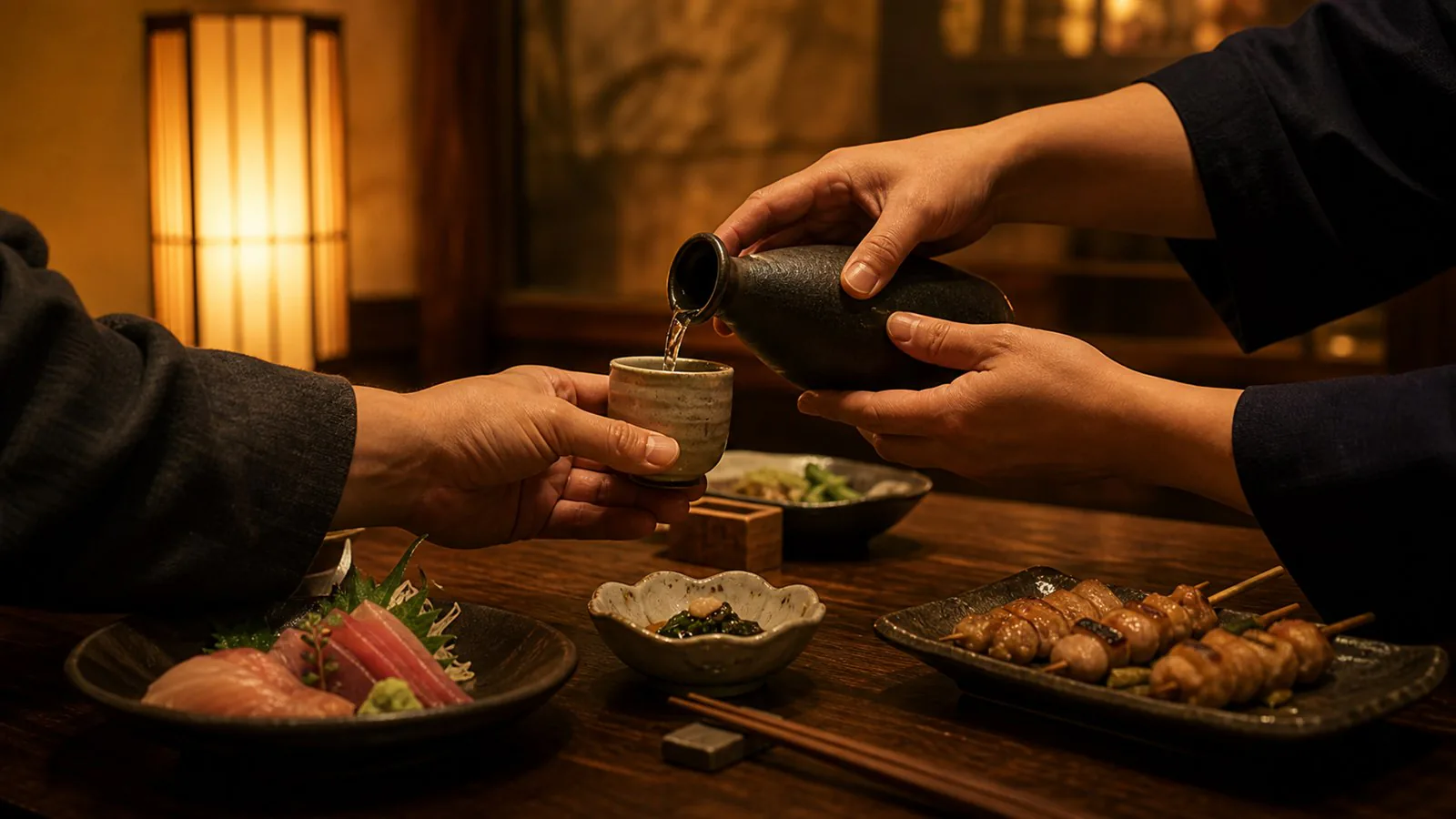
Drinking in Japan — Hidden Rules at Every Pour
Drinking in Japan is workplace politics in disguise. This guide unpacks oshaku pour order, why you must never pour your own, how cup height at cheers signals rank, the otoshi seat-charge surprise, the ikkinomi alcohol-harassment ban, and the magic farewell phrase that turns you from foreign visitor into honored guest.
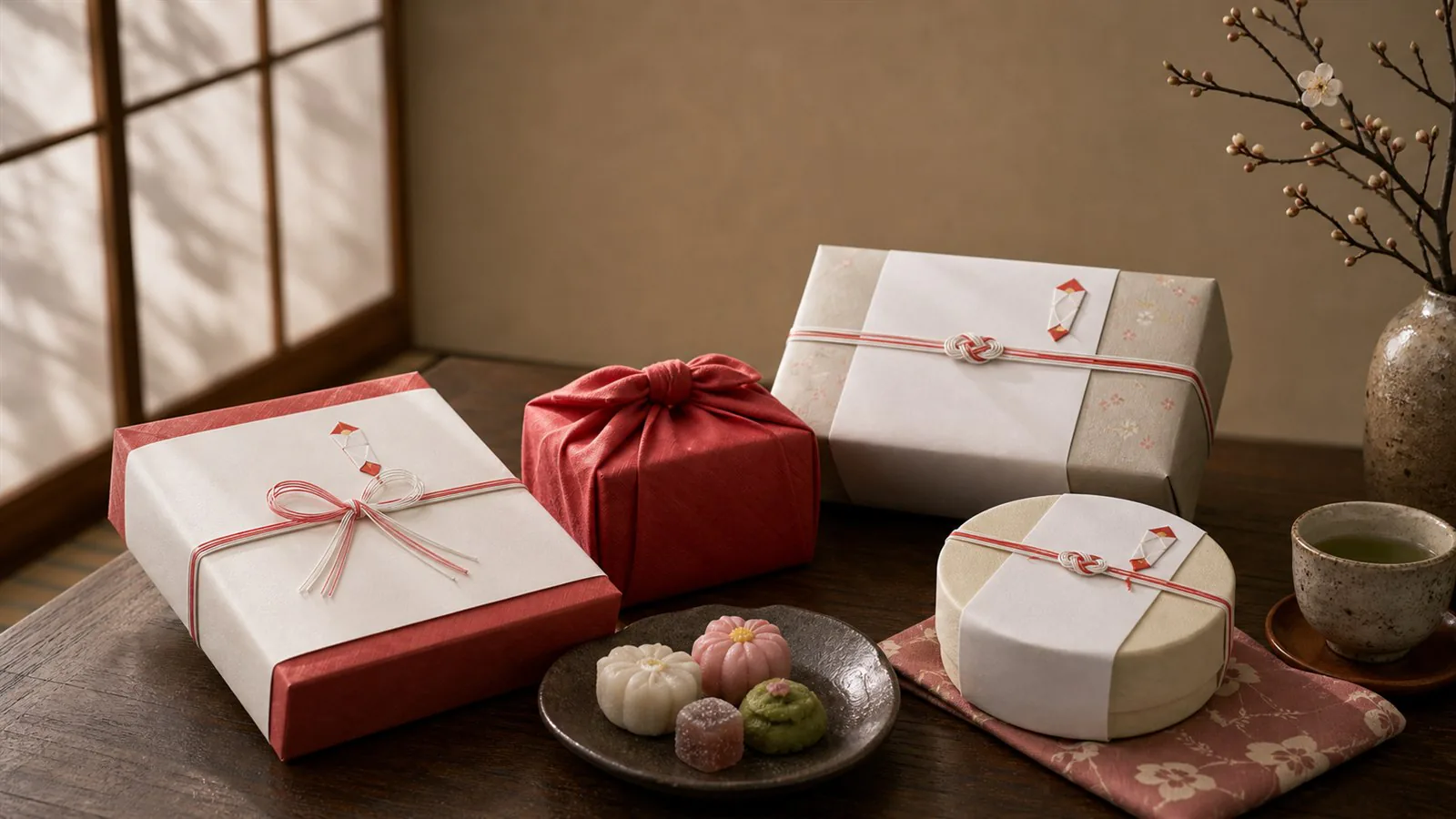
The Hidden Rules of Japanese Gift-Giving
Japanese gift-giving is a precise ritual. This guide breaks down omiyage office souvenirs, ochuugen mid-year gifts, uchiiwai return presents, why scissors and white handkerchiefs are taboo, the proper two-handed receiving etiquette, and why sending a thank-you gift back home from Taiwan can earn lifelong loyalty from a Japanese friend.
Honne and Tatemae — The Real and the Polite in Japan
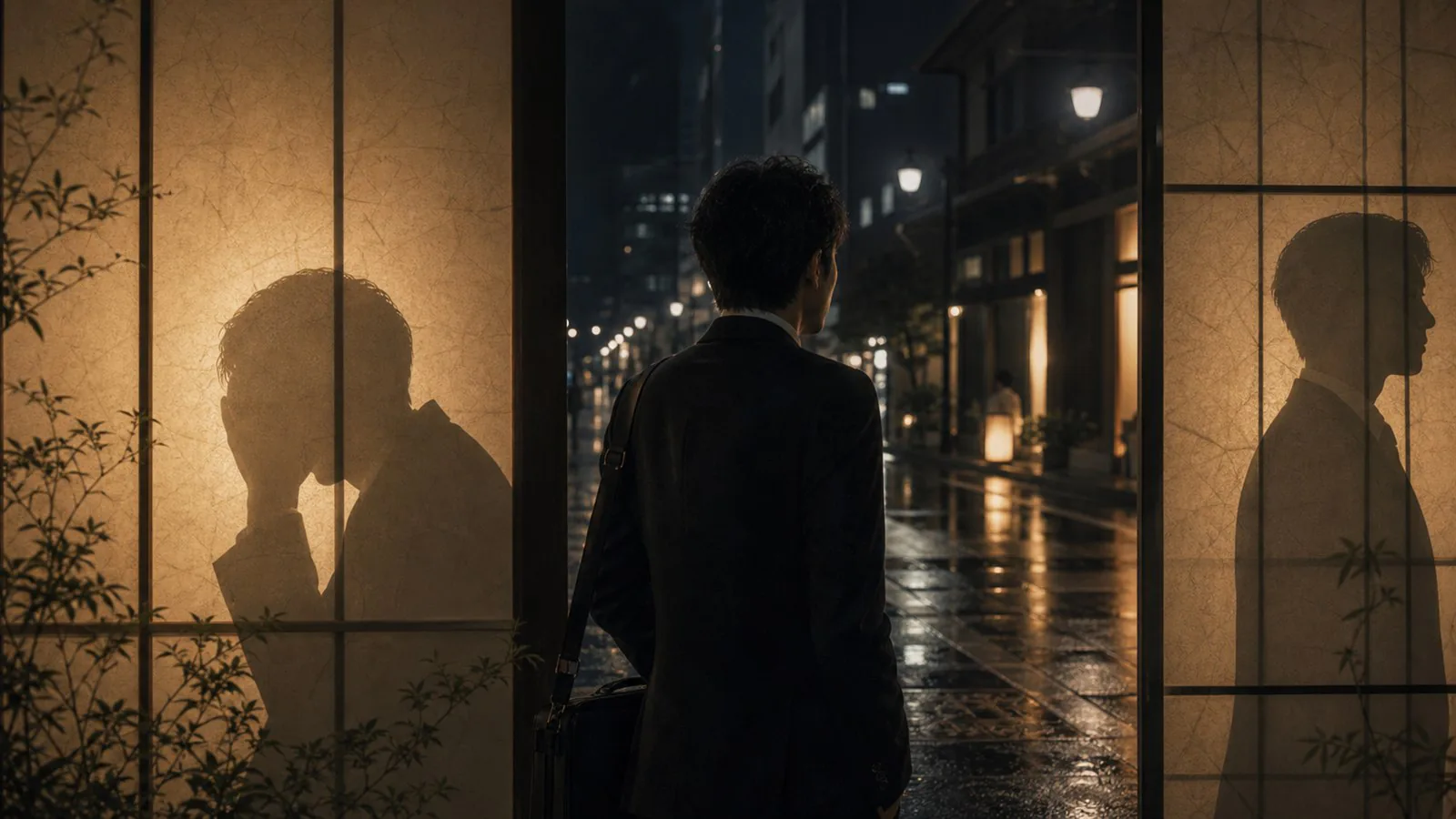
In Japan, honne (real thoughts) and tatemae (polite face) are not a fake-real opposition but a dual-track social system. This guide defines both precisely, contrasts four common scenarios, explains why honest revelations only emerge late at night at izakayas, decodes the shop-clerk you look great line, and teaches visitors how to wrap directness for smoother stays.
The Humility Reflex — Why You Cannot Just Say Thank You in Japan
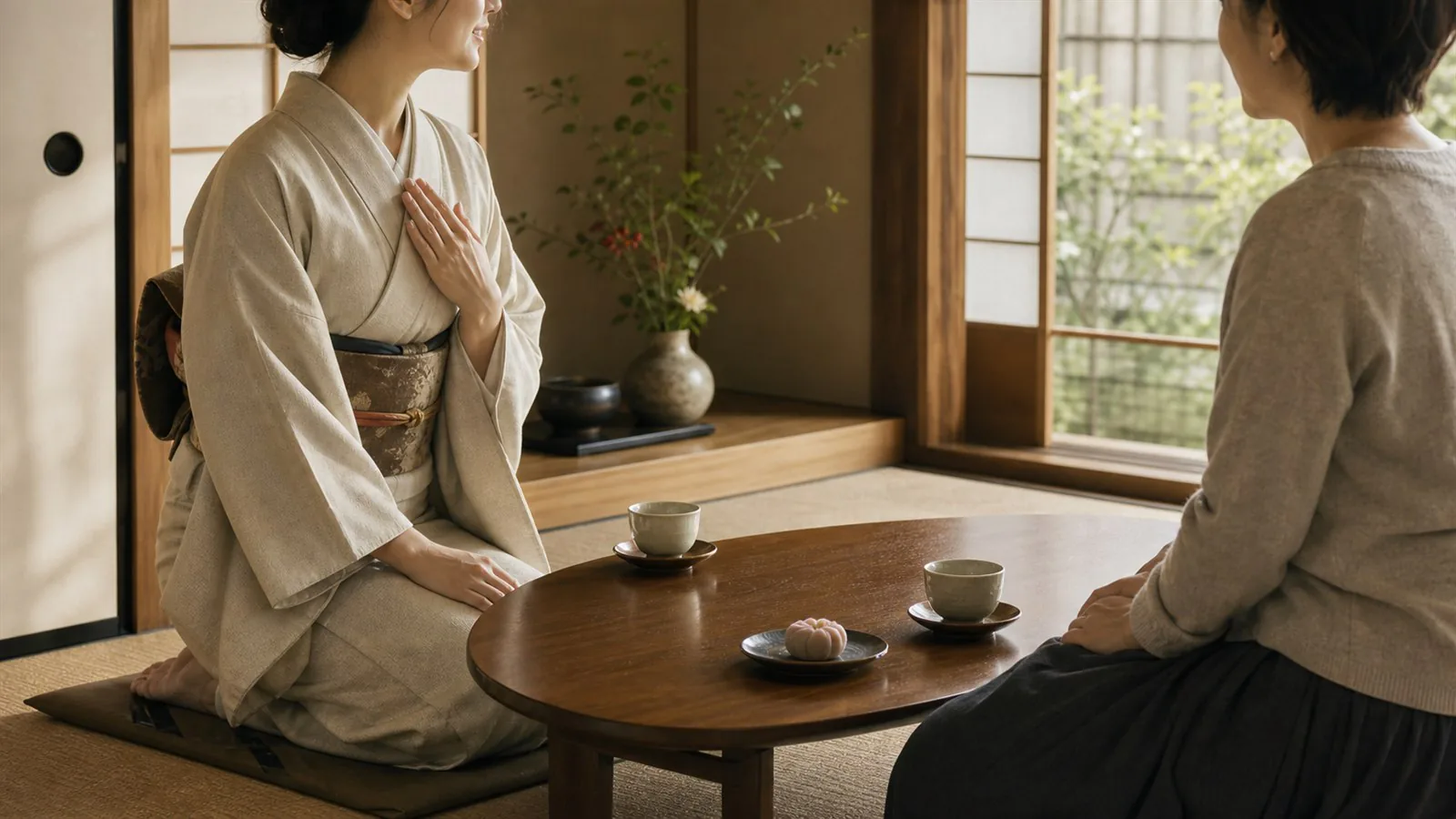
Saying thank you to a Japanese compliment is a misstep. This guide explains the 800-year humility reflex rooted in Zen and bushido, the standard iie iie not at all reply, the uchi-yoso insider-outsider grammar, why parents call their own kids dumb in public, advanced humility by deflecting credit, and how this coexists with private confidence.
Why You Can Not Talk on the Phone on a Japanese Train
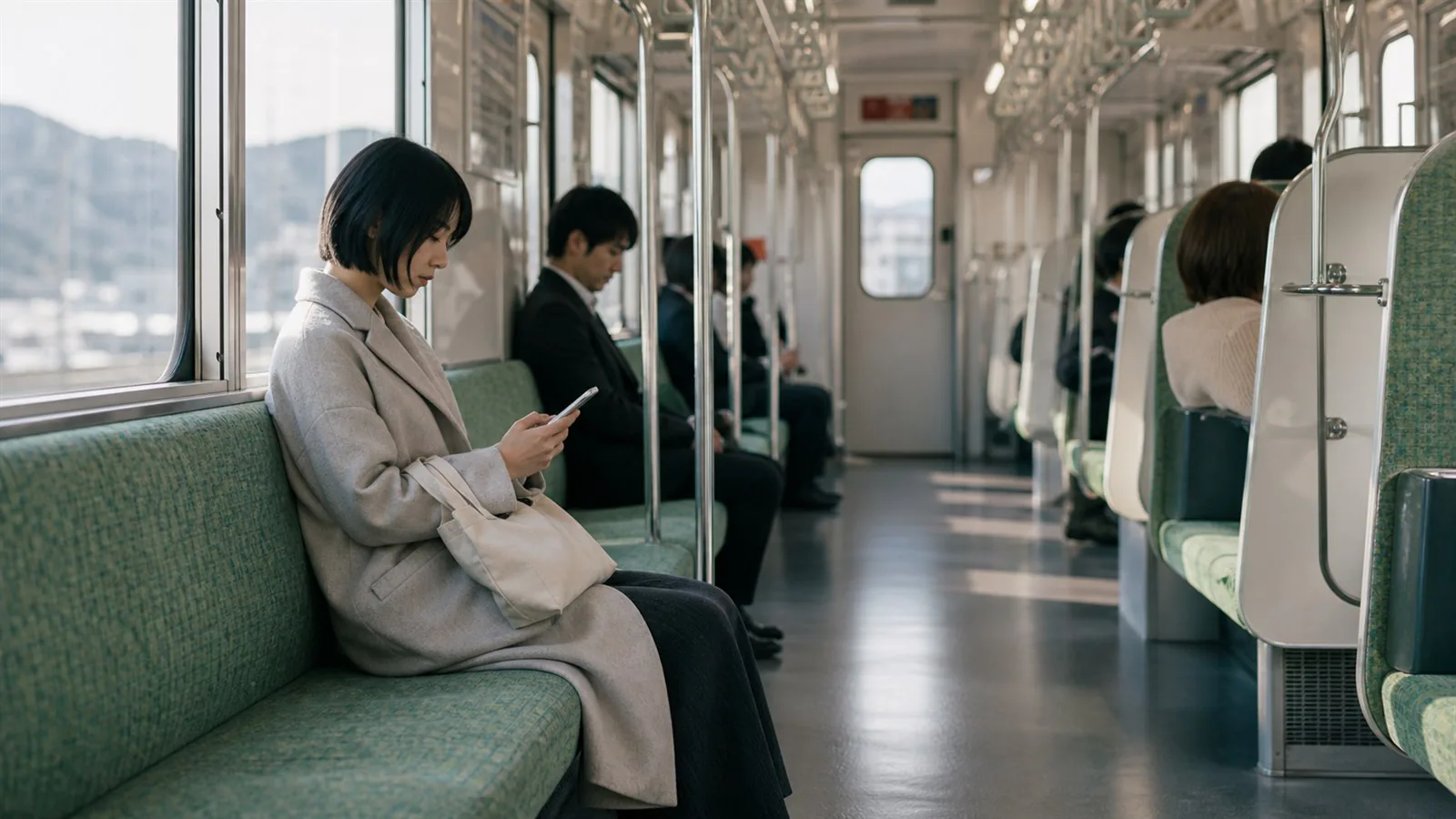
Why Japanese trains ban phone calls is not just about quiet preference. This guide traces the 1995 pacemaker scare, the social concept of meiwaku rooted in village solidarity, the priority-seat announcement that started it all, the shinkansen deck exception, and a real case where a foreigner got politely corrected on the Osaka loop line.
Why Japan Has No Tipping Culture and Why You Should Not Try
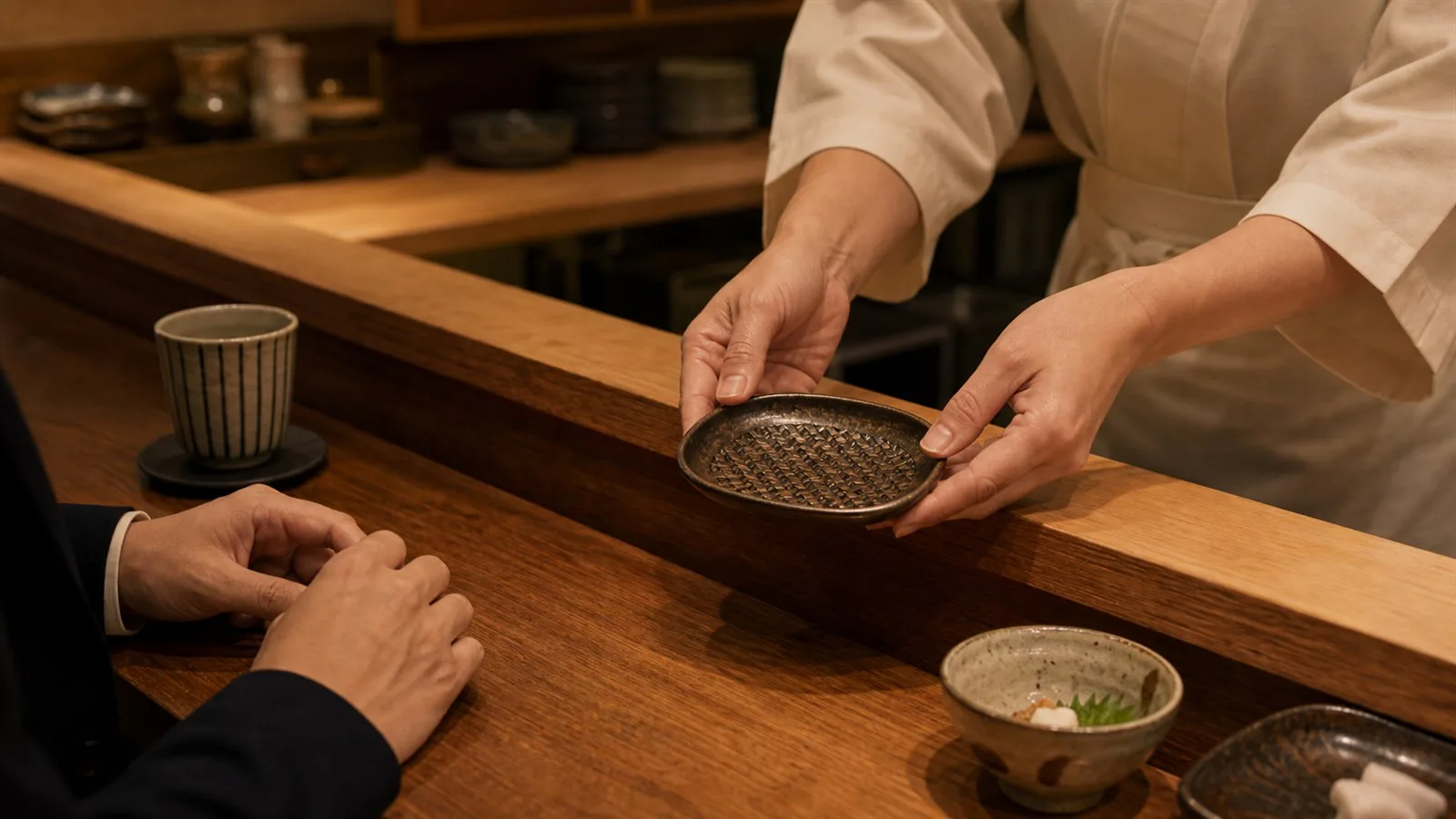
Leaving a tip in the US is polite; in Japan it can be insulting. This guide explains why omotenashi makes Japan tip-free, how to properly hand a kokorozuke envelope at a traditional ryokan, the cab driver exception, and a real Osaka sushi shop case. Next time, words of gratitude beat cash ten to one.
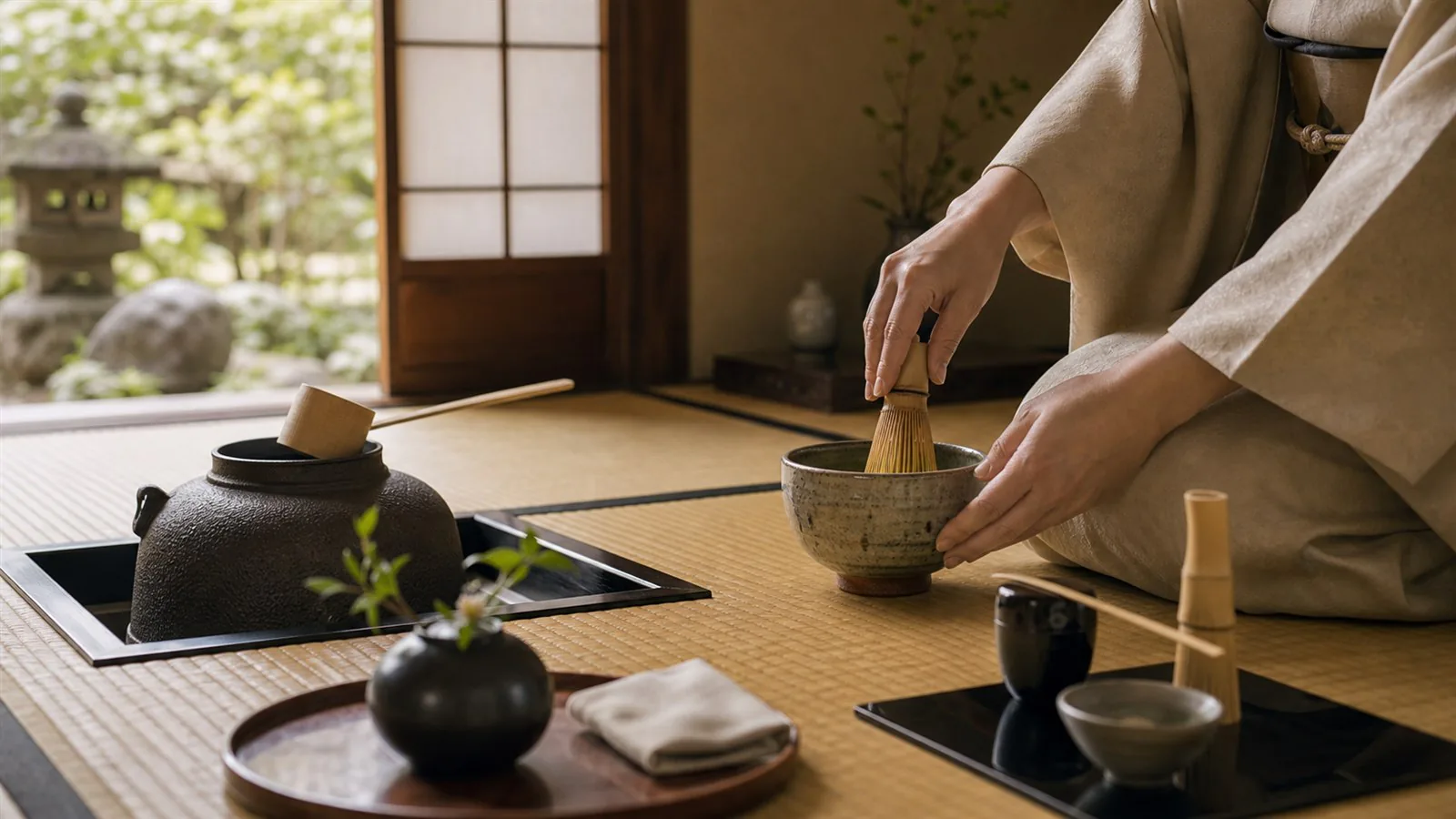
Omotenashi — The Soul of Japanese Hospitality
Omotenashi is not service — it is a 500-year-old hospitality philosophy rooted in Sen no Rikyu tea ceremony, where one cares deeply with no expectation of return. This guide traces the etymology, the four wakeiseijaku principles, five modern scenes from shinkansen 7-minute miracles to ryokan handwritten notes, the contrast with Western service, and how guests earn the highest level of welcome.
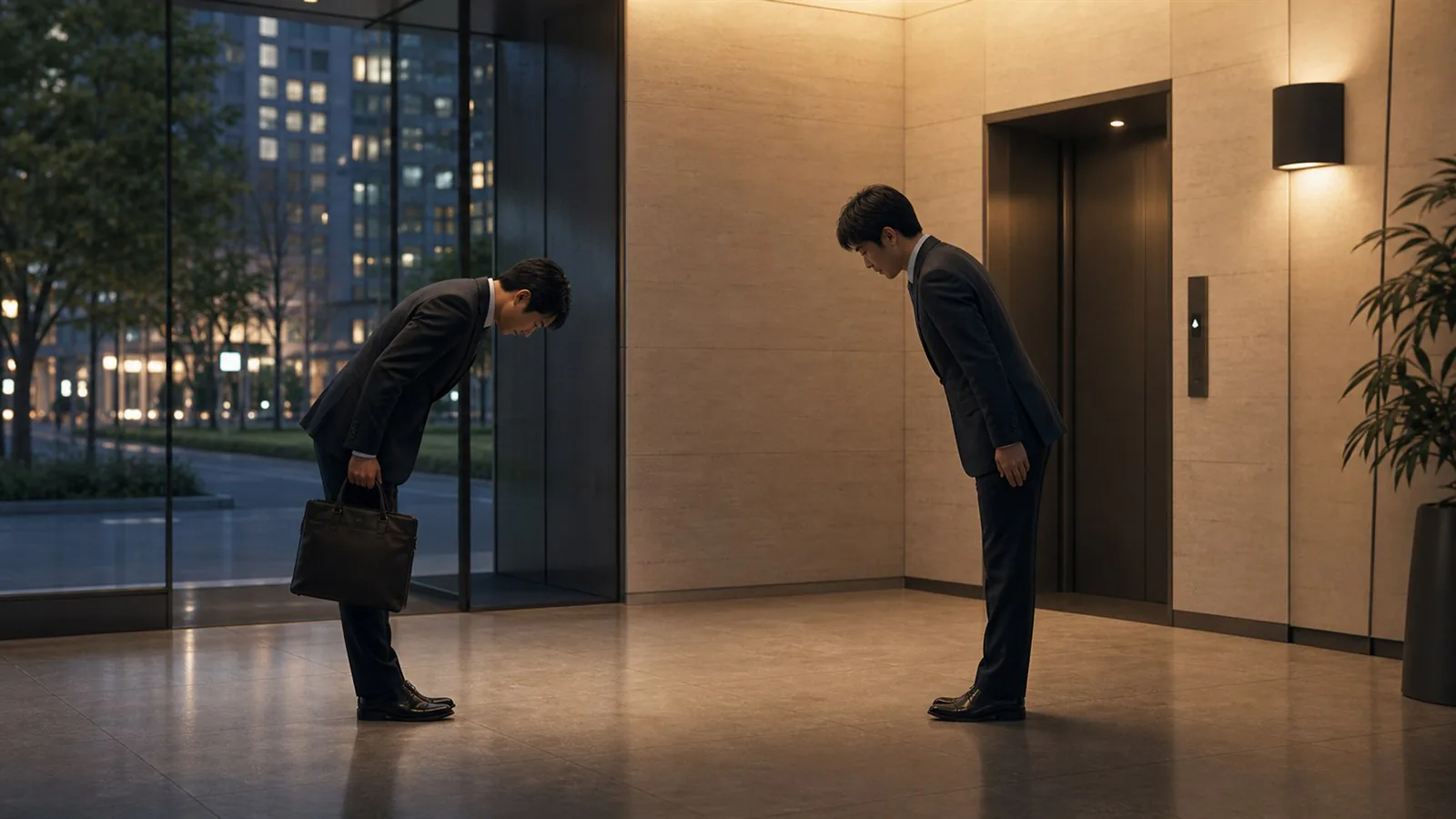
Otsukaresama vs Gokurosama — One Word Can Cost You Respect
Japanese has two ways to say good work — and one of them can offend your boss. This guide unpacks otsukaresama (universal) vs gokurosama (top-down only), tracing the samurai origin, scenarios with delivery drivers and taxi drivers, the more formal osewa ni narimashita, and a real case of an intern stumbling on her last day.

Why Plastic Bags Cost Money in Japan and Why It Matters
Japan made plastic bags paid nationwide on July 1, 2020. This guide covers the G7 ocean-plastic context that forced the law, how konbini chains differ from drugstores, which biomass exceptions stay free, and why an eco bag is your travel sidekick. A simple bag wa irimasen makes you sound like a local.
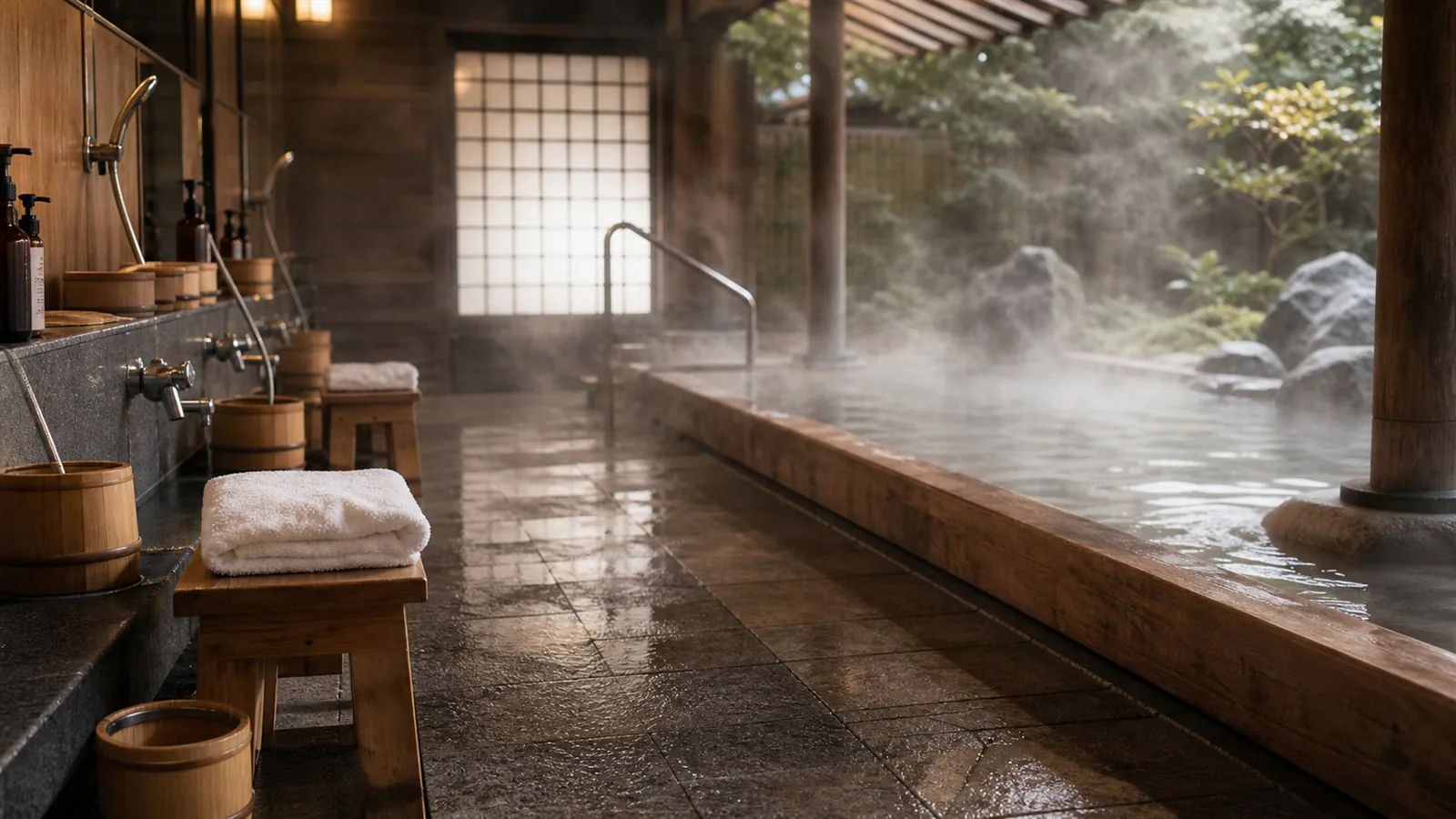
Why You Must Bathe Naked in Japan — and Where to Put the Towel
Japanese onsen require full nudity by law, not by prudishness. This guide traces the 1948 Public Bath Act, hygiene logic, and the egalitarian spirit of hadaka no tsukiai. Learn correct towel placement, the wash-then-soak order, tattoo-friendly alternatives, mixed-bath exceptions, and the five tourist misconceptions that get people kicked out.
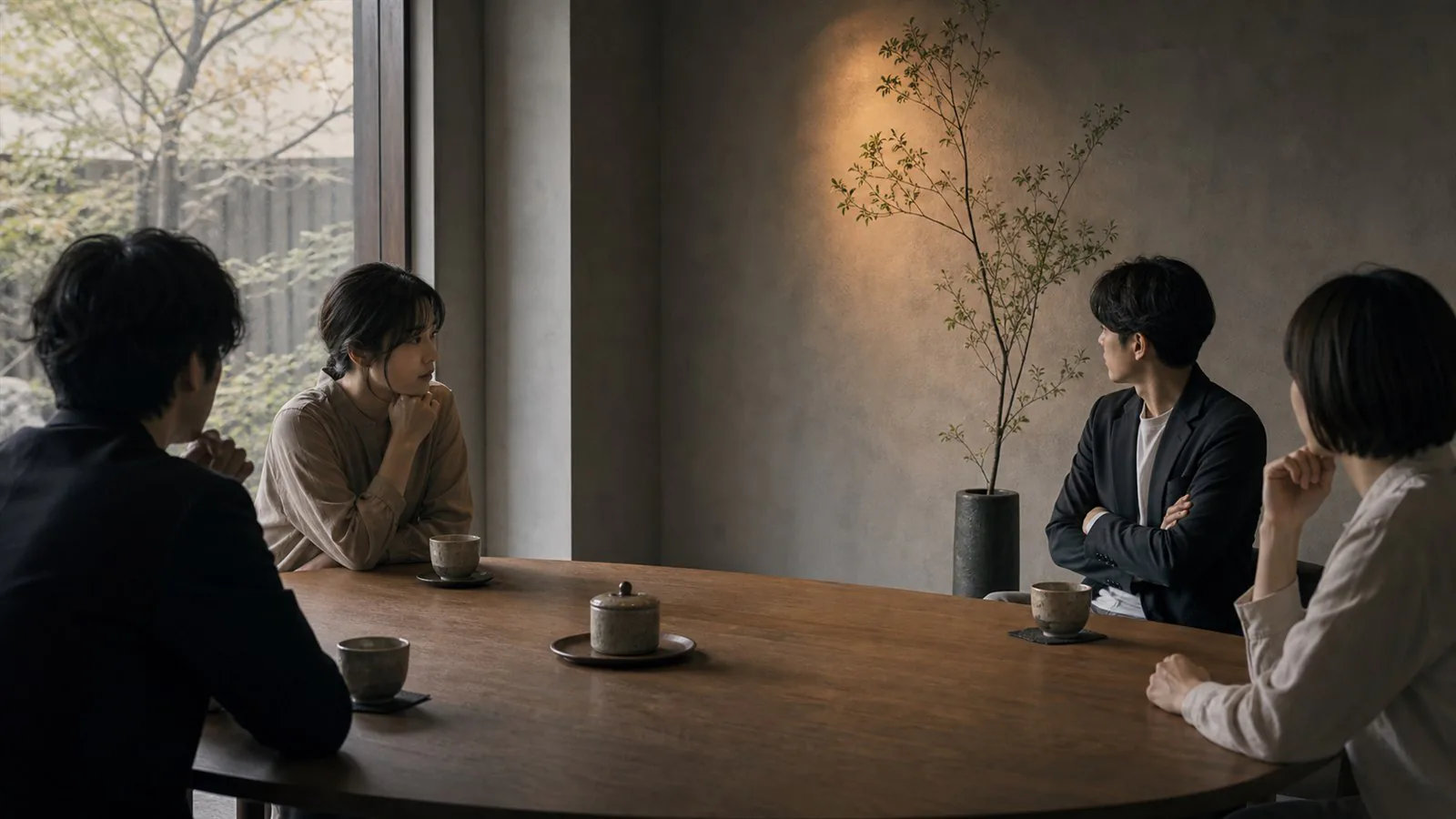
Reading the Air — Why Japanese Communicate Without Words
Reading the air in Japan is not repression — it is a 1500-year-old high-efficiency communication system born of island village life. This guide breaks down the KY label, office code phrases like kangaete oite (translate: no), four scenarios where foreigners trip, the upsides and downsides, and four strategies for visitors. Silence is content.
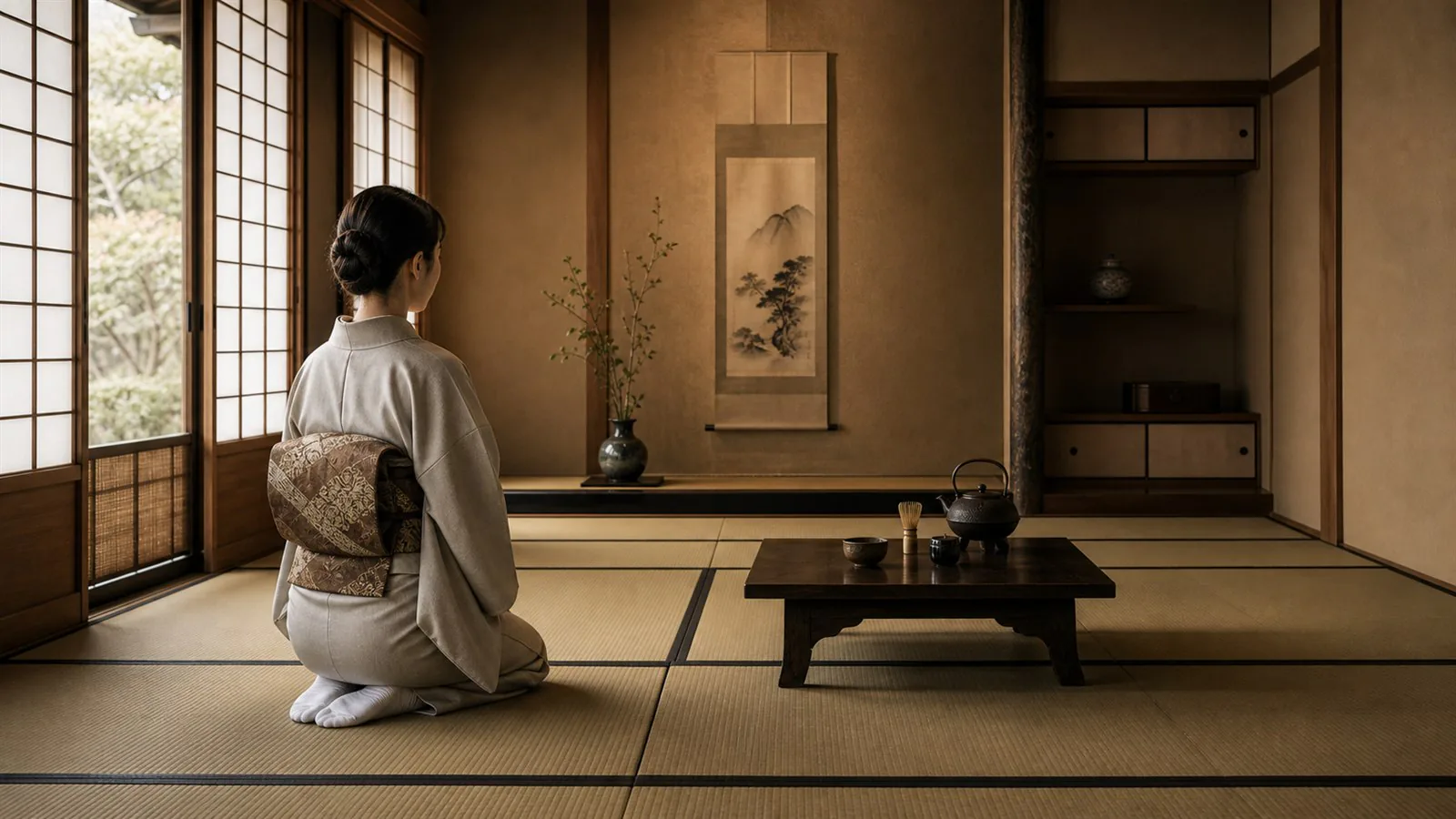
Seiza, Bowing, Kneeling — When Each Posture Is Mandatory
Seiza kneeling is not just tradition — it is mandatory for tea ceremony, Zen, samurai etiquette, and Shinto rituals. This guide lists five must-seiza scenarios, the modern horigotatsu floor pit compromise, the agura cross-leg gender divide, why tachihiza one-knee-up is taboo, and pro techniques for surviving 30 minutes without your legs going numb.
Why Japanese Hotels Skip Floor 4 — Number Taboos Explained
Japanese fear of 4 and 9 comes from shi (death) and ku (suffering) homophones. This guide covers skipped hotel floors, missing hospital rooms, gift quantity taboos, wedding cash amounts to avoid, the reversed funeral envelope rule, car license plate avoidance, and how Japan differs from Chinese (no 9 taboo) and Western (13 taboo) conventions.
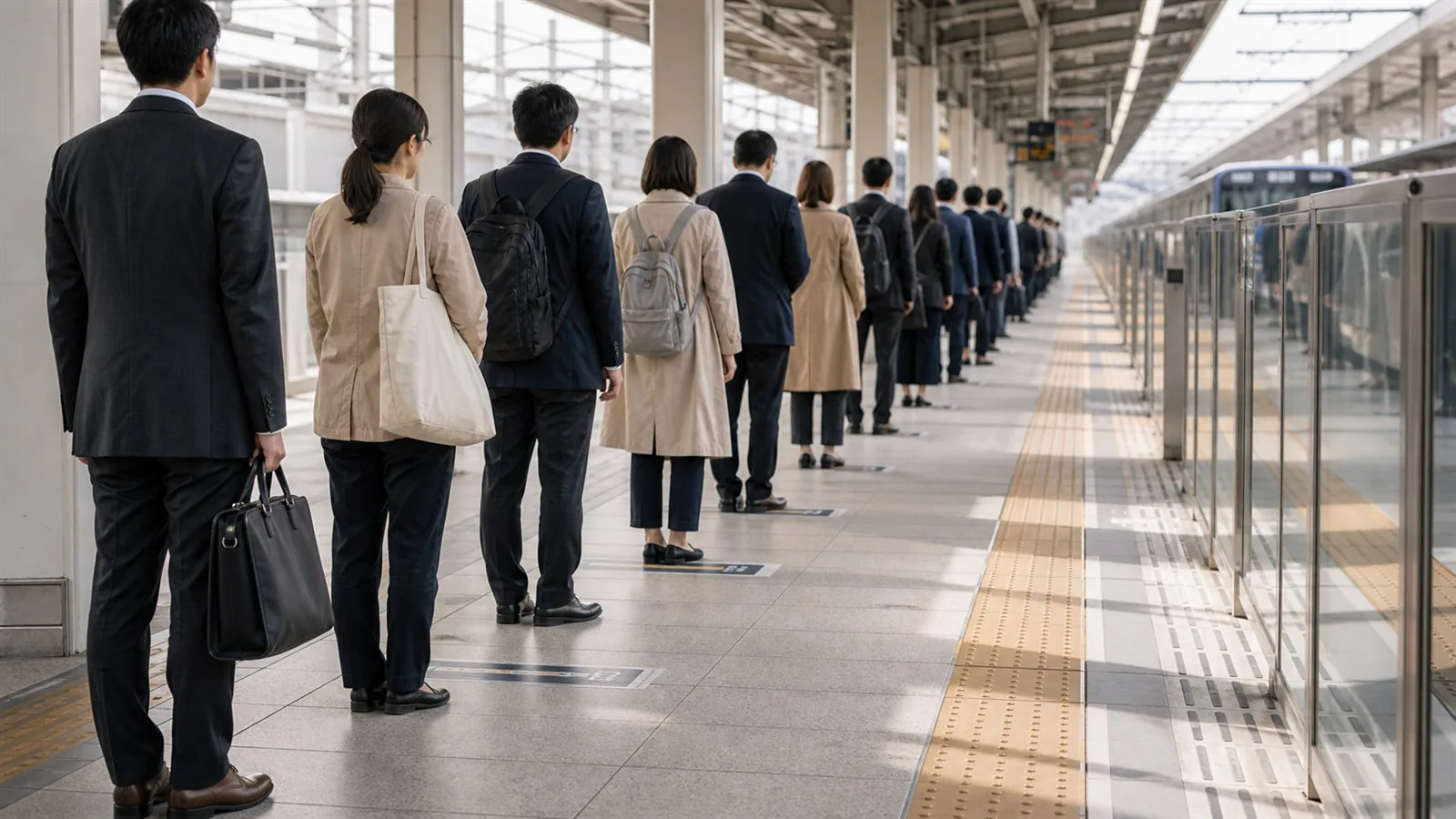
Why the Japanese Queue for Everything — Even Restrooms
The Japanese line up for everything — even restrooms. This guide traces it to Edo village society, postwar rationing, and the meiwaku ethic. You will learn why bathrooms queue from outside, the Tokyo-Osaka escalator divide, why shinkansen seats break the rule, and the four queue scenarios where tourists slip up the most.
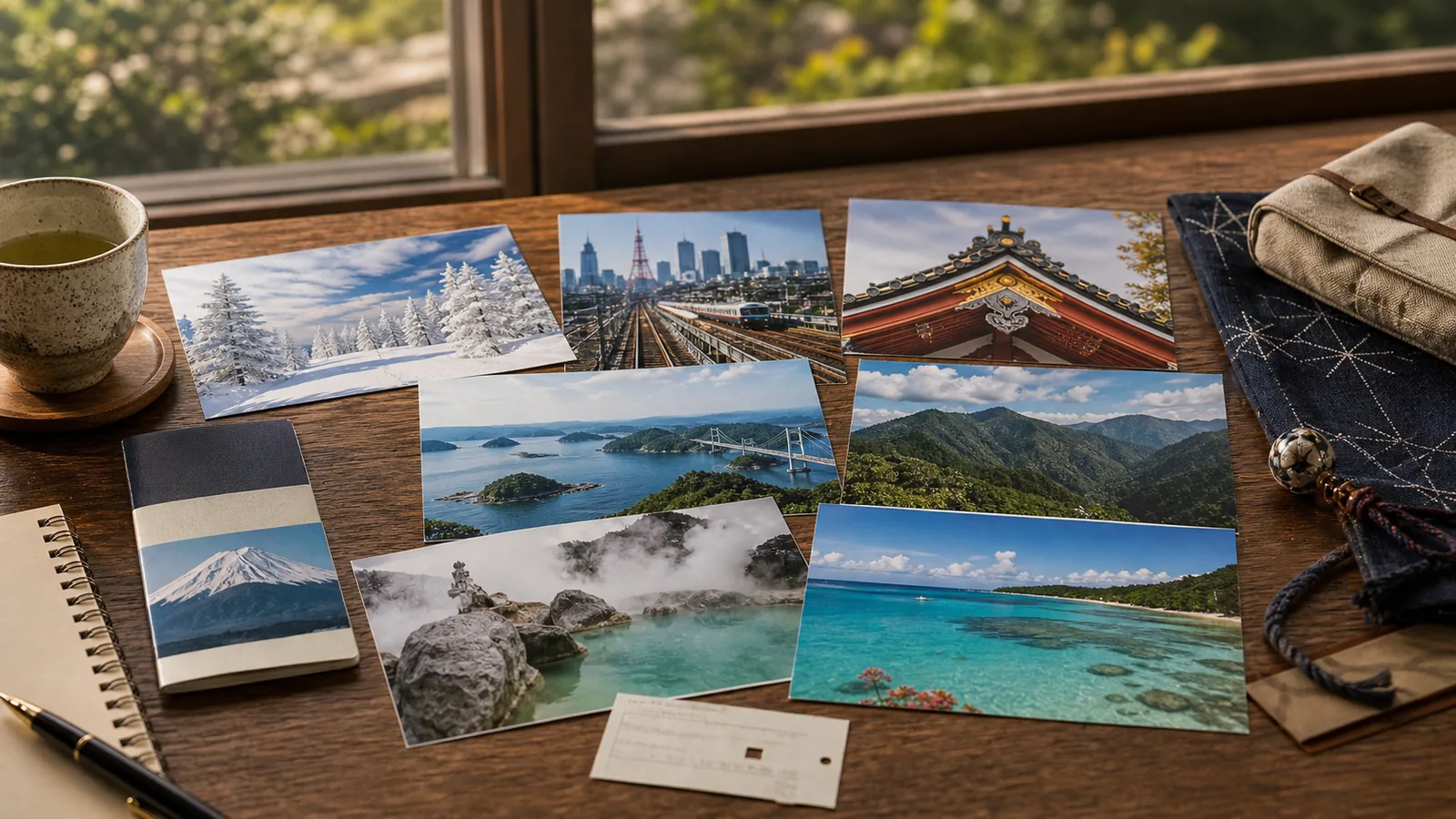
Japan’s 8 Regions Explained: From Hokkaido to Okinawa
Japan is not just Tokyo and Kyoto. The country splits into 8 major regions, each with its own climate, dialect, food, and history. From Hokkaido (sub-arctic seafood paradise) to Okinawa (former Ryukyu kingdom with tropical vibes), this guide breaks down what makes each region unique and which one fits your trip number.
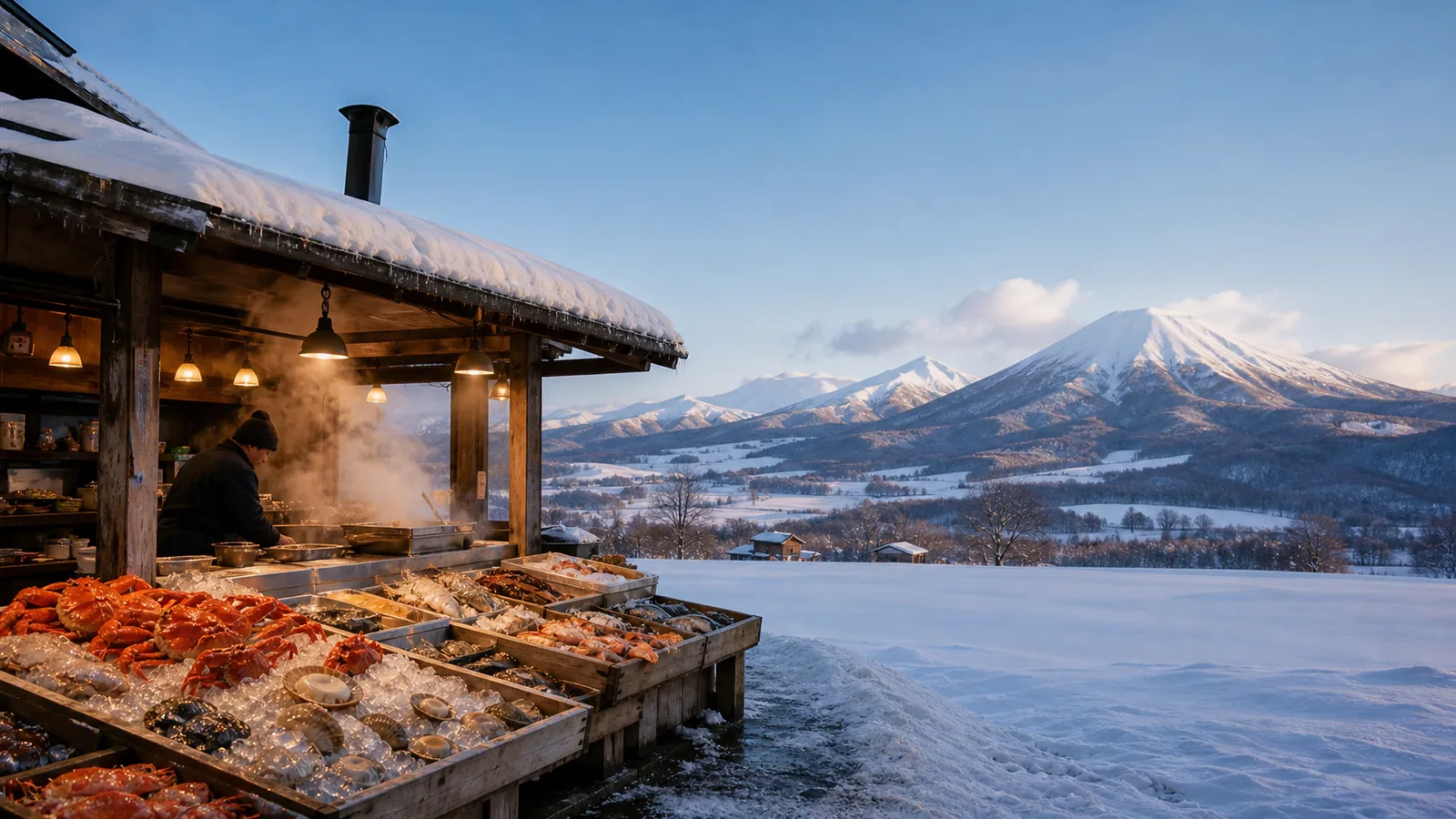
The Complete Hokkaido Guide: Where Food and Snow Make Magic
Hokkaido does not feel like Japan. It is bigger than Taiwan plus South Korea combined, and was only annexed 156 years ago, leaving its food, climate, and street grid distinctly different. This guide covers winter (Sapporo Snow Festival, Niseko skiing, Hakodate night view), summer (Furano lavender, Shiretoko wildlife), why the seafood and dairy are world-class, and how many days you really need.
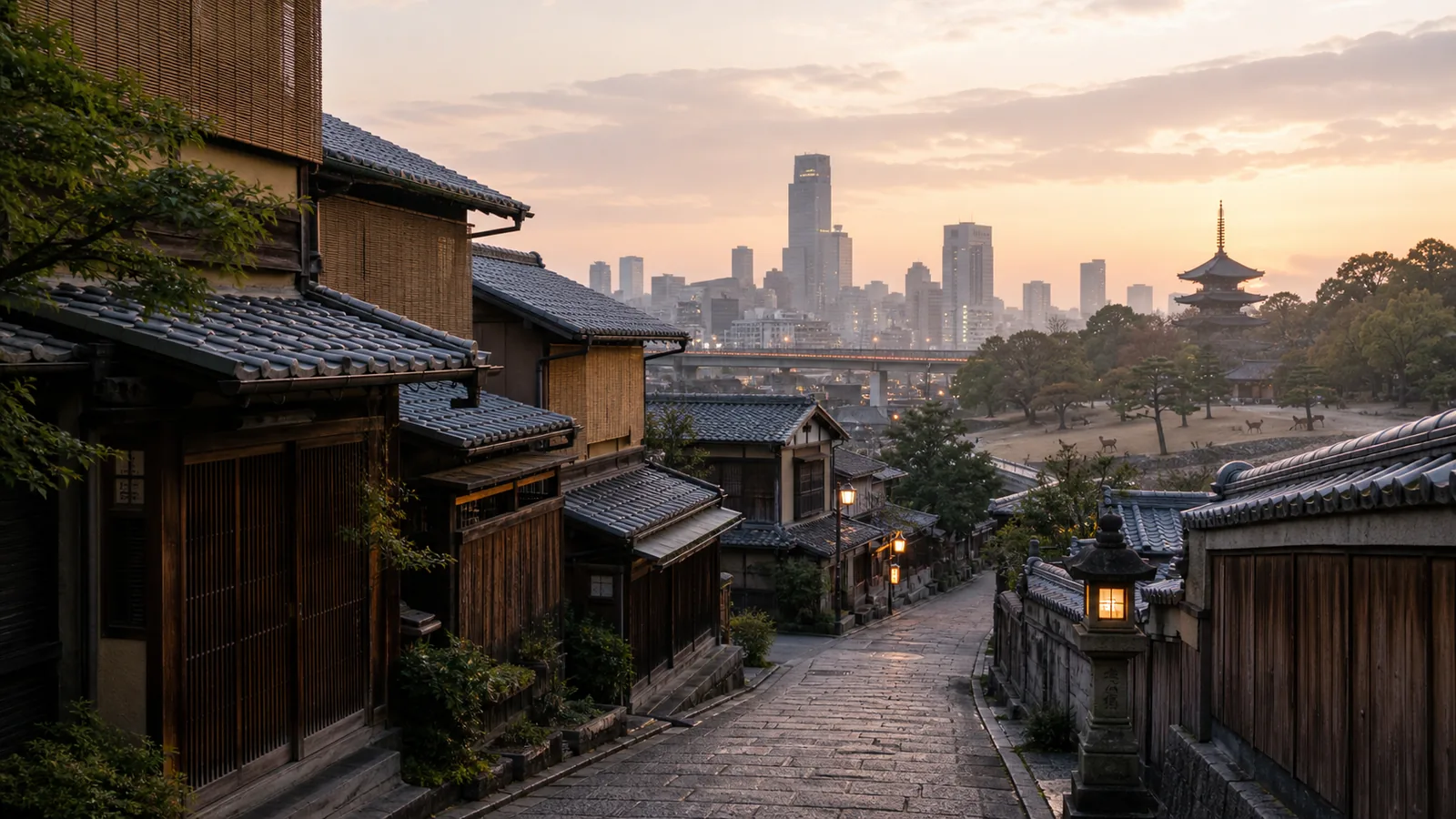
7 Days in Kansai: A Deep Dive into Kyoto, Osaka, and Nara
How do you actually use 7 days in Kansai without wasting them? This guide builds a day-by-day route: Days 1-2 Osaka (Dotonbori, Osaka Castle, or USJ), Day 3 Nara day trip, Days 4-5 Kyoto (Arashiyama, Kinkaku-ji, Fushimi Inari, Kiyomizu, Gion), Day 6 Kobe or Himeji, Day 7 flex (Shiga, Kumano, or Uji). Includes train passes, hotel switching strategy, and the exact times to beat the crowds.
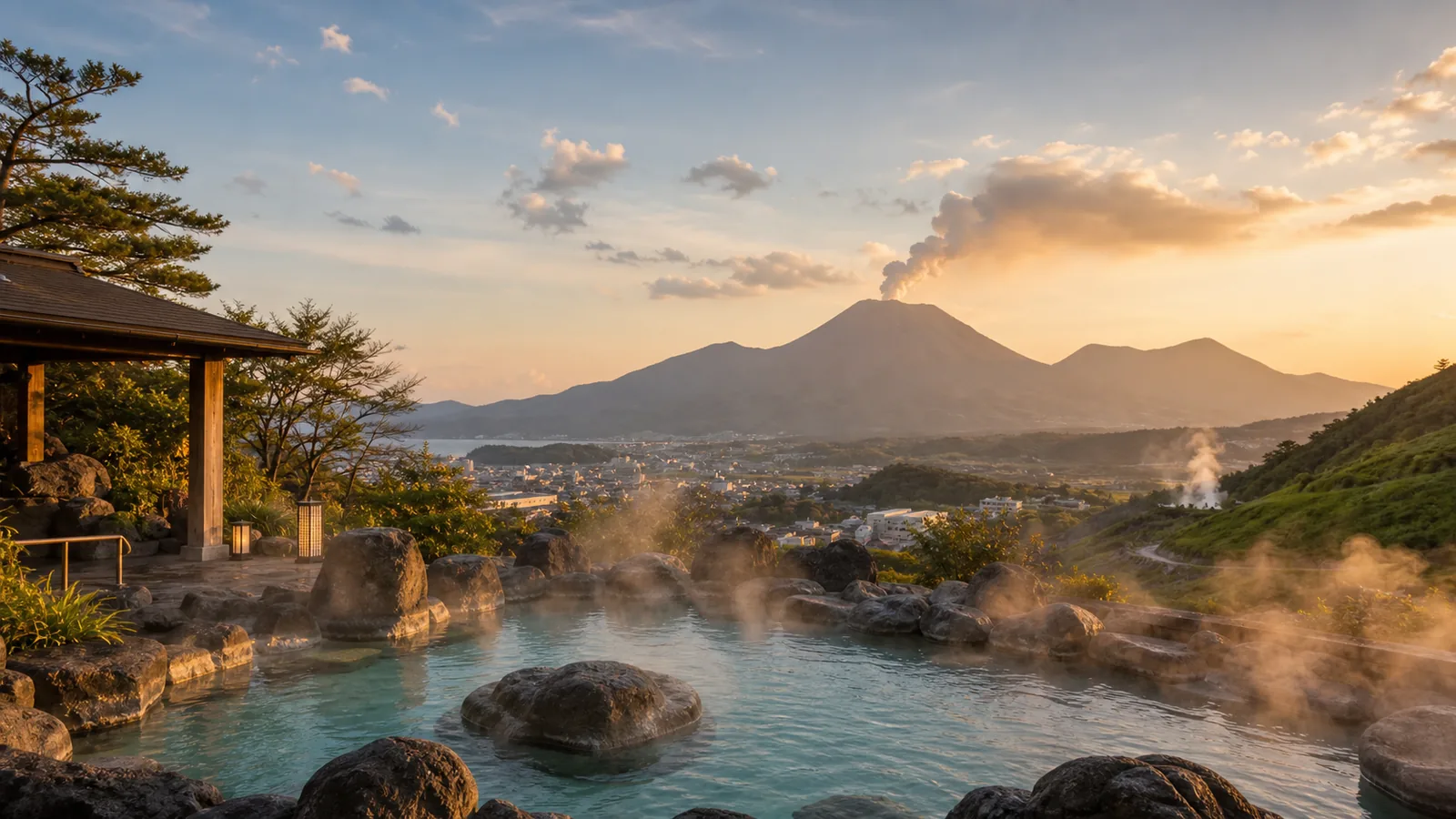
Kyushu: Japan’s Island of Volcanoes and Hot Springs
Kyushu is Japan’s volcano and hot spring paradise. It has 17 active volcanoes, Beppu pumps out 130,000 liters of onsen water daily (second only to Yellowstone), and each of its seven prefectures has a different personality. This guide covers Fukuoka ramen, Nagasaki’s exotic Dutch trading history, Aso volcano, the Beppu and Yufuin onsen rivalry, and a tested 7-day route.
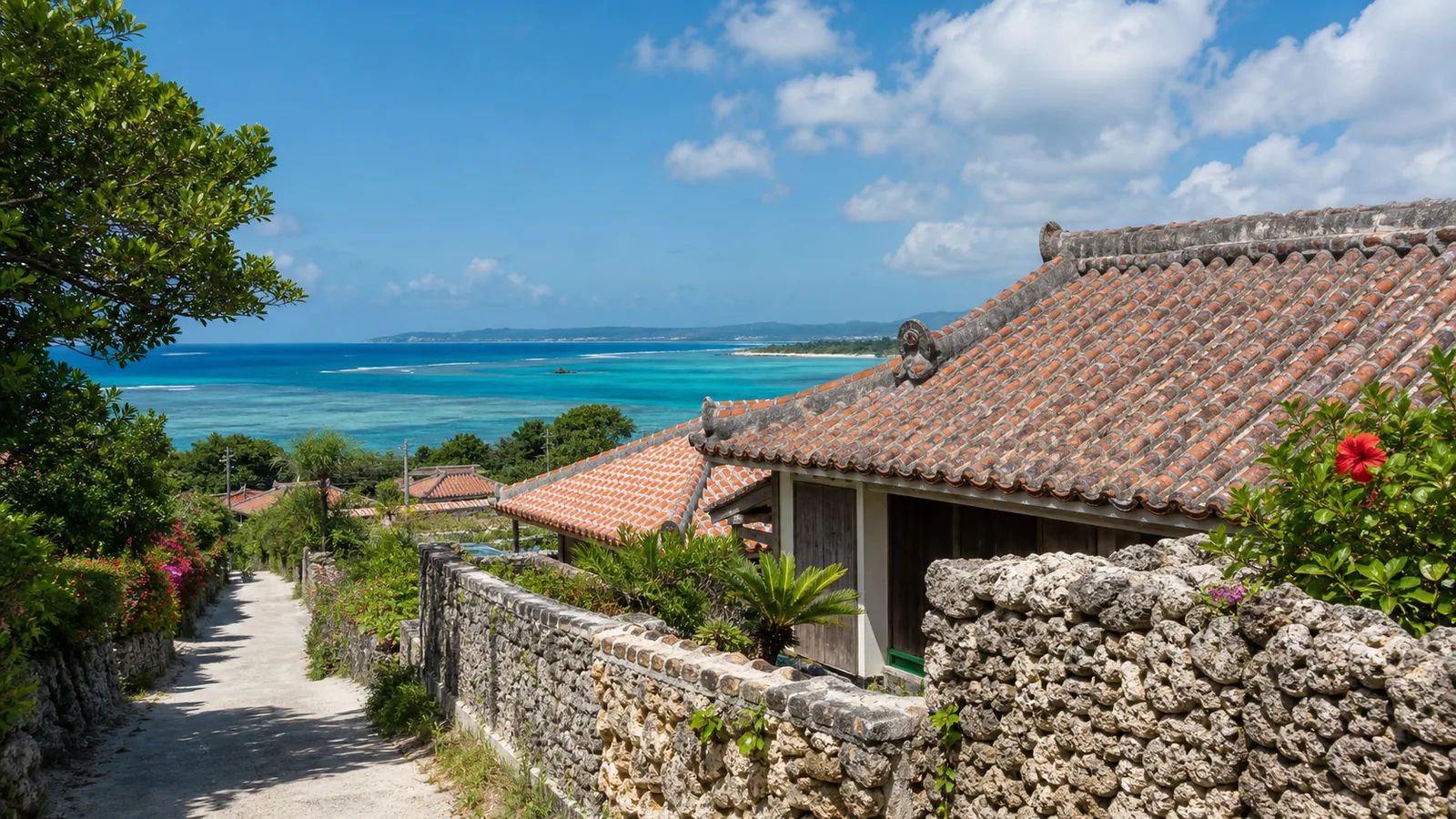
The Complete Okinawa Guide: Ryukyu Culture and Tropical Vibes
Okinawa is not Japan’s Hawaii. It is the former Ryukyu Kingdom that ruled itself for 450 years until forced annexation in 1879, was occupied by the US for 27 years post-WWII, and still hosts 70 percent of US military forces in Japan. This guide covers Ryukyu history, food unlike anywhere else in Japan, why the outer islands (Miyako, Ishigaki, Iriomote) are the real paradise, and why Ishigaki is closer to Taiwan than Tokyo.
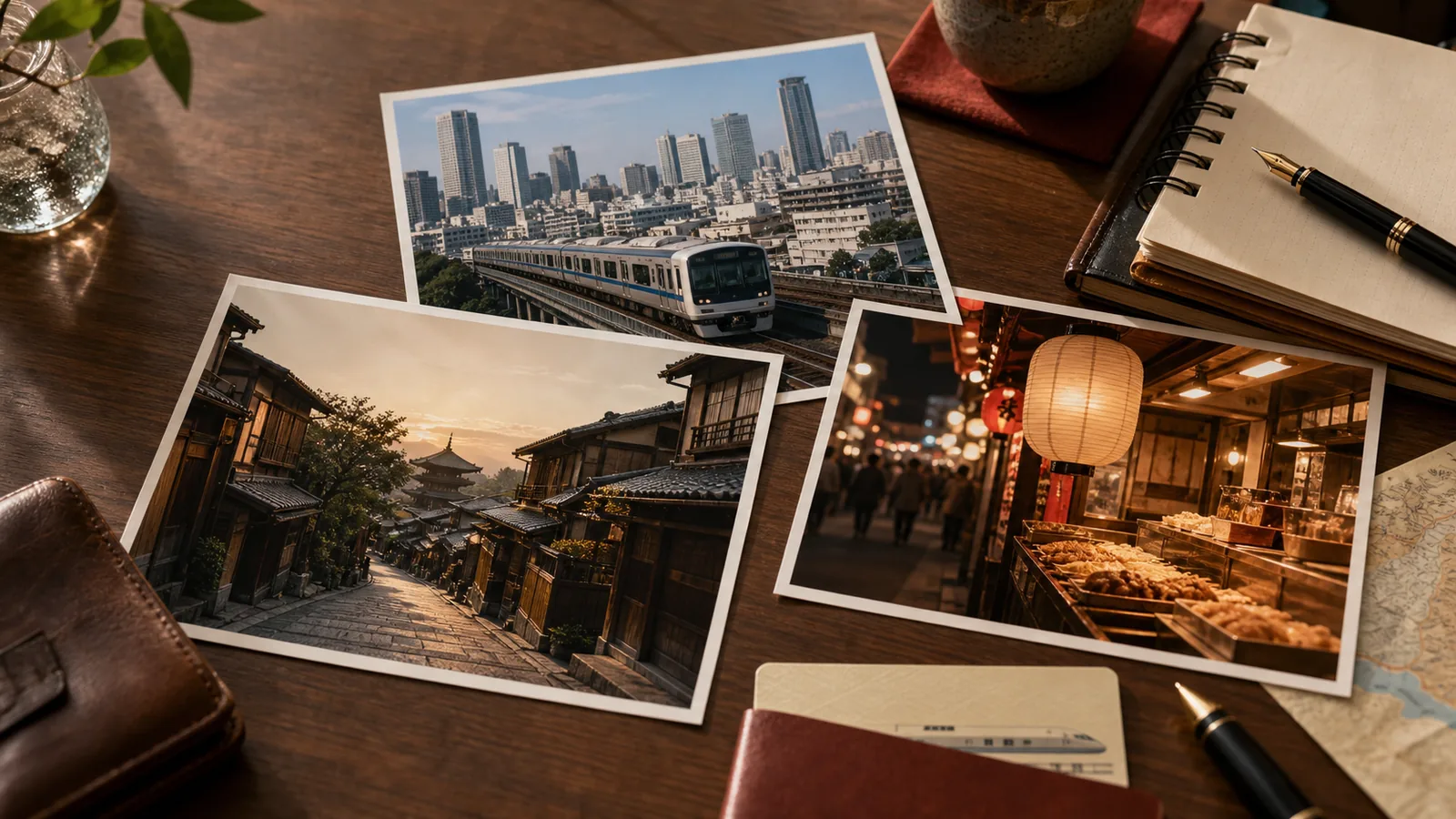
Tokyo, Kyoto, Osaka: Why Every Japan Itinerary Includes All Three
Wondering why every first-timer itinerary forces Tokyo + Kyoto + Osaka? Because each plays a totally different role: Tokyo is the modern showcase, Kyoto was the imperial capital for 1,074 years, and Osaka is the merchant-and-food heart. This guide breaks down why missing one leaves Japan incomplete, plus the most efficient 5-7 day route to connect all three.
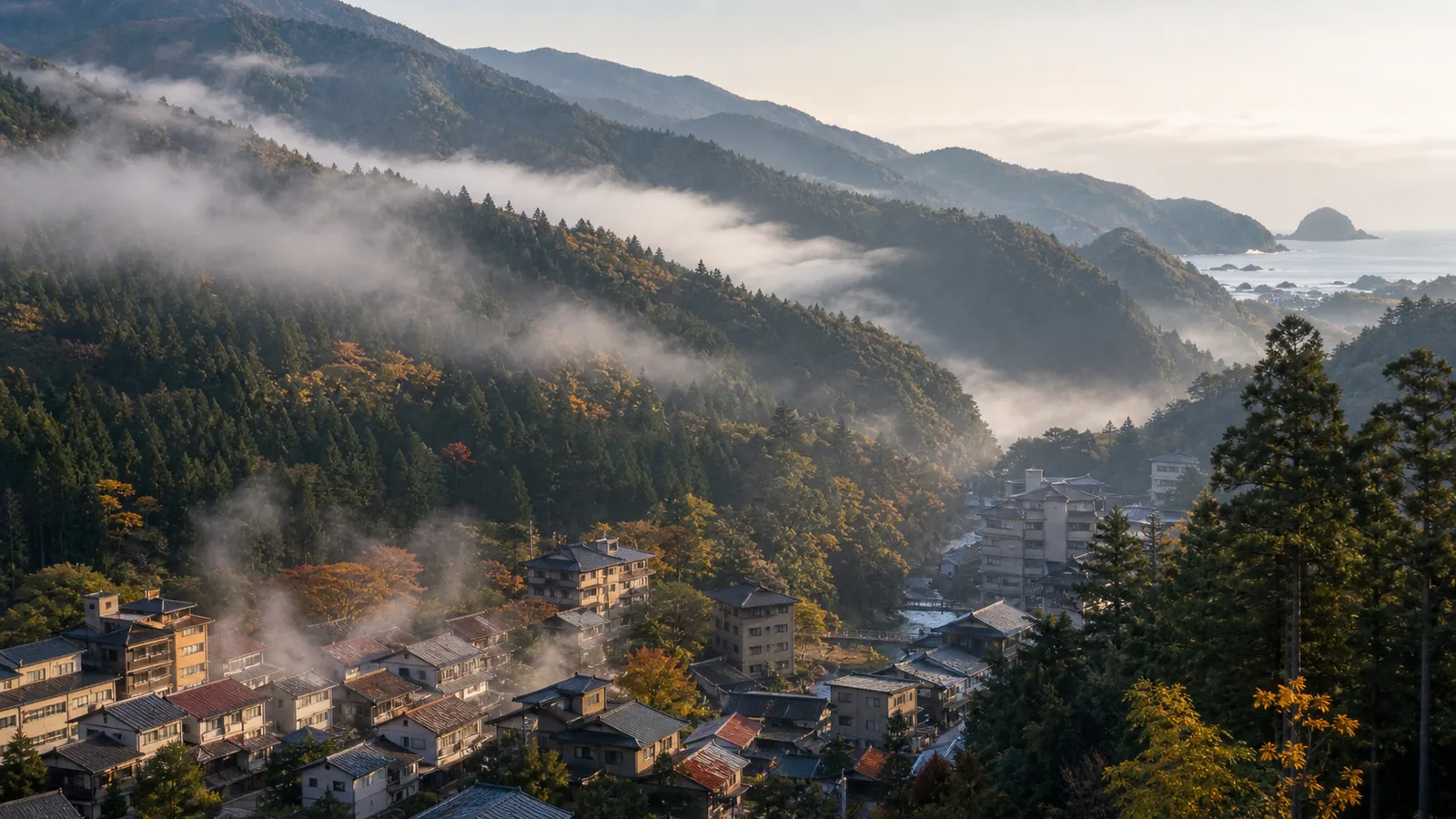
Tohoku: Japan’s Most Underrated Region (Aomori, Sendai, Fukushima)
Tohoku is Japan’s most underrated region. The six northern prefectures (Aomori, Iwate, Miyagi, Akita, Yamagata, Fukushima) offer the heaviest snow, oldest matsuri, deepest hot springs, and fewest crowds in the country. This guide explains why tourists skip it (311 aftermath, weak guidebook coverage), what each prefecture offers, the truth about Fukushima radiation, and a 7-day route.
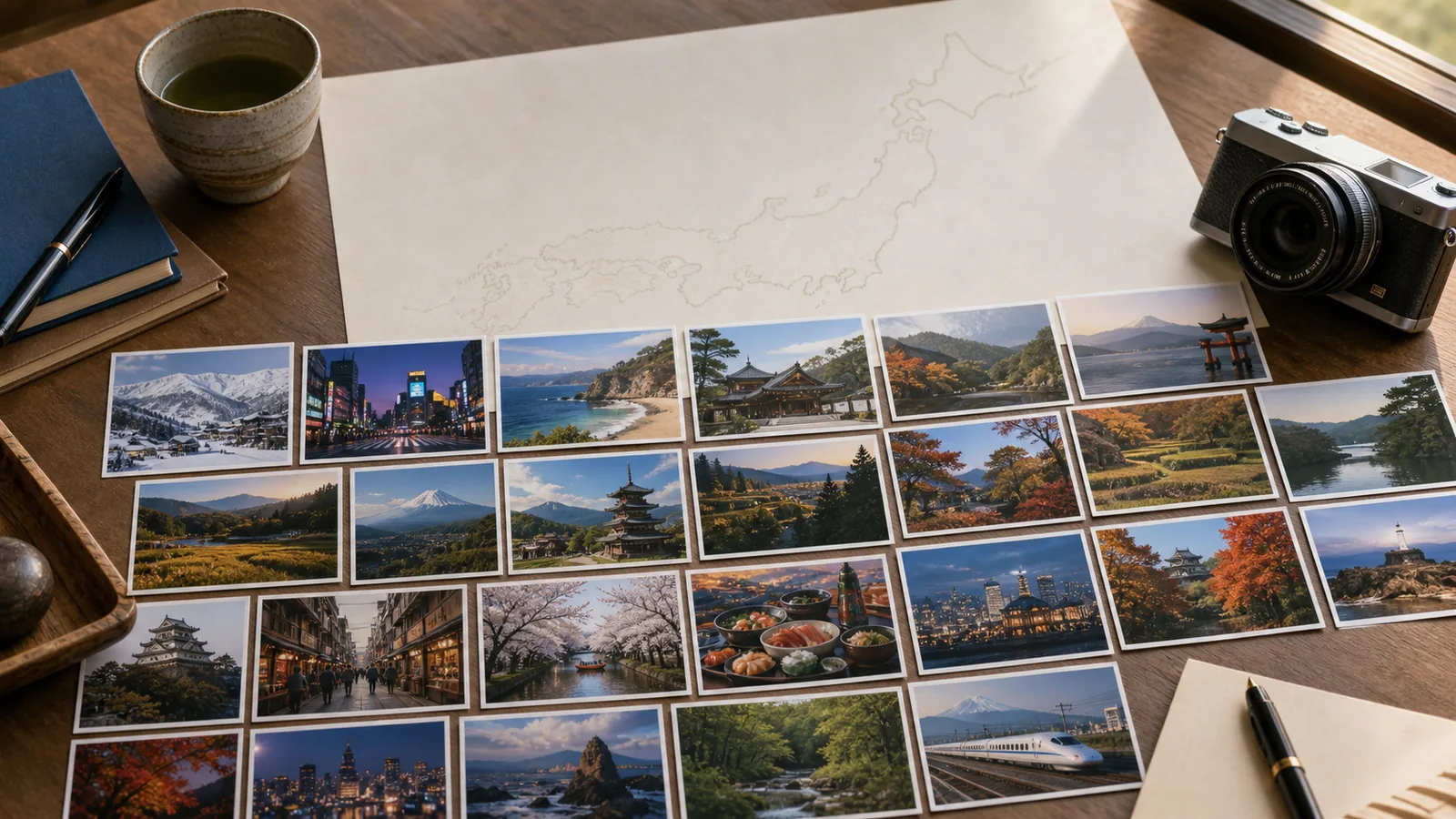
All 47 Prefectures and the Top 10 Every Tourist Should Visit
Japan has 47 prefectures, which sounds intimidating until you realize tourists really only need to remember 10: Tokyo, Kyoto, Osaka, Nara, Hokkaido, Okinawa, Kanagawa, Hiroshima, Nagano, and Gifu. This guide ranks each by tourist value, lists must-see spots and best seasons, and recommends combinations for 5, 7, 10, and 12+ day trips.
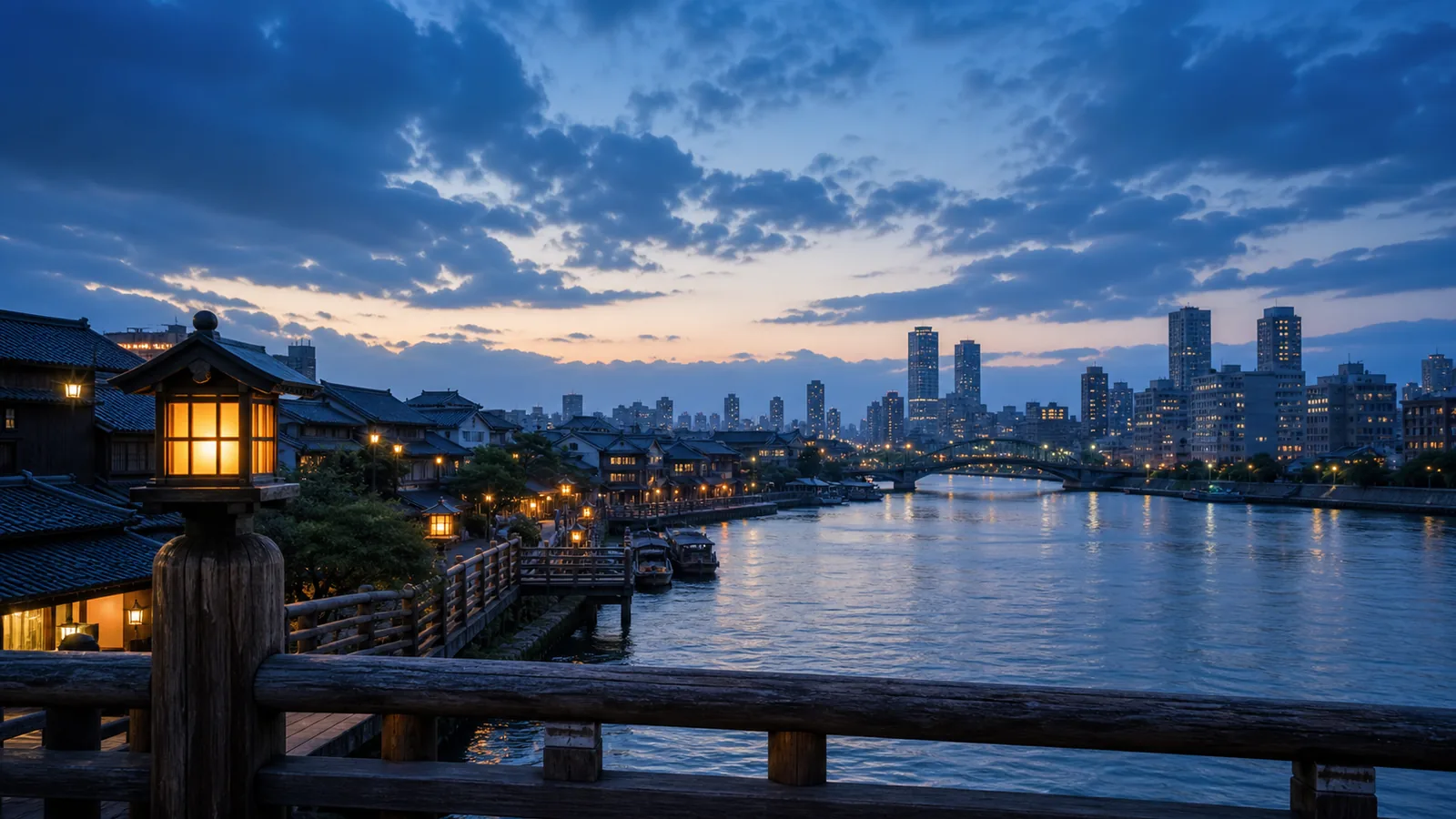
From Edo to Tokyo: The 400-Year Story of a Fishing Village Becoming Tokyo
Four hundred years ago, Tokyo was a fishing village. In 1590 Hideyoshi banished Tokugawa Ieyasu to this swampy backwater, expecting him to fail. Instead, Ieyasu filled the marshes, built canals, and within 130 years Edo had over one million residents, the biggest city in the world. This guide walks through 7 stages from Ieyasu’s arrival to the 2020 Olympics, plus the exact Tokyo spots where you can still see the Edo layer.
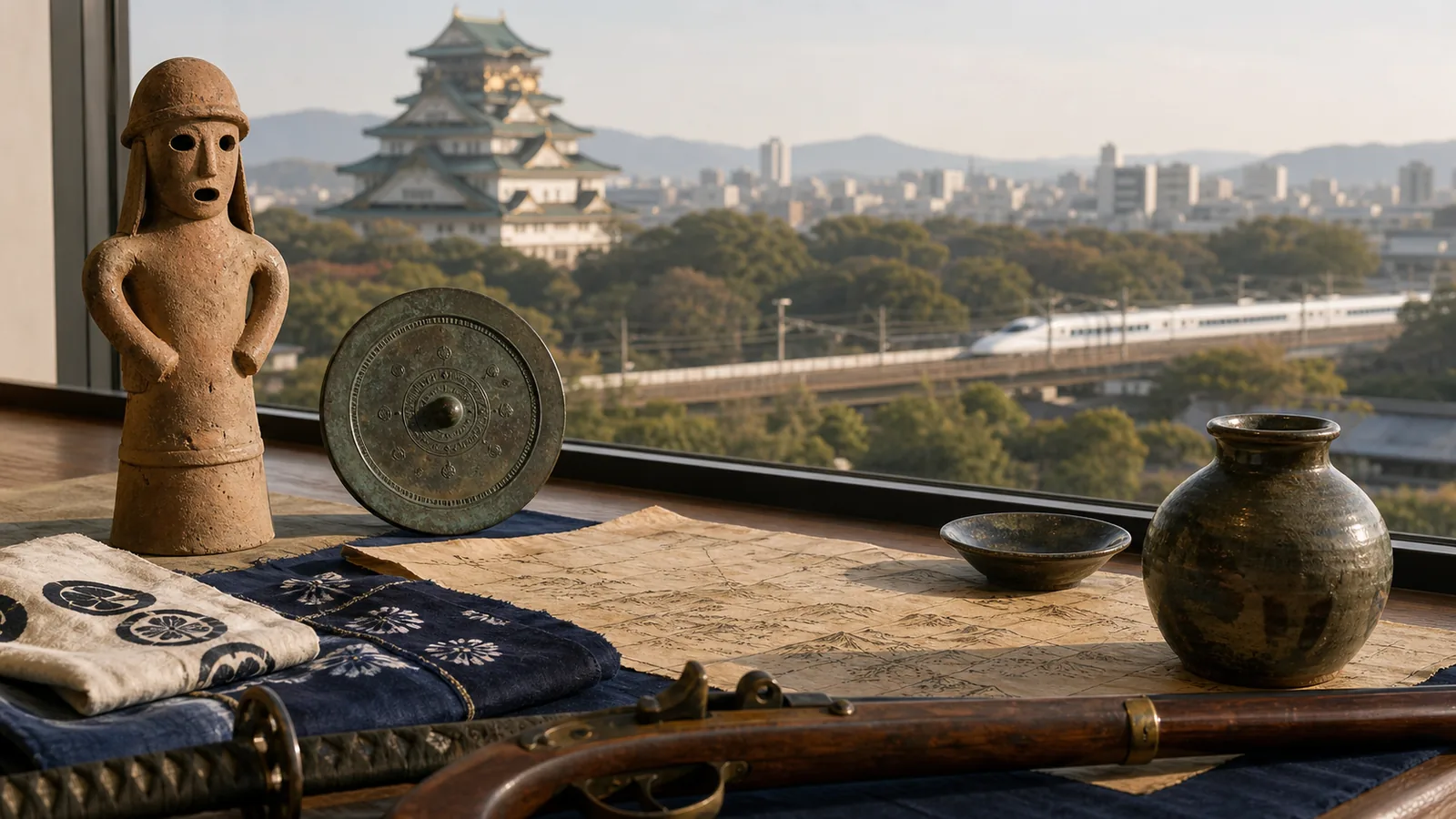
1,500 Years of Japan in One Map: From Burial Mounds to the Reiwa Era
Japanese history is not as complicated as it looks. You only need to remember 8 eras: Kofun, Nara, Heian, Kamakura, Muromachi, Azuchi-Momoyama, Edo, and Meiji-onward. This guide gives you the 3 key words for each era plus the exact temples and castles where you can stand in that era today, from Horyu-ji (Asuka) to the Edo-Tokyo Museum.
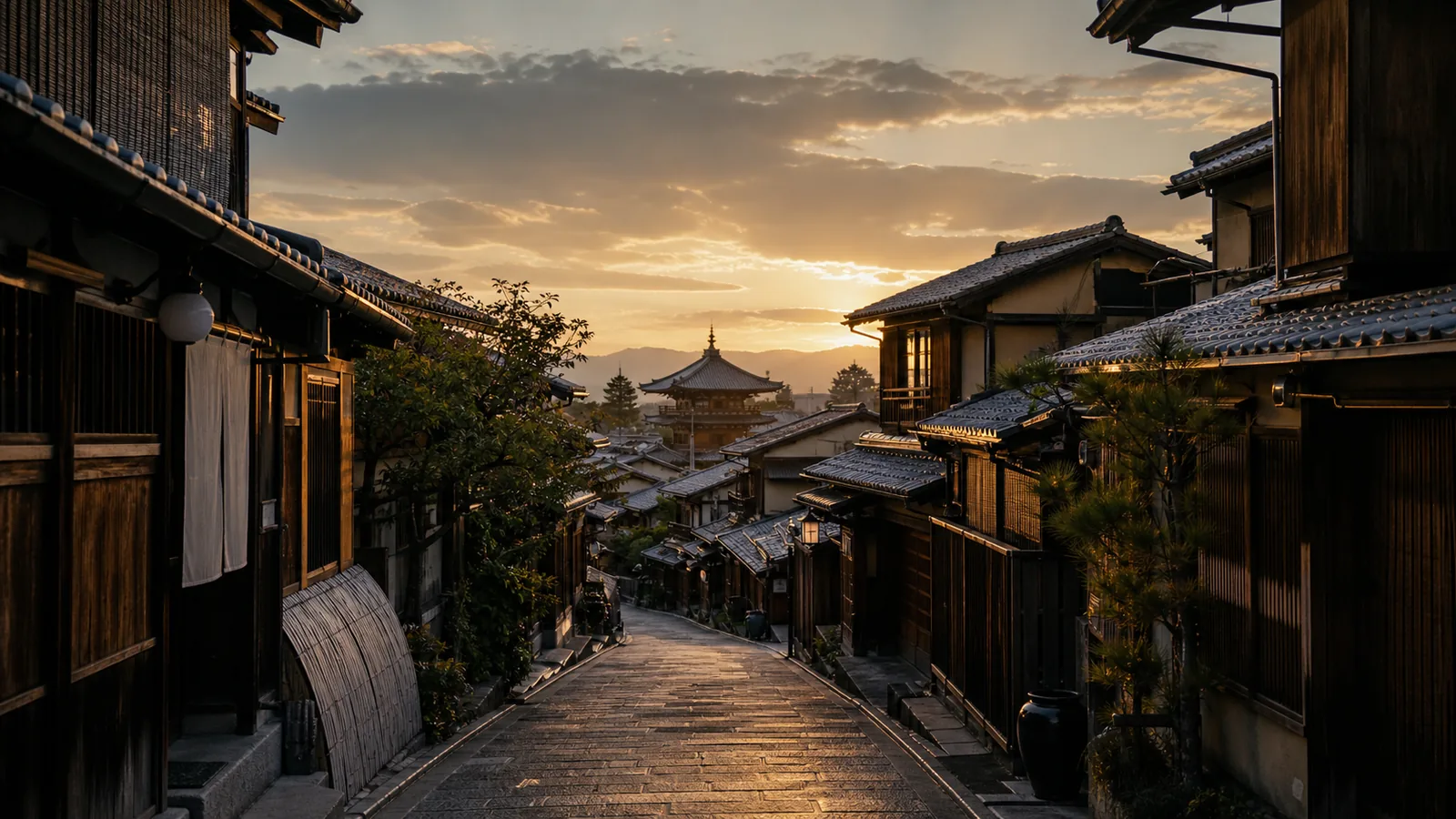
Why Kyoto Was Never Destroyed: 1,200 Years of Urban Survival
Kyoto was Japan’s capital for 1,074 years (794-1868) and miraculously kept most of its ancient buildings intact, which is extremely rare in world urban history. This guide walks through the four times Kyoto nearly burned: the Onin War (70 percent destroyed in 11 years), the Honno-ji Incident, the Bakumatsu chaos, and the WWII atomic bomb that almost dropped here (Secretary Stimson personally lobbied to remove Kyoto from the target list).
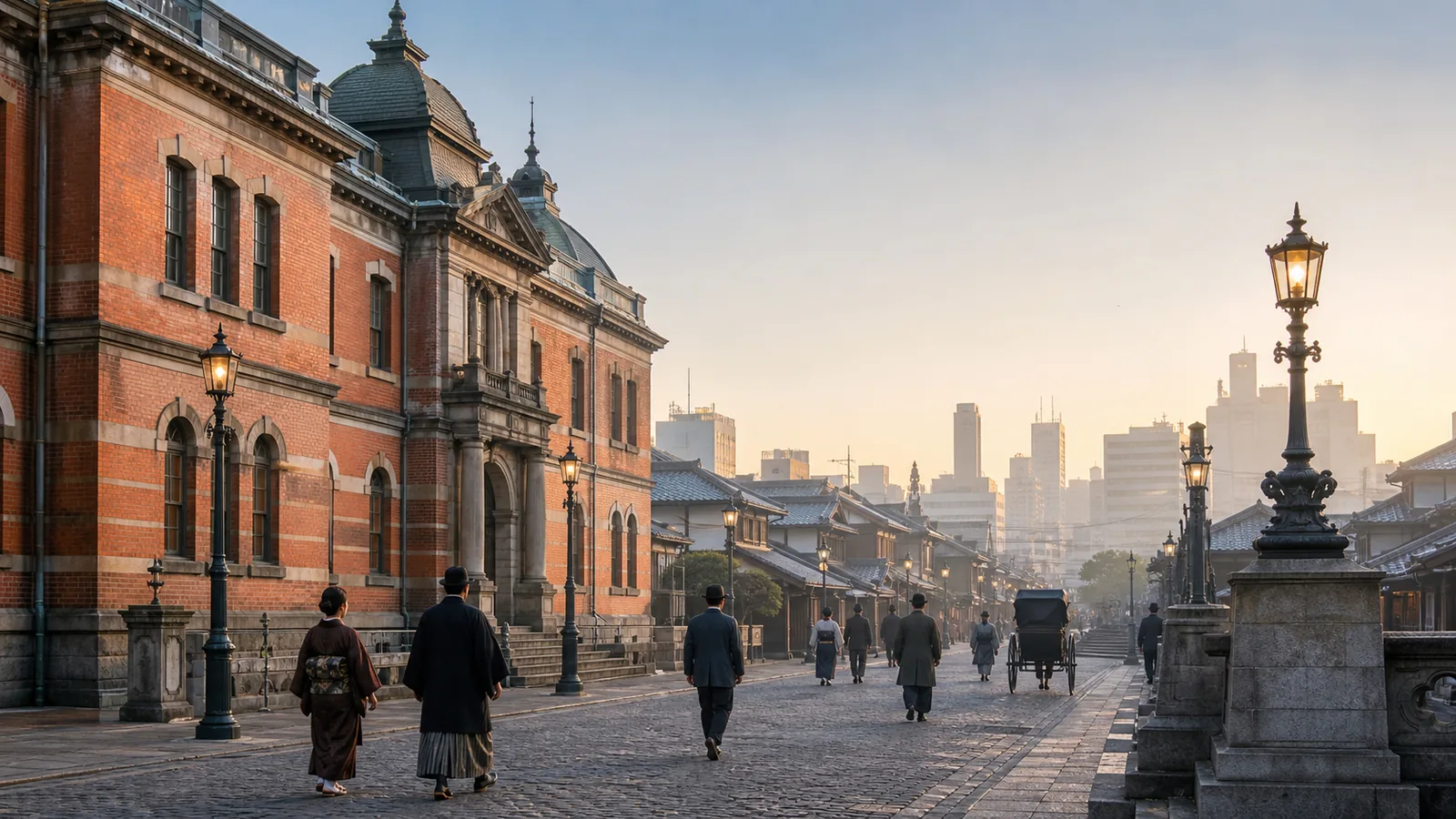
How the Meiji Restoration Built Modern Japan
If you could pick just one event to explain how Japan became what it is today, it would be the Meiji Restoration. This guide walks through 1853 (Black Ships) to 1912 (end of Meiji era), showing how Japan went from feudal kingdom to industrial power in just 30 years, why it succeeded where Qing China failed, and the lasting impact on modern Japan, from Tokyo’s dominance to the birth of standard Japanese.
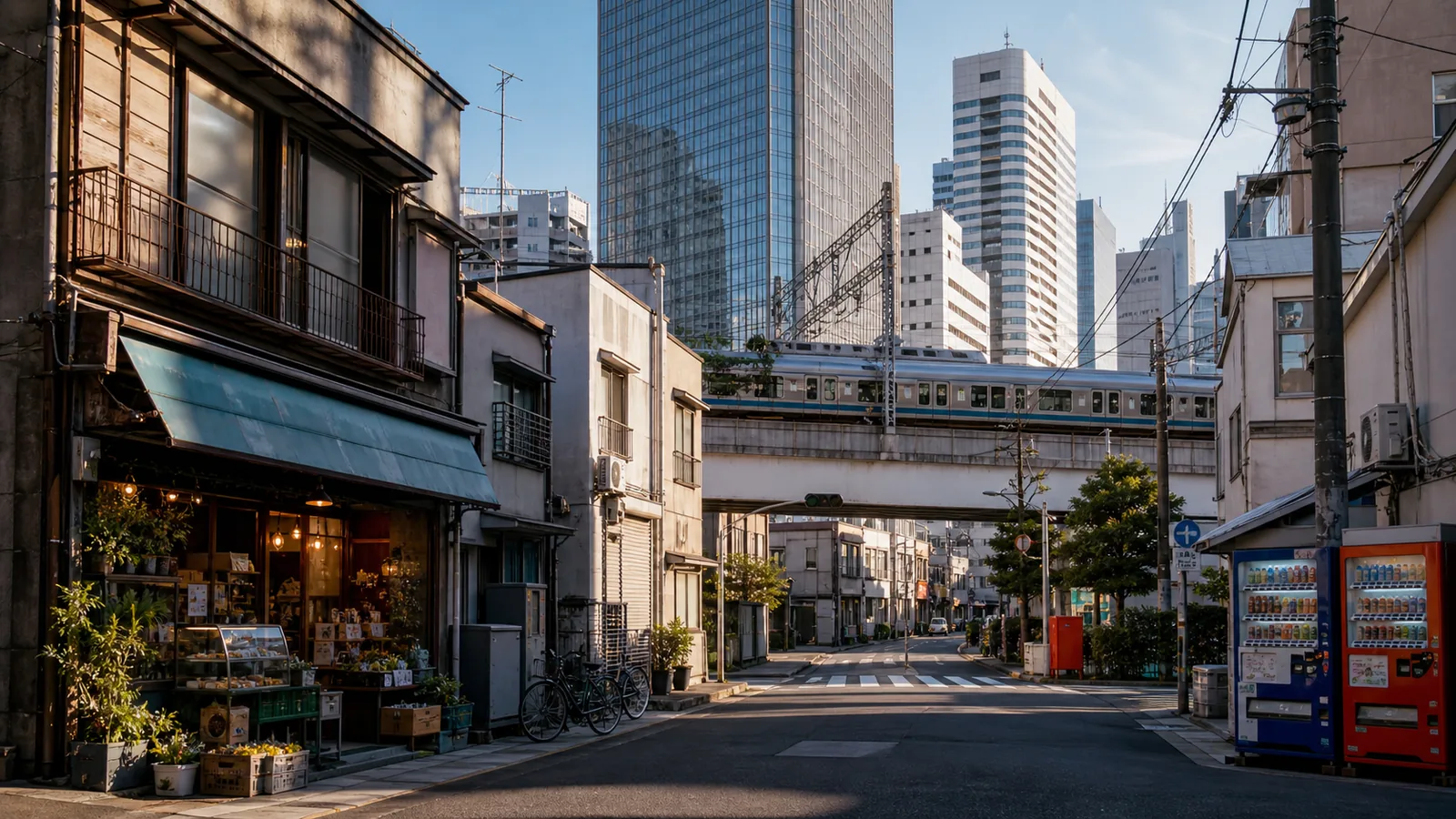
From WWII Defeat to Reiwa: How Japan Became What It Is Today
How did Japan go from WWII rubble to what it is today? This guide walks through 80 years in 7 stages: 7 years of GHQ occupation, the 20-year economic miracle that made Japan #2 by 1968, the Plaza Accord bubble, the lost 30 years (Hanshin and 311 disasters included), Abenomics, the start of the Reiwa era, and the post-COVID weak-yen tourism boom. Includes the demographic crisis Japan still has to solve.
How Bushido Still Shapes Japanese Corporate Culture
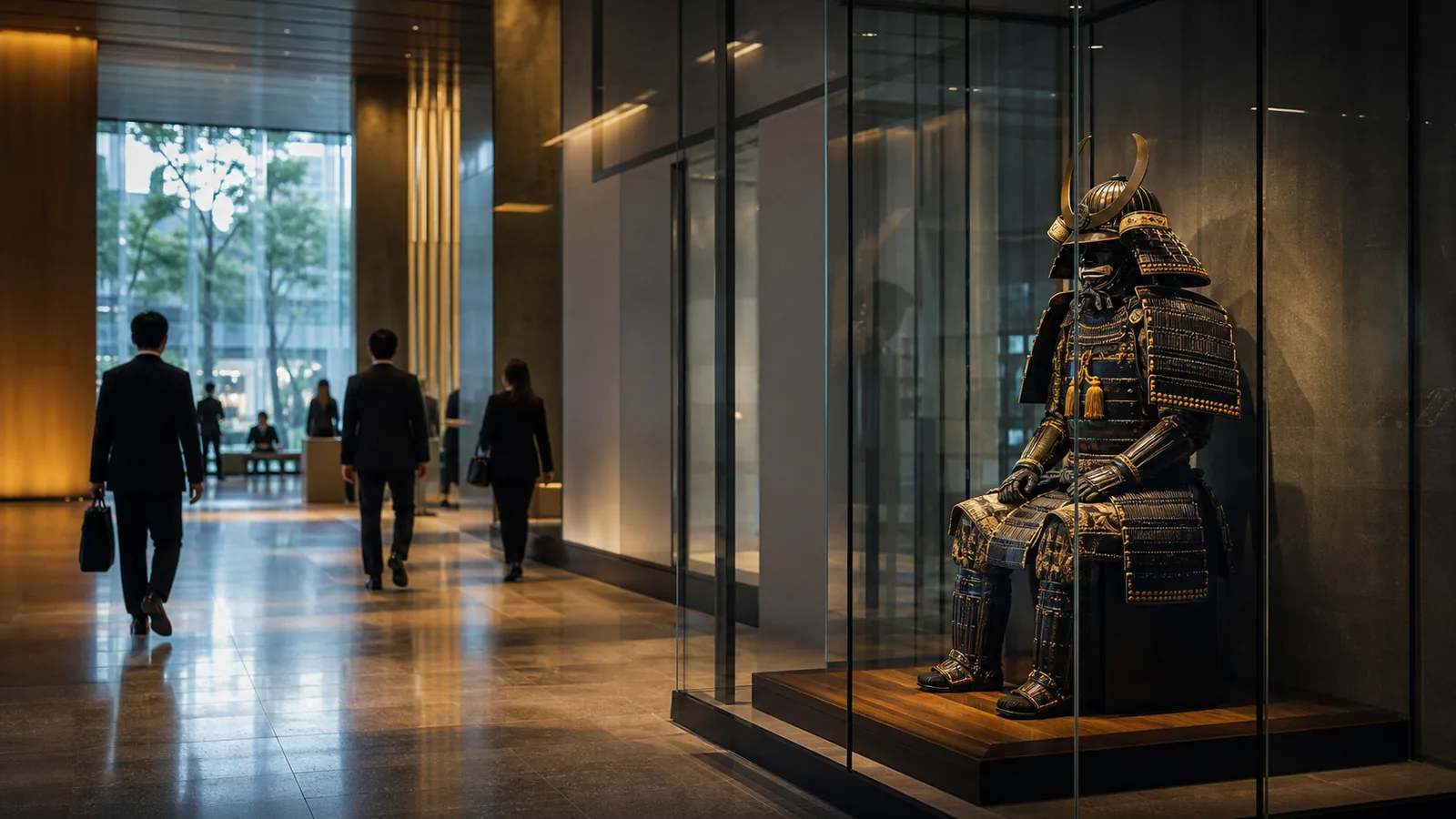
Why is Japanese work culture so unique? Lifetime employment, seniority-based promotion, karoshi, deep bowing, the gap between honne and tatemae. The answer is 800 years of bushido. This guide unpacks Nitobe’s eight bushido virtues and traces each one to a modern Japanese corporate practice, from Dentsu’s overwork tragedy to CEOs bowing 90 degrees on TV.
Sengoku Period 101: Nobunaga, Hideyoshi, Ieyasu, and Kyoto’s Defining Moments
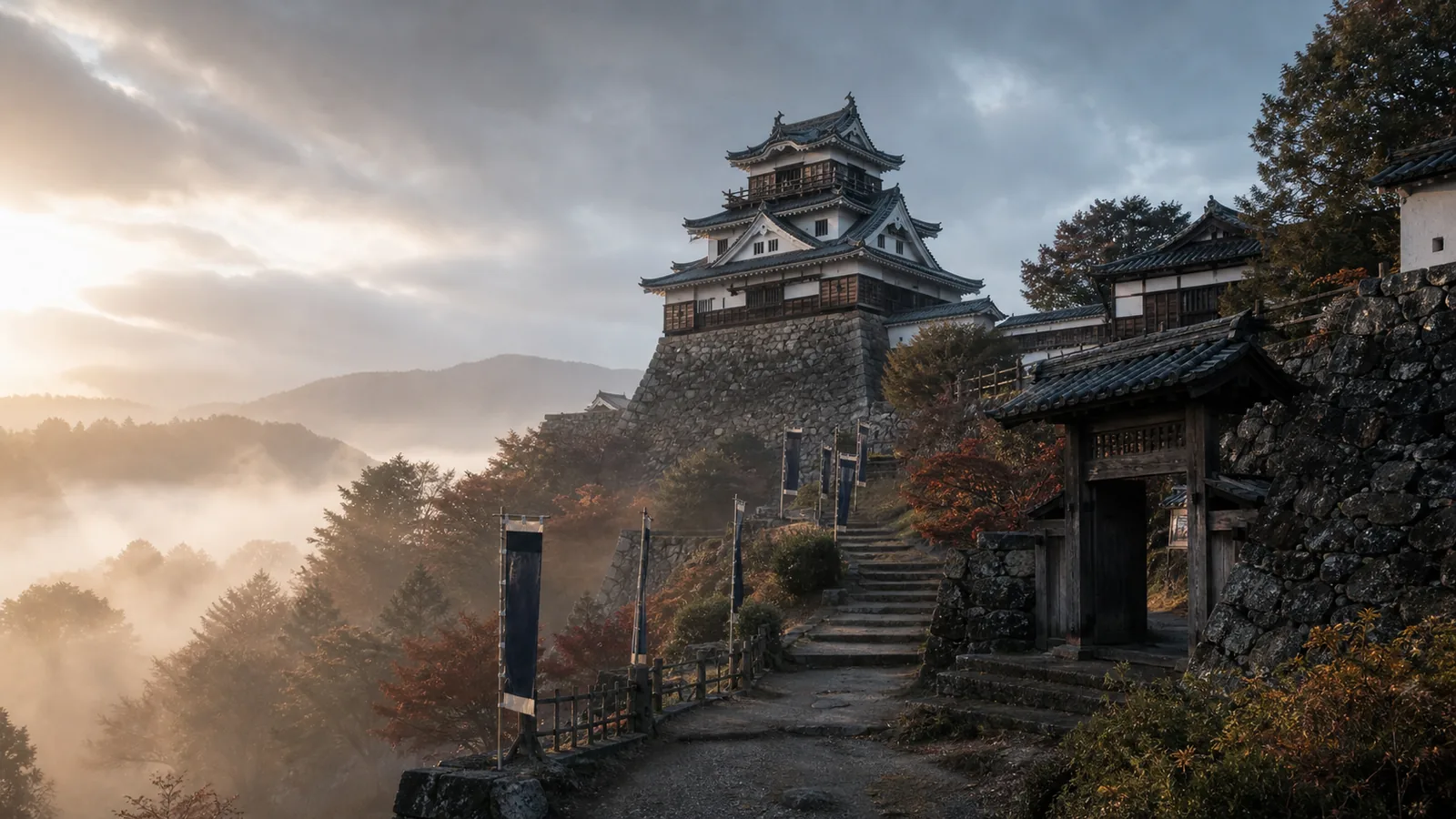
Japan’s Sengoku period spanned 136 years and centered on three giants: Nobunaga (ruthless, killed at Honno-ji 1582), Hideyoshi (peasant-born unifier, died 1598), and Ieyasu (patient, opened Edo shogunate 1603). This guide breaks down each phase, the iconic battles (Honno-ji, Sekigahara, Osaka Summer Siege), and which Kyoto, Osaka, and Gifu sites let you stand on the actual ground today.
The Three Shogunates: Kamakura, Muromachi, and Edo Explained
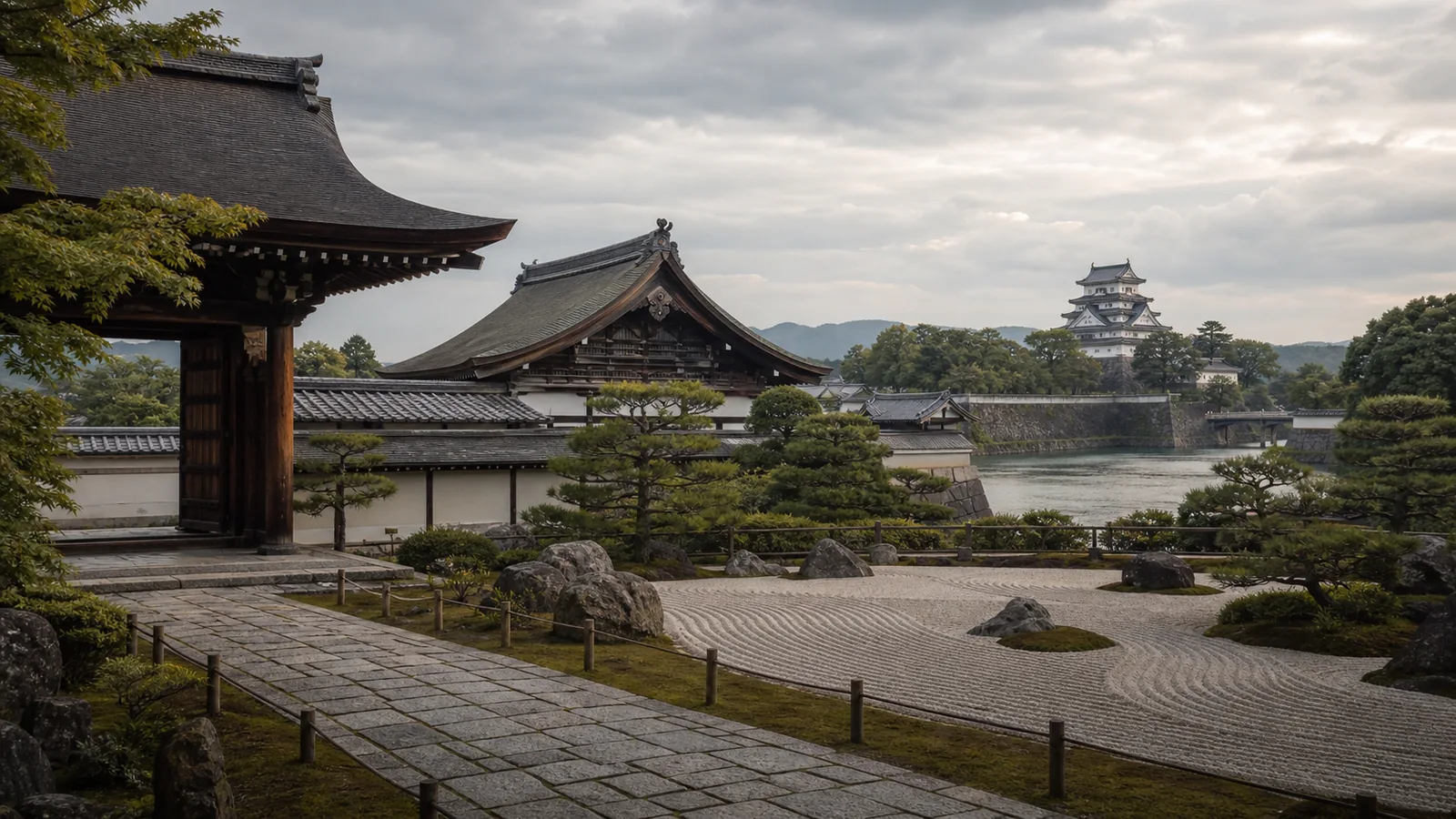
Japan was ruled by three military governments (shogunates) for a combined 680 years. Kamakura (1185-1333) was austere and warrior-focused, Muromachi (1336-1573) was lavish and gave us tea ceremony and Noh theater, and Edo (1603-1868) brought 265 years of stable isolation. This guide compares each shogunate’s ruling family, capital, style, and which sites in Kamakura, Kyoto, and Tokyo let you stand in each era today.
Carry-On Rules for Japan Flights: Food, Liquids, Power Banks
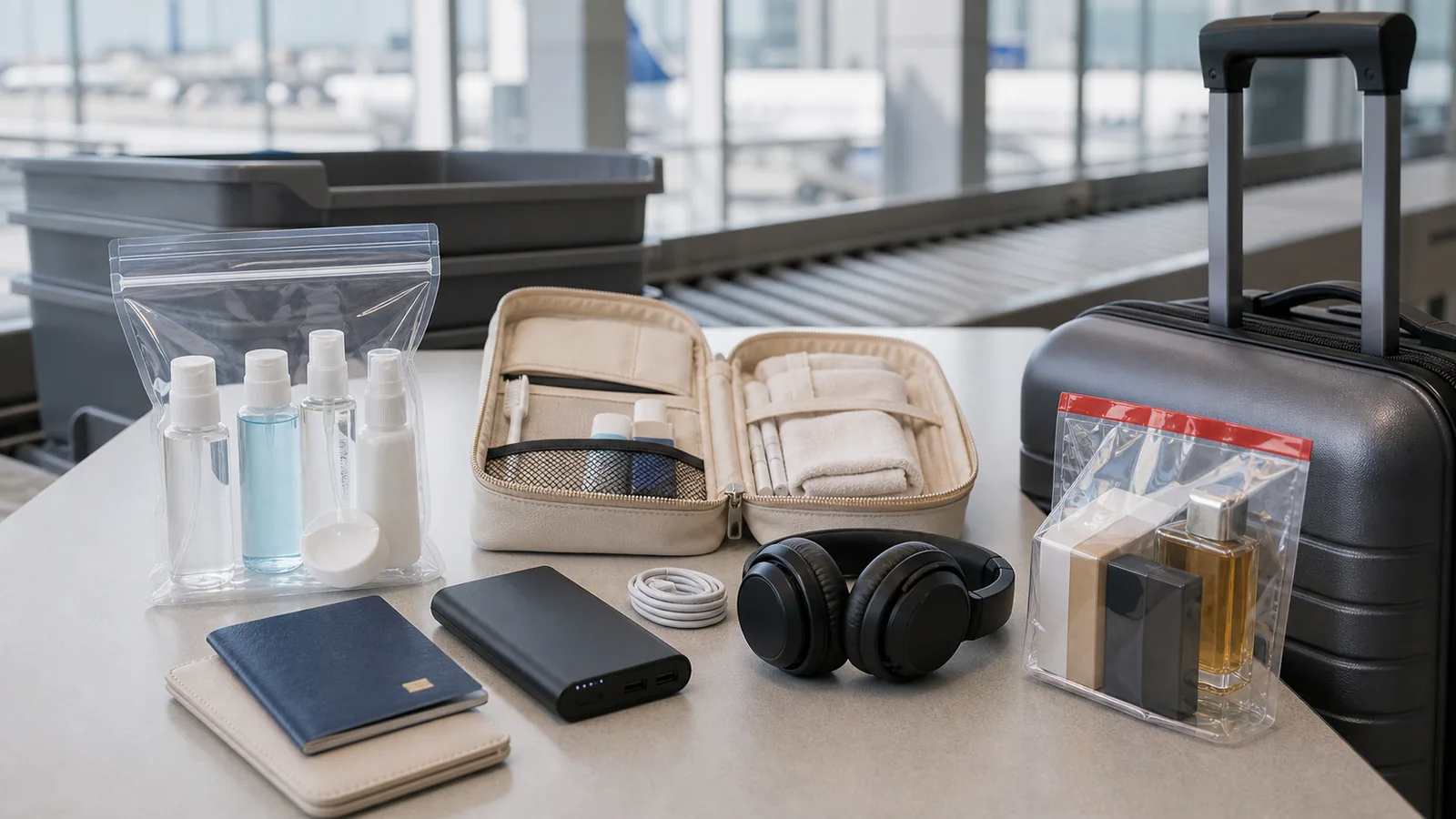
Carry-on rules for Japan flights cover three categories: 100ml liquid limits (bottle capacity, not contents), power bank rules (carry-on only, never checked), and food restrictions (Taiwanese pork and beef products are banned and carry 50000 yen fines). This guide lists six common traps including the bottle-capacity rule that catches even half-empty 200ml containers.
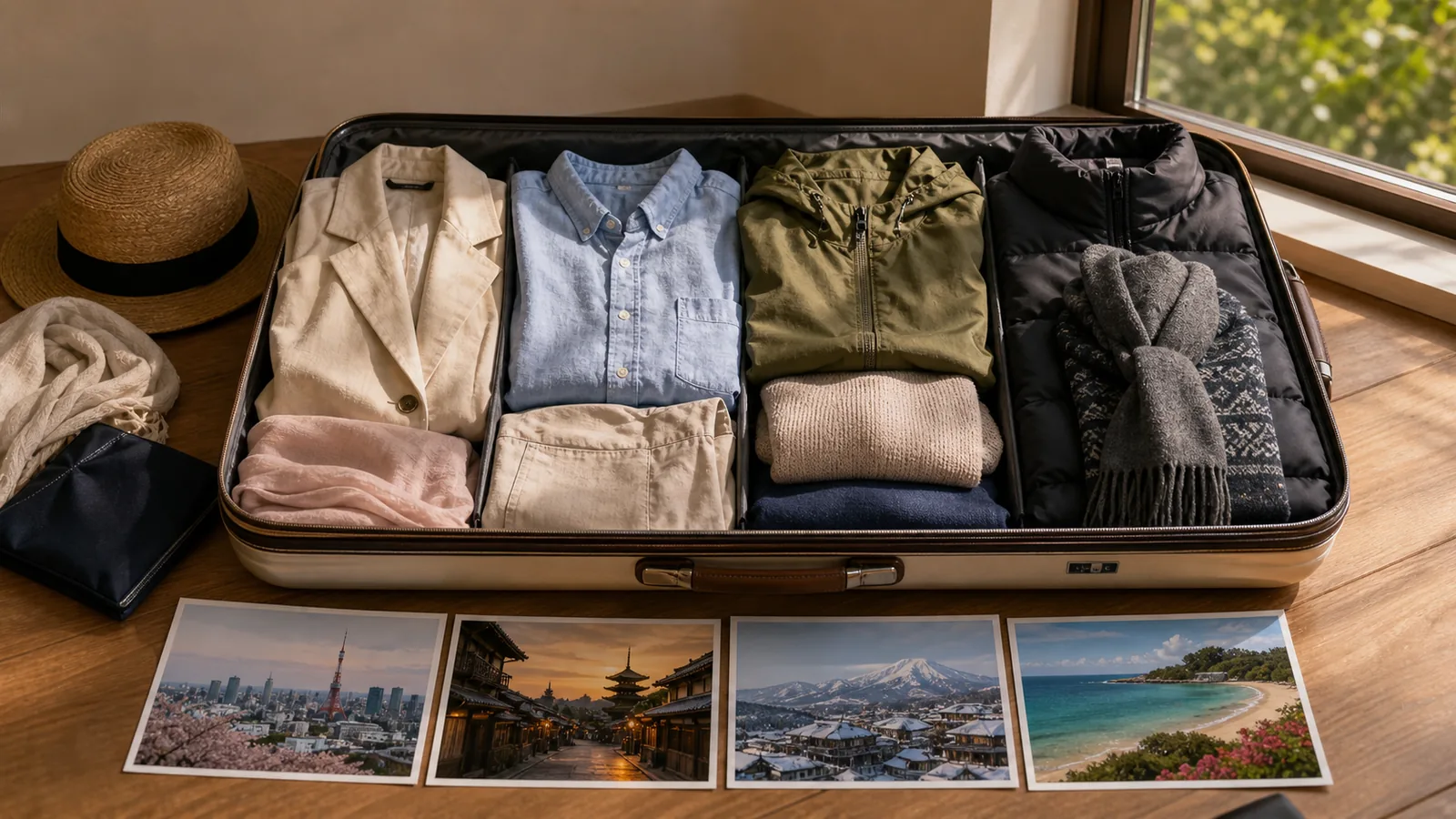
What to Wear in Japan: Season-by-Season Packing Guide
Japan temperature swings are huge: minus 5 in winter, 38 in summer. This guide covers what to wear by month and by region (Honshu, Hokkaido, Okinawa), with focus on winter snow boots, summer sun protection, and rainy season waterproof shoes. Top rules: dress in layers because indoor heating and AC run hot, and choose great walking shoes since 10000+ daily steps is normal.
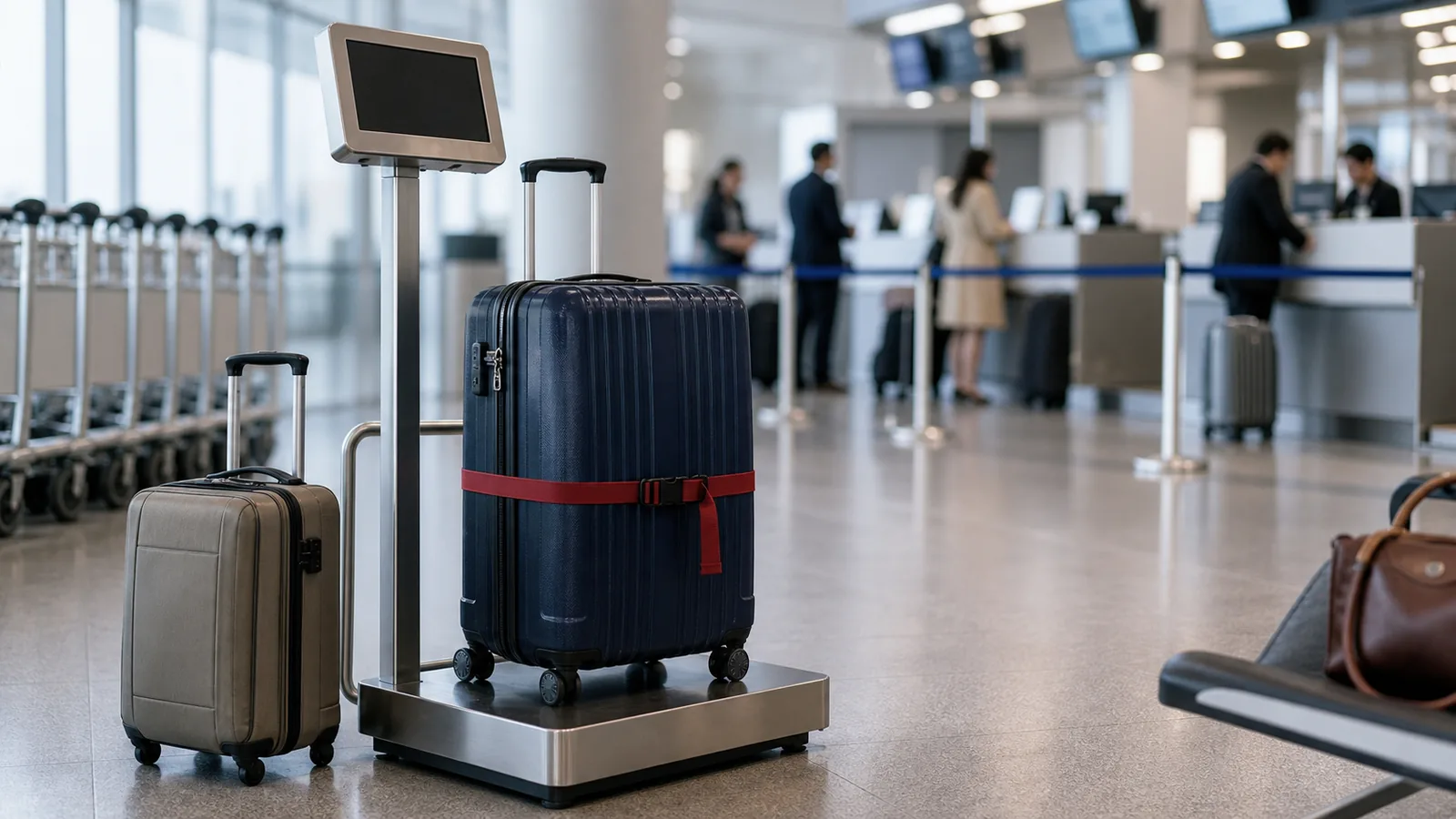
Japan Flights: Baggage Limits and Excess Fees by Airline
Japan flight baggage rules vary dramatically by airline. Full-service carriers like EVA, China Airlines, JAL include 23-30kg checked. Low cost carriers (Peach, Jetstar, Tigerair) charge 1500-4500 yen extra and charge double that at the airport. Excess fees can hit 3000 yen per kilogram. This guide compares 10 plus airlines and lists 7 tricks to dodge excess fees, including EMS shipping and wearing your heaviest coat on board.
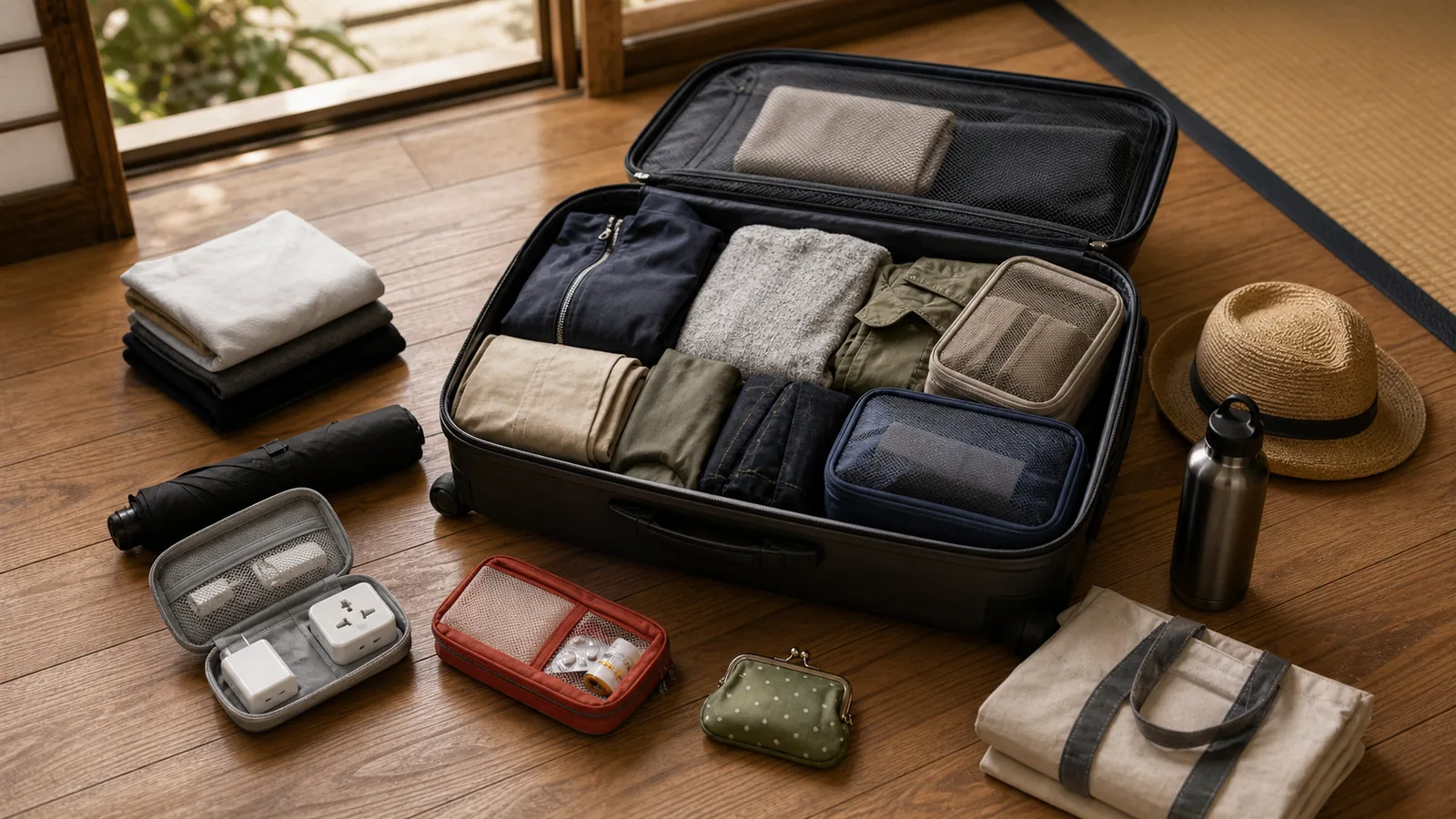
Japan Packing Do and Do Not: What Travelers Always Get Wrong
Packing for Japan goes wrong in two ways: forgetting essentials that cost triple in Japan, or overpacking and paying 10000 yen excess baggage. This guide gives 12 must-pack items, 8 to skip, and what to buy cheaper in Japan instead. Includes real traveler regret stories and a surprise: Taiwan plugs already fit Japanese sockets, but laptop three-prong adapters do not.
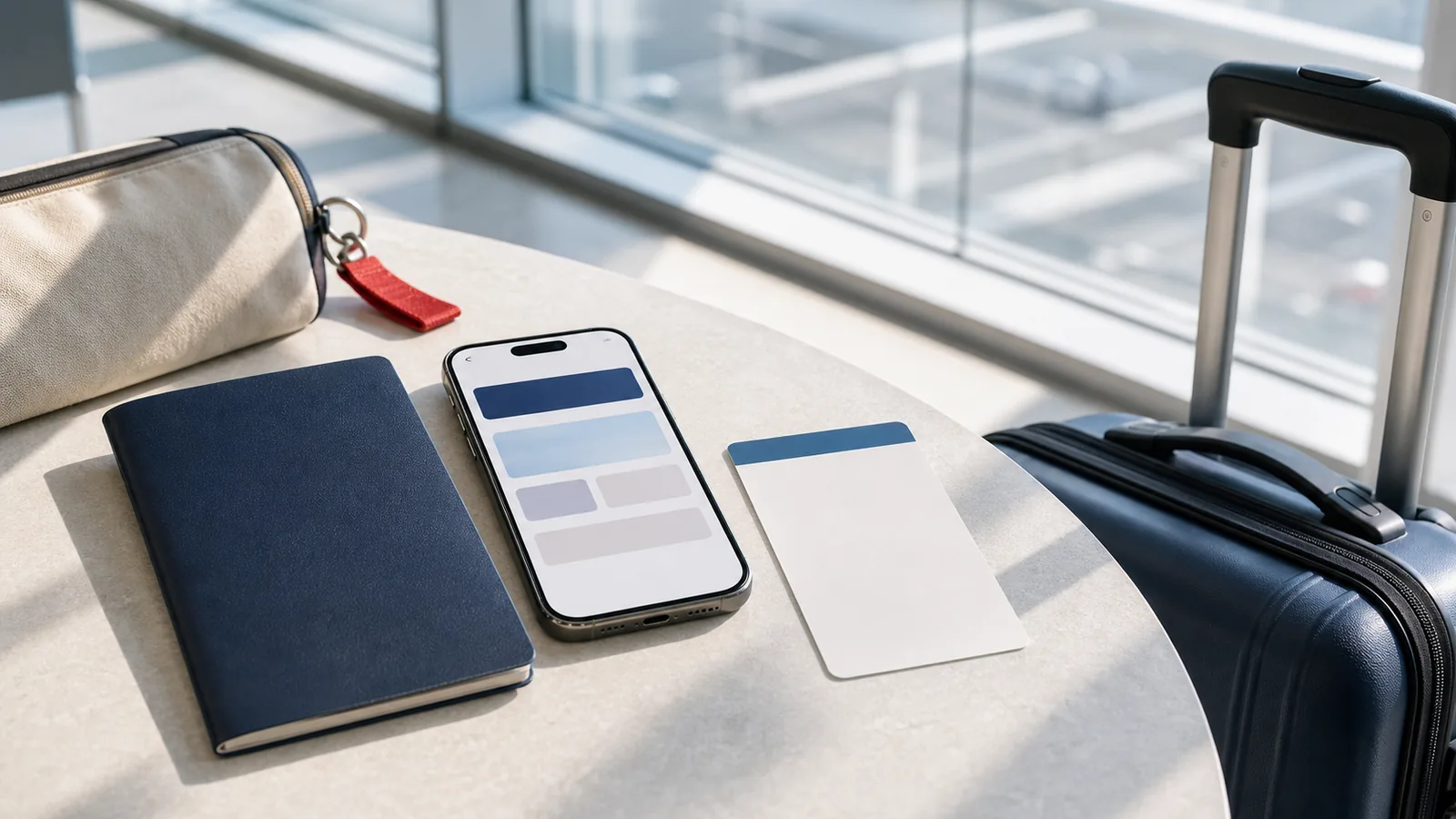
Japan Entry: Passport, Visa, and Arrival Form Step-by-Step
Taiwan passport holders get 90-day visa-free entry to Japan, but passport validity should be at least 6 months. This guide covers the full entry process: Visit Japan Web pre-registration with QR codes for 5-second clearance, immigration questions, customs declaration honesty rules (pork and beef are banned and lying brings 300000 yen fines), and what to do first after exiting. Get through arrival in 10 minutes.
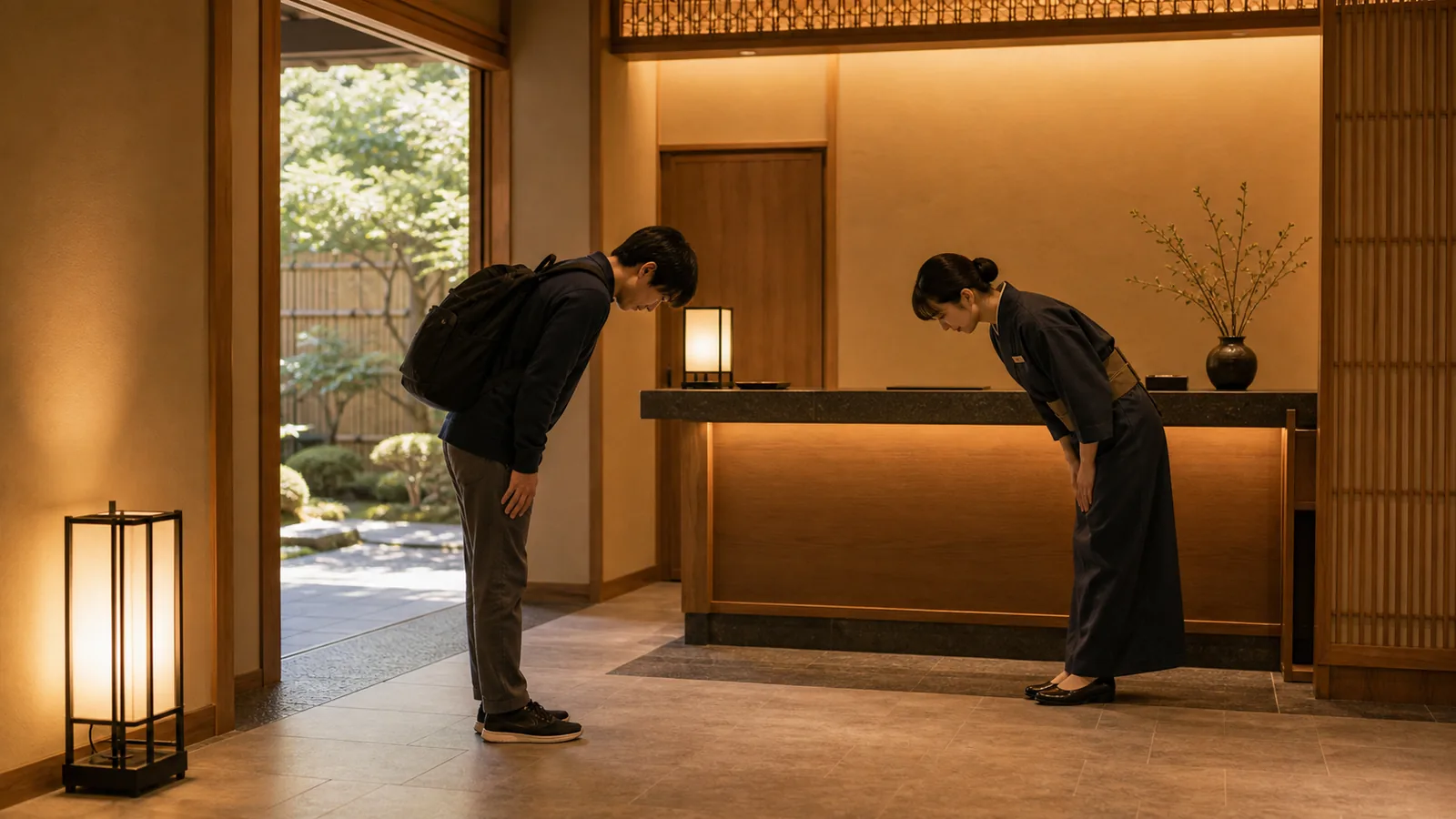
15, 30, 45 Degrees: Decoding the Hidden Language of Japanese Bowing
Japanese bowing is not one gesture — it is a precise language of respect. A 15-degree nod for daily greetings, a 30-degree bow for first meetings and shrines, a deep 45-degree dip for VIP guests and serious apologies. This guide decodes the meaning of each angle, the right posture and timing, why Japanese bow even on phone calls, and the one rule tourists need: a simple 15-degree nod plus a smile already scores 90 percent.
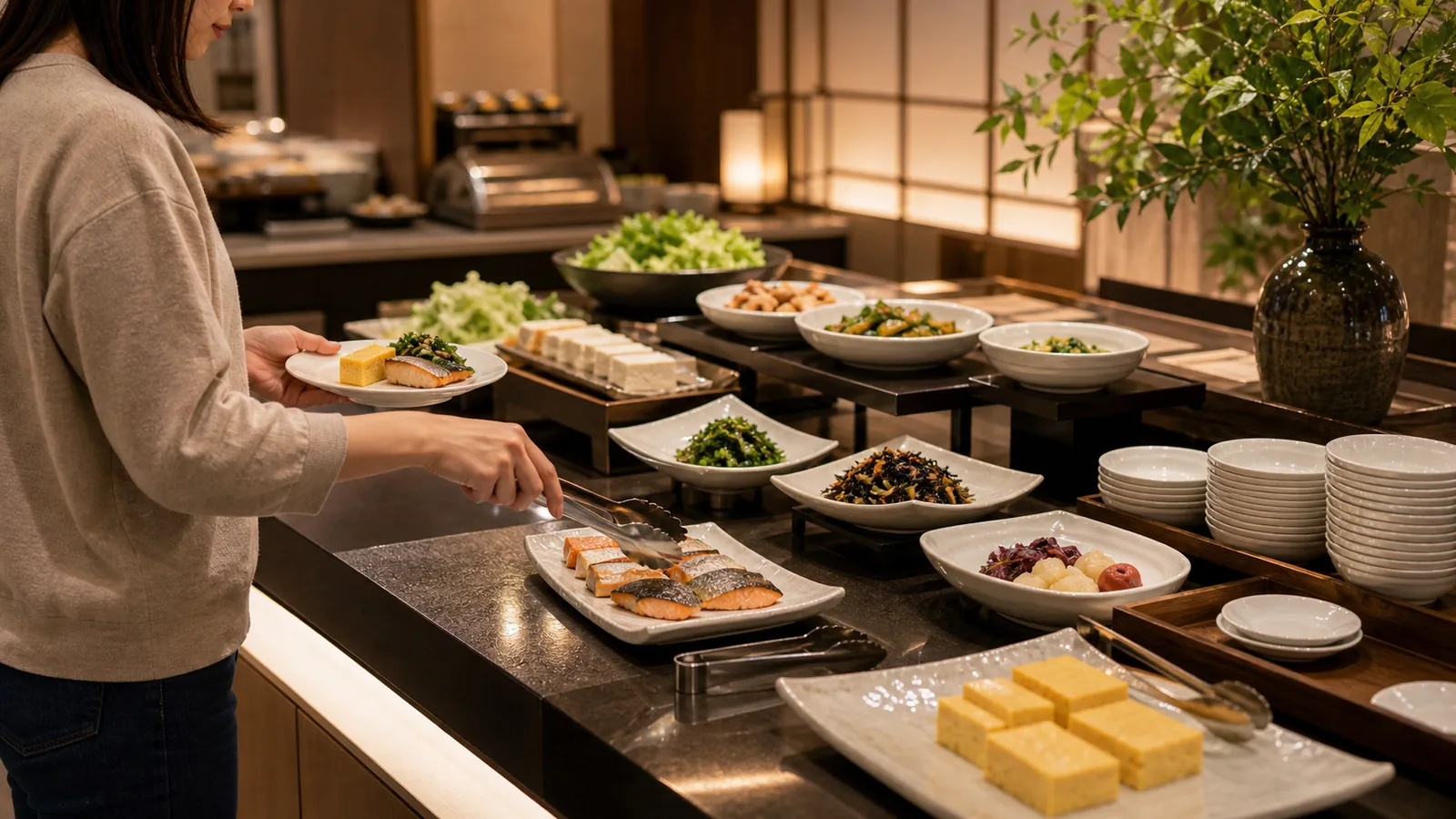
Hotel Buffet Etiquette in Japan: The Quiet Rules at the Counter
Japanese hotel buffets run on a quiet code most tourists violate without realizing. This guide unpacks 7 unspoken rules: always grab a fresh plate (no recycling the same one), never overstack food (waste is the deepest faux pas), use the tongs assigned to each dish, never grab with bare hands, follow the single-direction queue, stack used plates neatly, and end with a simple gochisousama deshita. Plus one pro tip: walk a full lap before grabbing a single plate.
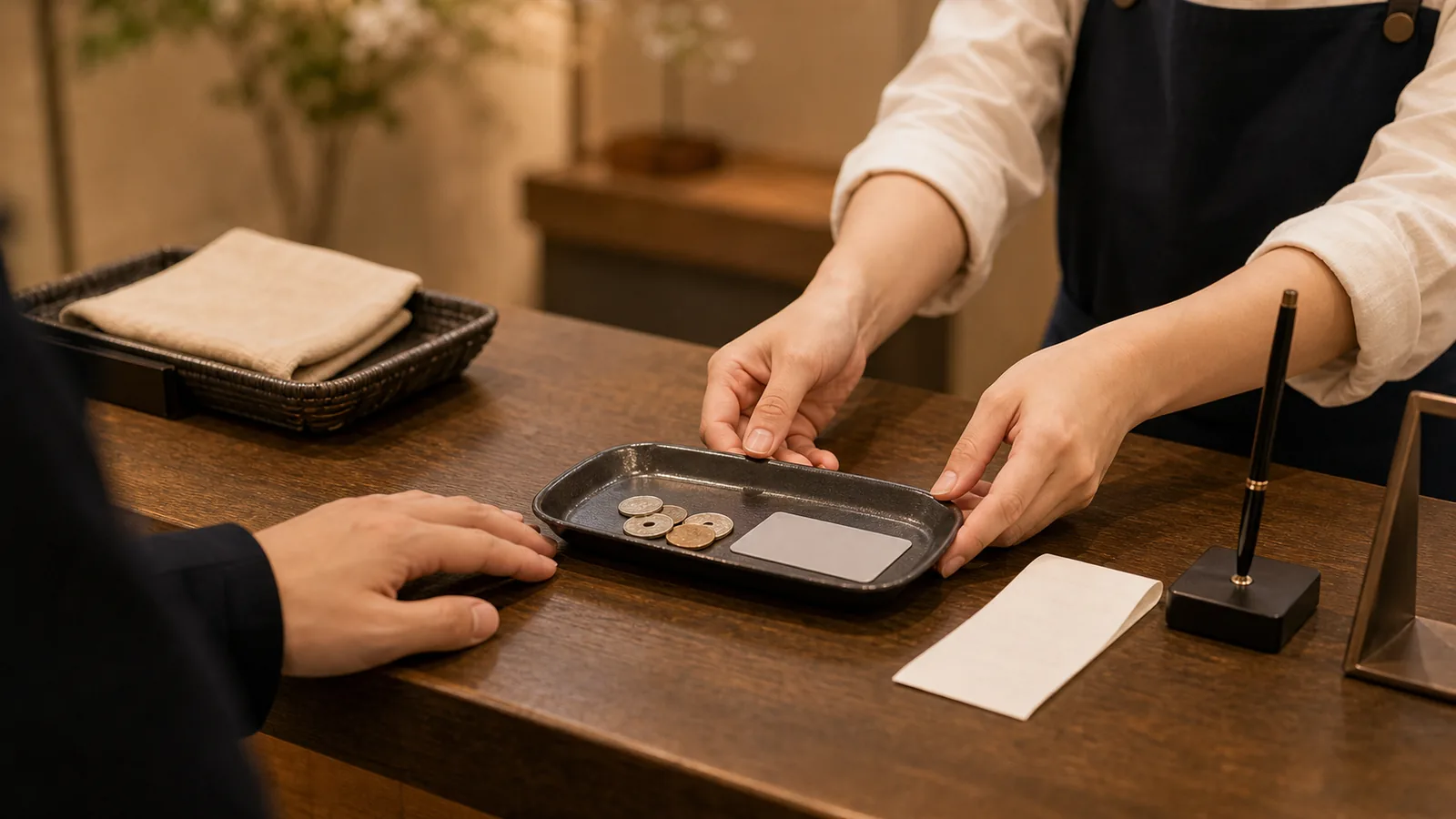
Why You Hand Cash on a Tray in Japan
In Japan you do not hand cash directly to the cashier — you place it on a small tray called a karuton. This guide explains why (hygiene, clear counting, dispute prevention, ritual distance) and walks through the 6 micro-steps of a proper checkout: when to pull out cash, how to lay bills face-up, the right way to scoop change from the tray, why you wait when a 10,000-yen note gets verified, and how high-end restaurants use a leather bill holder version.
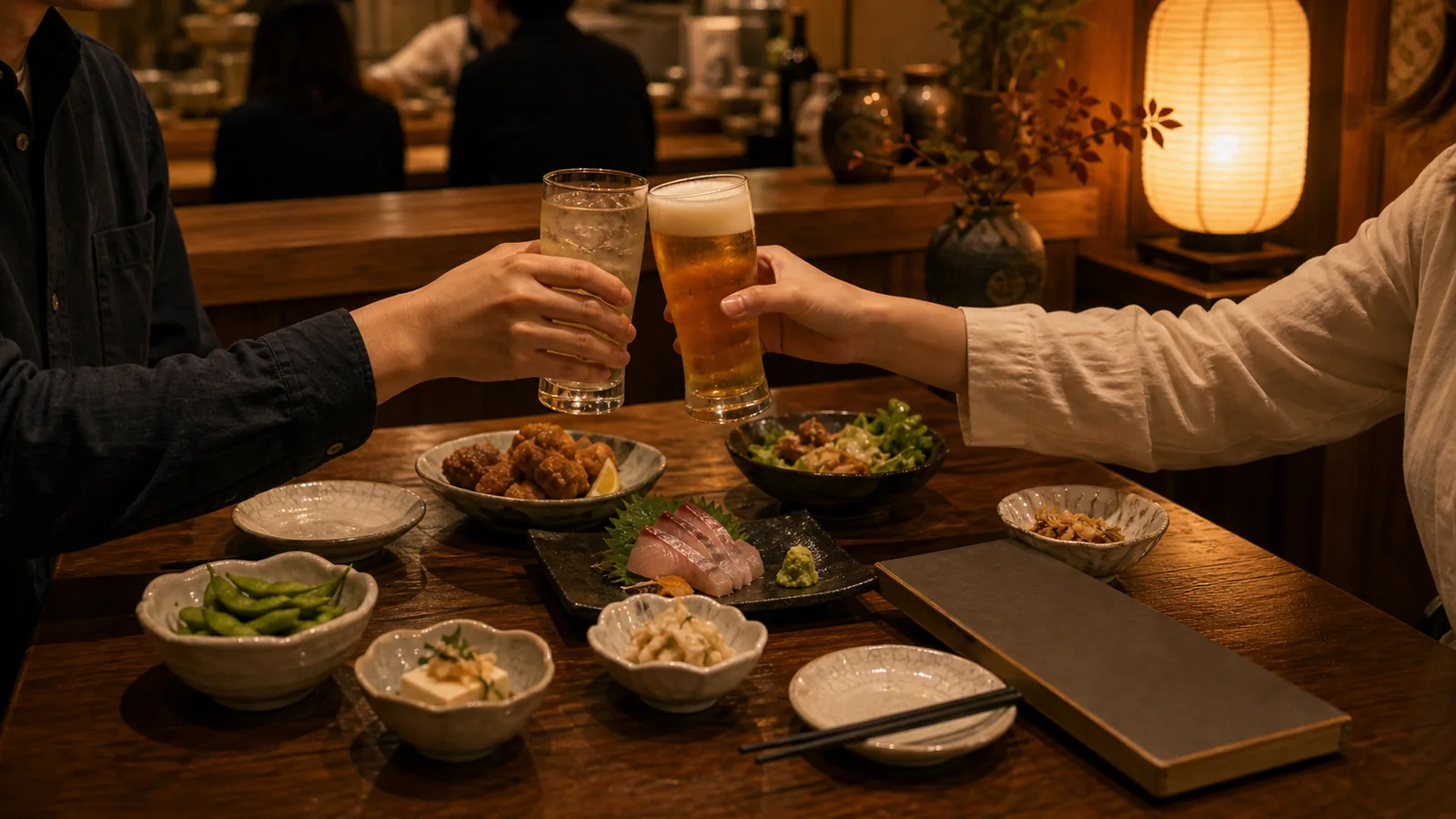
Inside the Izakaya: Unspoken Rules About Otoshi, Nomihodai, and the Check
Why did the bar charge you 500 yen for a small dish you never ordered? What are the hidden time limits in the all-you-can-drink menu? Why do Japanese tilt their cup lower when toasting? This guide unpacks 7 unspoken izakaya rules — otoshi, nomihodai traps, pouring etiquette, the no-tip rule, and the shime tradition — plus two newbie-friendly chain recommendations.
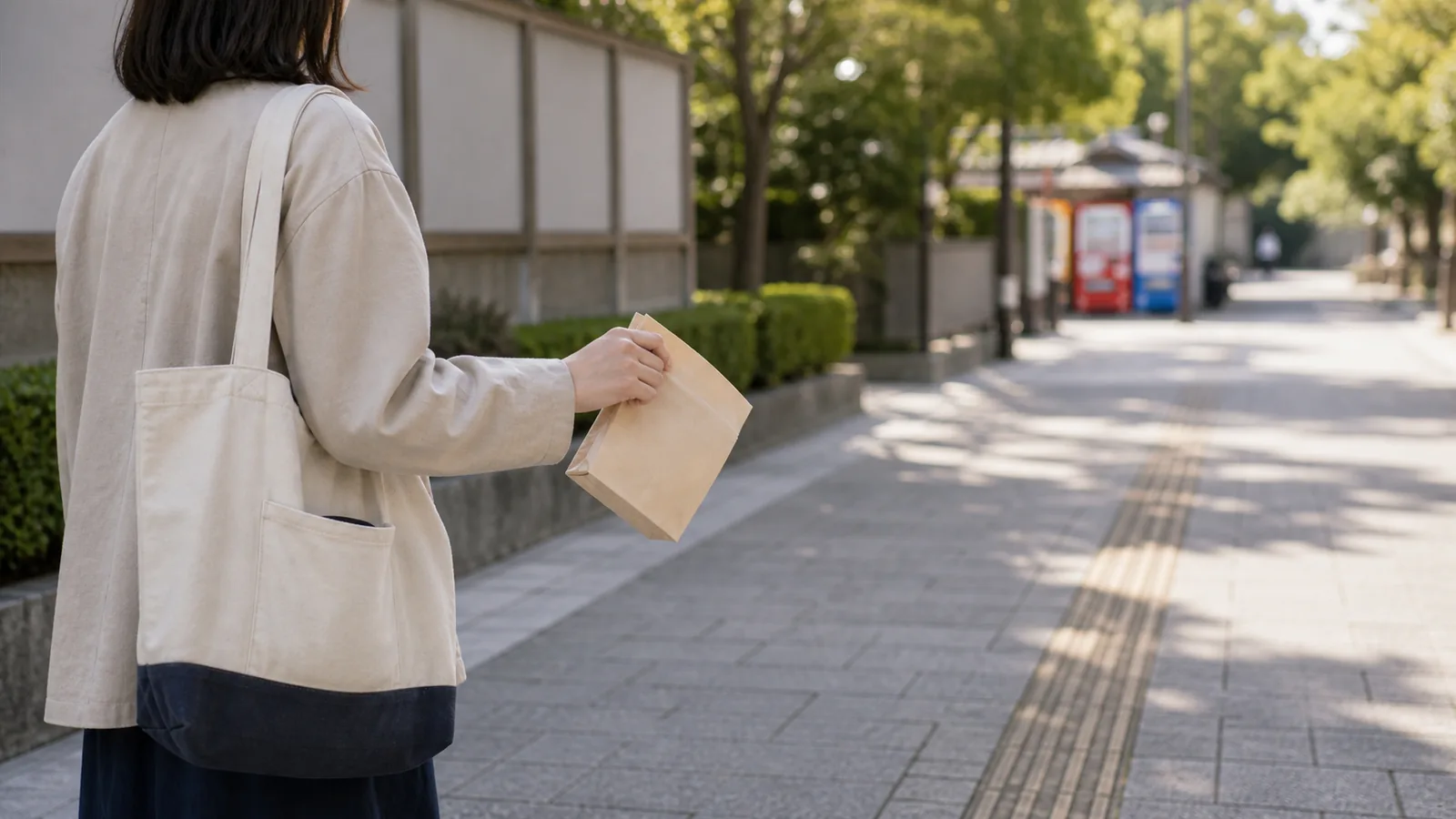
Why Japan Has No Public Trash Cans — and 7 Smart Ways to Handle It
Japan is astonishingly clean — yet you will struggle to find a public trash can. The reason traces back to a 1995 subway attack, a deep-rooted ethic of taking your trash home, and rising cleanup costs. This guide offers 7 practical strategies for handling rubbish on the go: convenience-store bins, vending-machine recycling, carrying a personal pouch, eating in place, separating PET bottles into three parts, and surviving long-term Airbnb sorting rules.
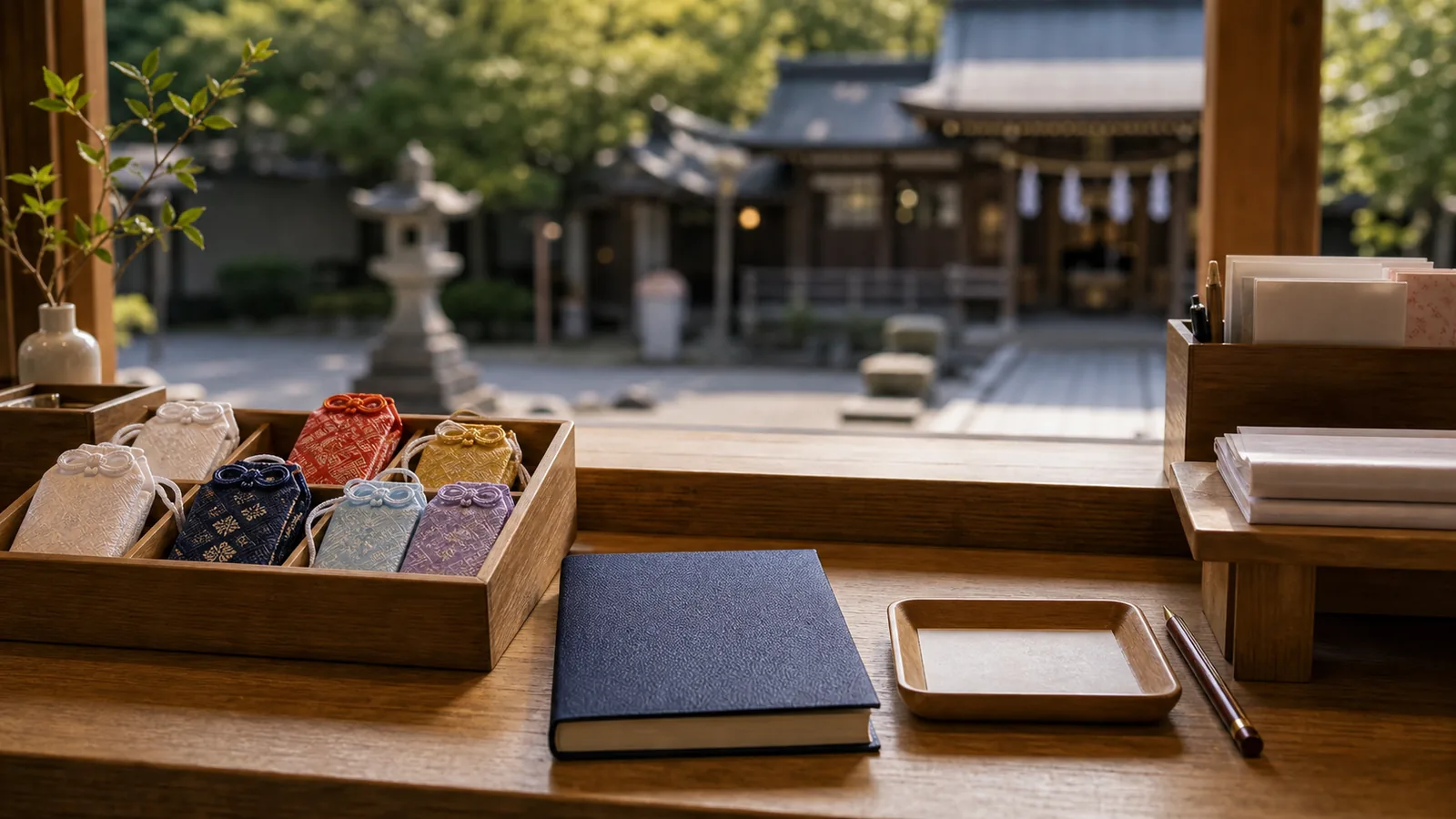
Omamori vs Goshuin: The Complete Guide to Japanese Shrine Souvenirs
Omamori charms and goshuin stamps are not just souvenirs — they are portable sacred objects with strict rules. This guide explains how to choose the right charm theme for your wish (love, study, health, business), match it to each shrine specialty (Kyoto Fushimi Inari for commerce, Tokyo Yushima Tenmangu for exams), and the etiquette for goshuin stamps: pray first, pay cash, never watch the calligrapher work, and keep shrine and temple books separate. Plus how to retire expired charms after one year.
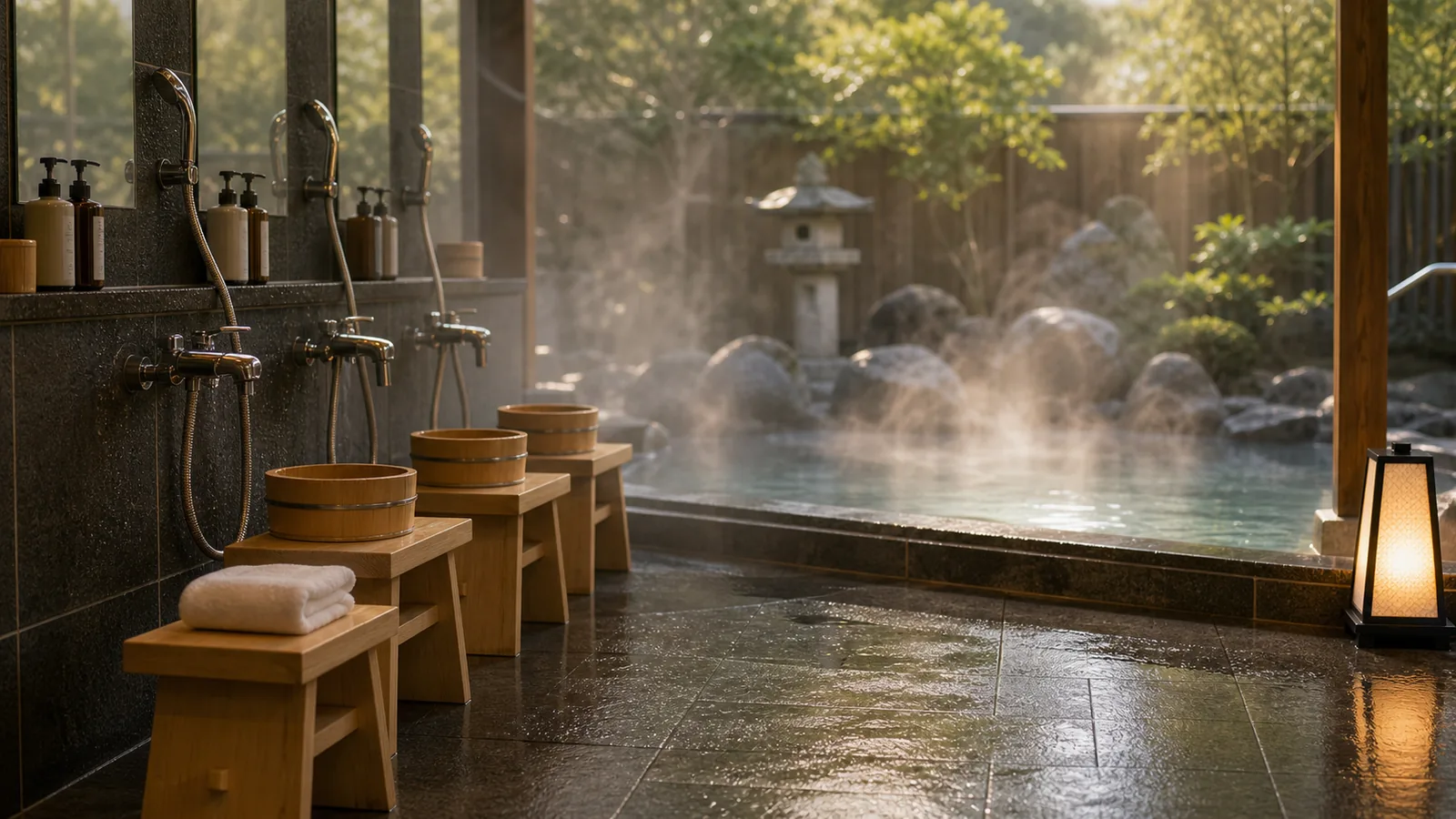
Japanese Onsen Etiquette: 5 Things You Must Do Before Stepping In
Wearing a swimsuit, skipping the pre-rinse, or dipping your towel in the pool — these are the three fastest ways to ruin your first Japanese onsen experience. This guide walks through the 5 essential steps before you step in (full undress, kakeyu warm-up, scrubbing at the washing station, no towel in pool, slow entry), plus what to do about tattoos and how to break in via a private bath.
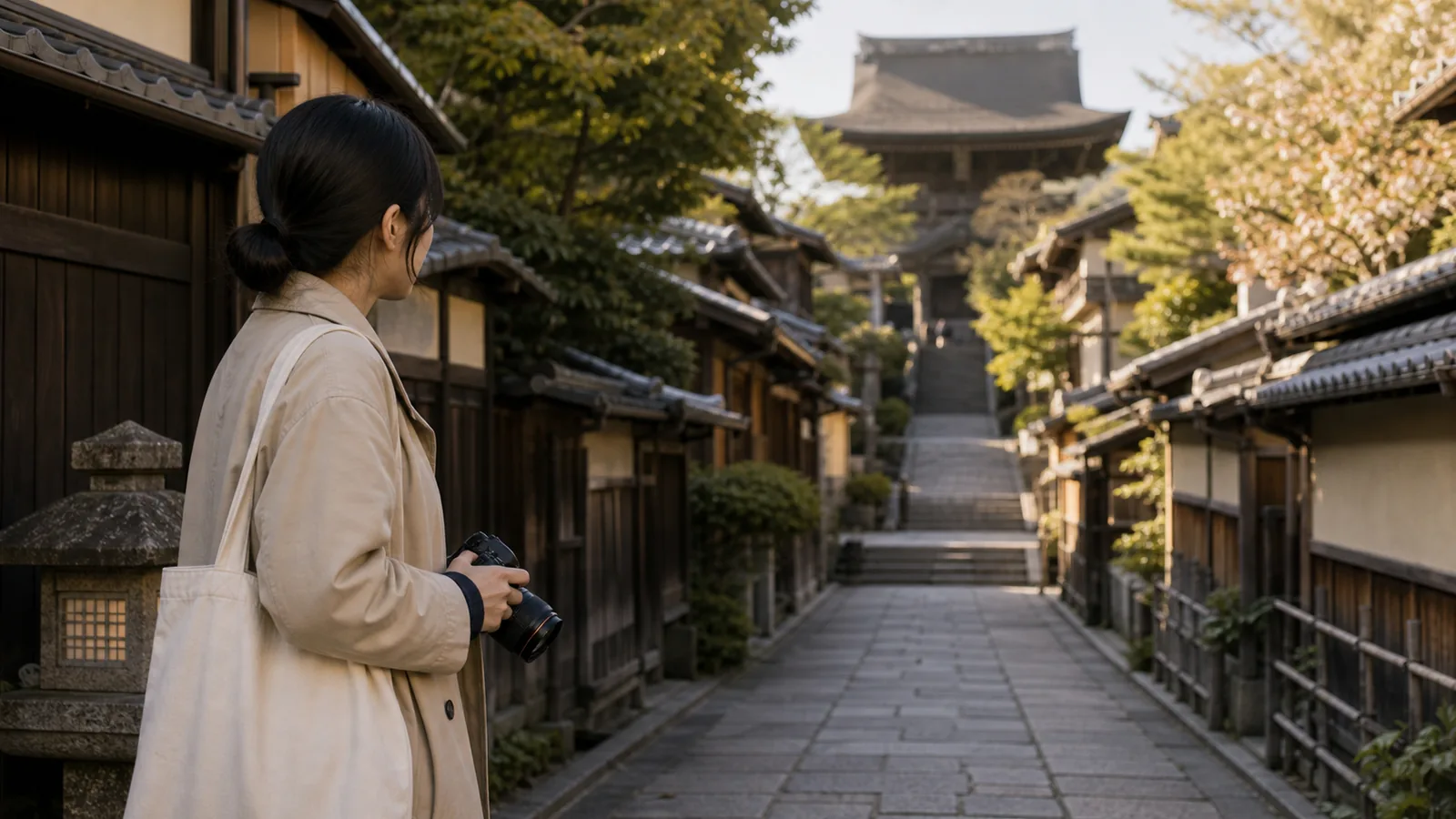
Photography Taboos in Japan: Shrines, Bars, and the Geisha Districts
Japan is a photographer paradise — but in some spots one click of the shutter can earn you a 10,000-yen fine or a crowd of angry locals. This guide marks 6 critical lines: shrine inner sanctums, the back lanes of Kyoto Gion (officially banned since 2019), high-end restaurant chefs, station turnstiles, strangers children, and ryokan common areas. Plus the one Japanese phrase that defuses 90 percent of awkward moments.
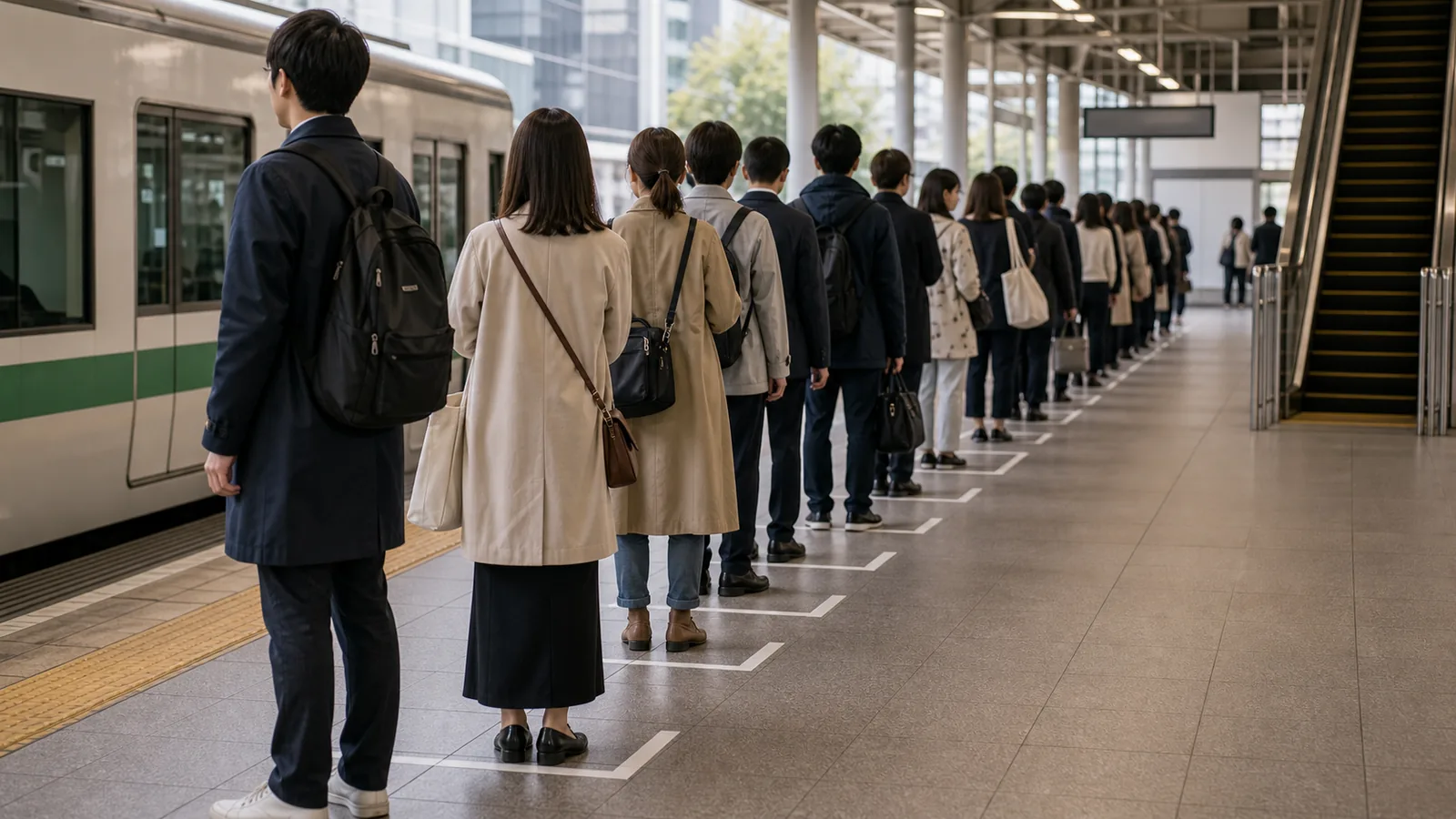
Why Japanese Queue Perfectly — Even for the Bathroom
Watching Japanese form perfect queues for the bathroom feels like witnessing a miracle. The truth: it is not government rules, but deep cultural conditioning going back to Edo. This guide explains 8 queueing principles tourists need to know — floor marks, the zero-tolerance for cutting, restaurant numbered tickets, vending-machine-first ordering, why Tokyo escalators differ from Osaka, and how to politely leave and rejoin a line.
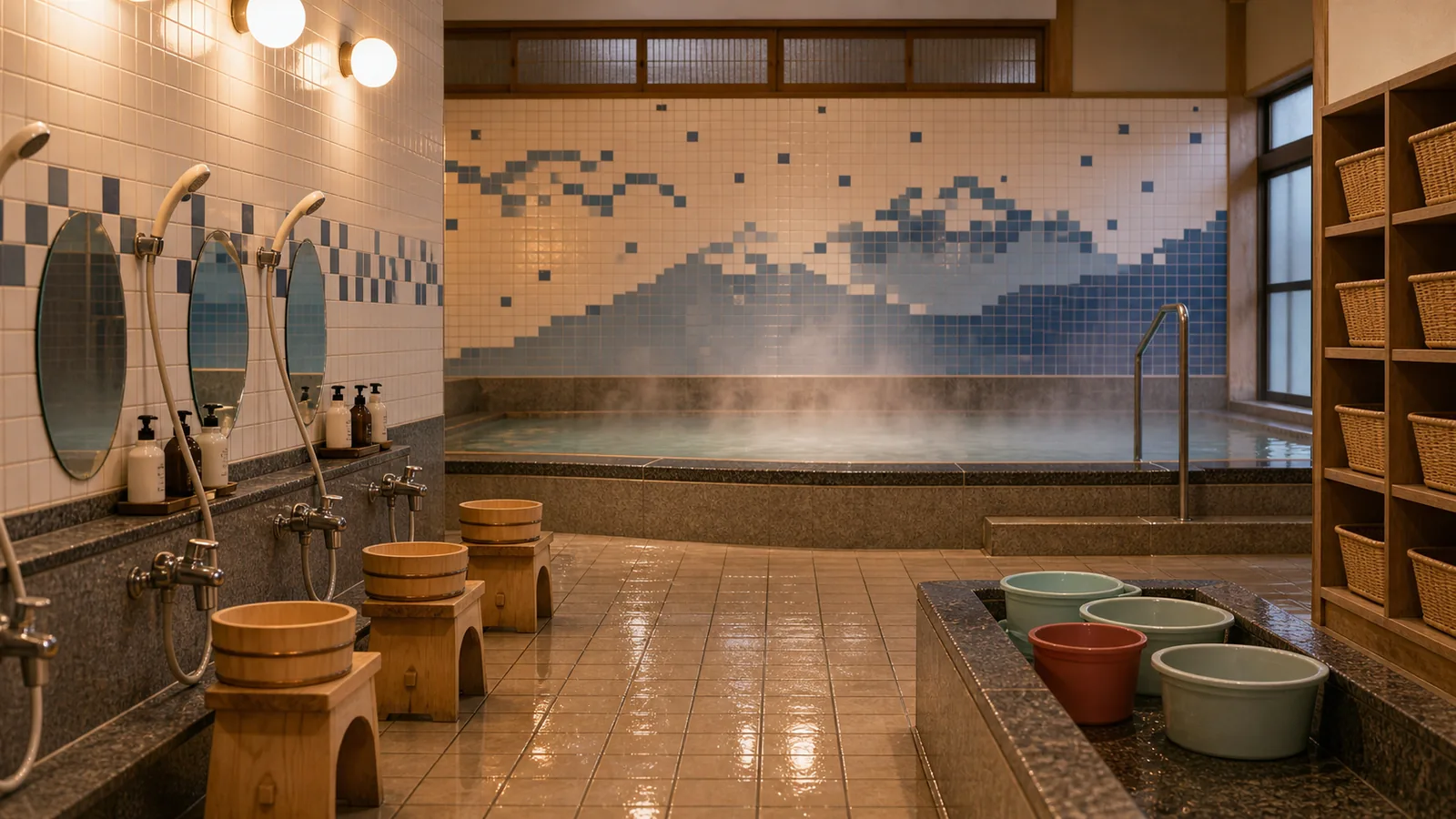
Sento 101: How a Tokyo Public Bath Differs from a Hot Spring
Sento are neighborhood public bathhouses, not necessarily natural hot springs. Tokyo adult admission is 550 yen through July 31, 2026, and 600 yen from August 1; towels, toiletries, and sauna access often cost extra. This guide explains the differences between sento and onsen, plus payment and bathing etiquette for a first visit.
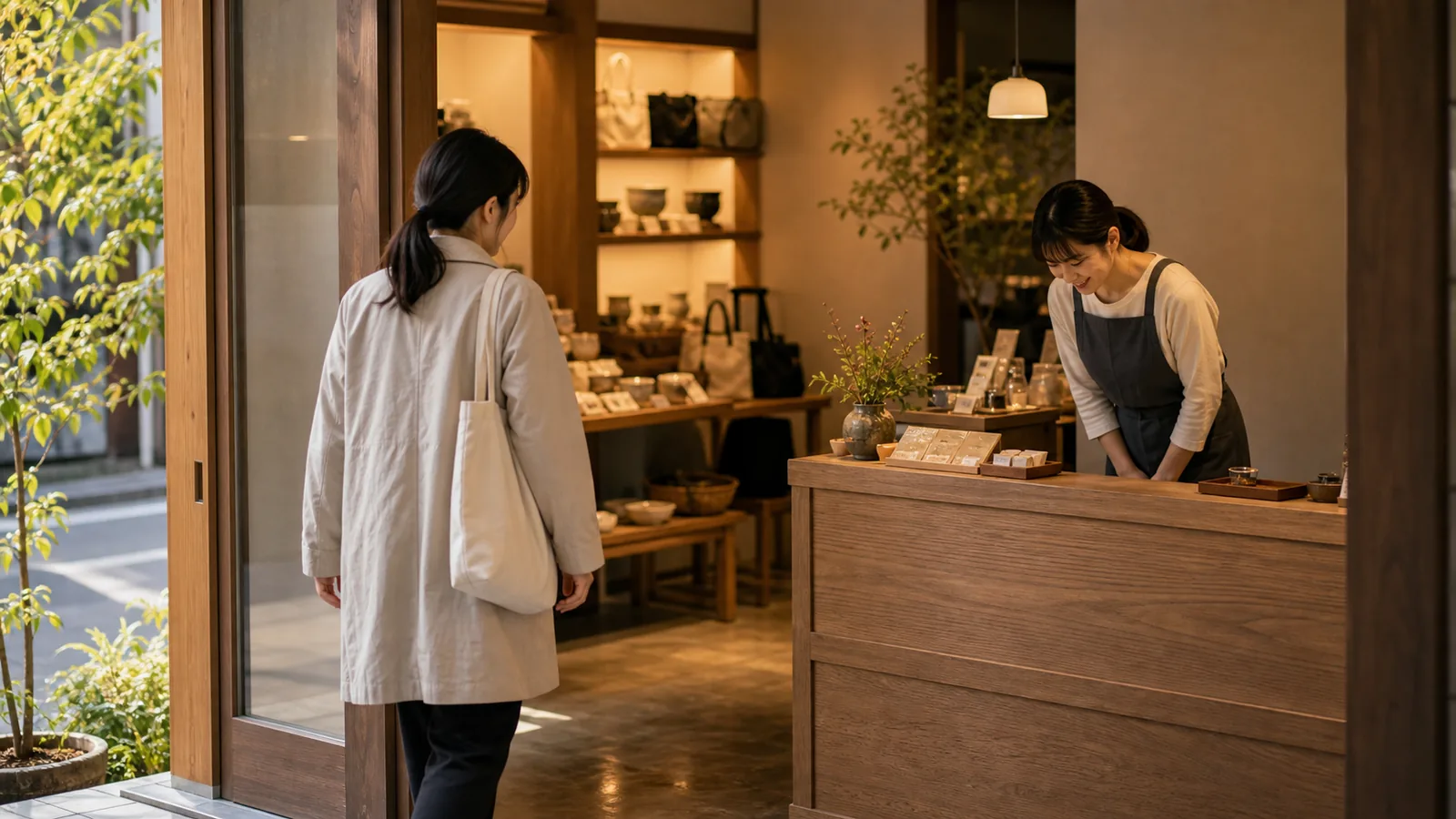
How to Respond to Irasshaimase: The Honest Answer for Tourists
Every shop greets you with a loud Irasshaimase. Most tourists panic — am I supposed to say something back? The surprising answer: nothing is required. This guide explains the cultural logic, when interaction is actually needed (restaurants ask your party size), how convenience stores handle the whole loop, and the cash tray ritual at checkout. By the end you will glide through any shop in Japan without a single awkward moment.
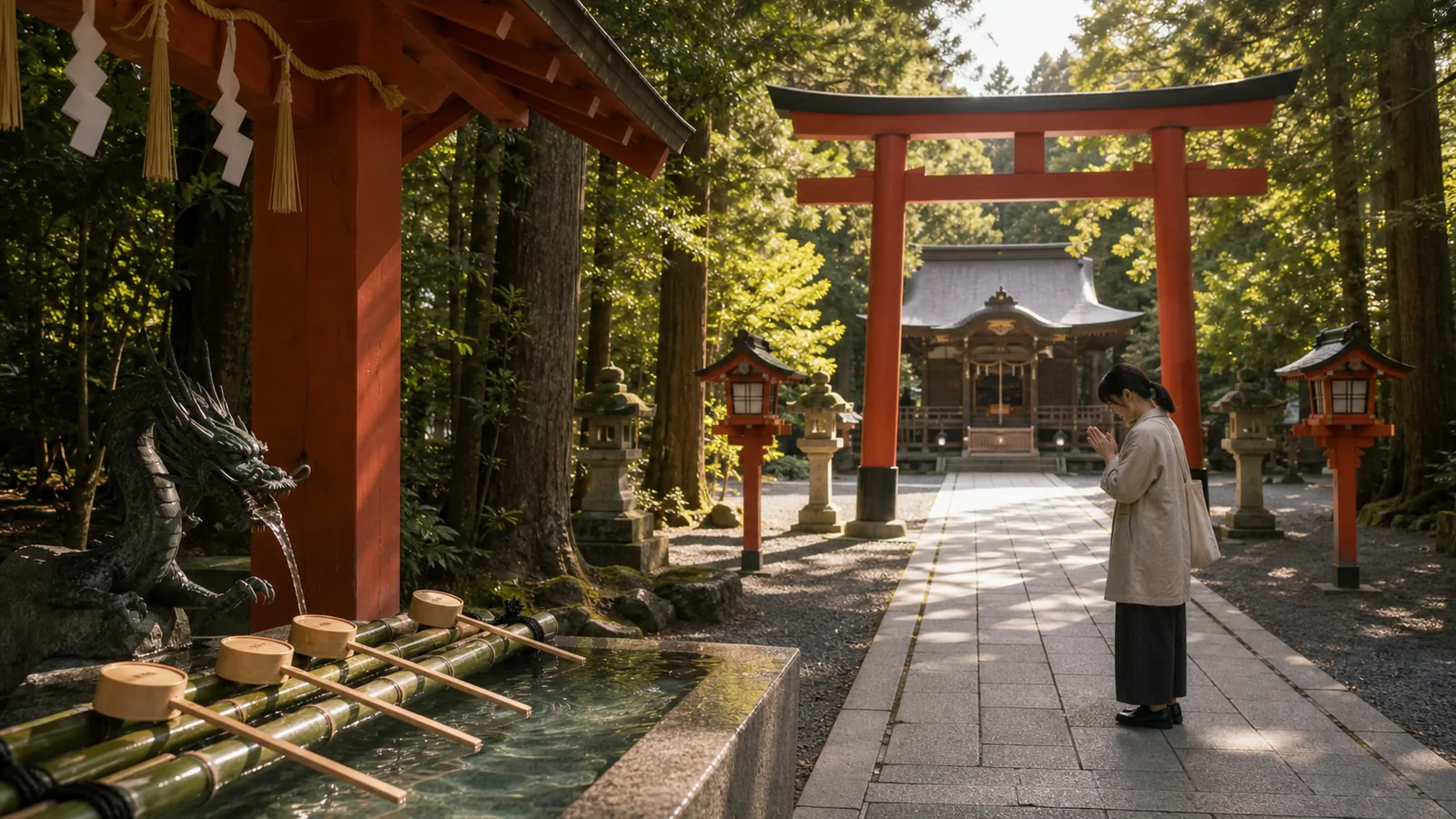
How to Visit a Shinto Shrine the Right Way
Worried about getting Japanese shrine etiquette wrong? Even small slips mark you as a careless tourist. This guide breaks down all 6 steps: bowing at the torii, purification at the temizuya, why 5-yen and 10-yen offerings have opposite meanings, the iconic two-bows-two-claps-one-bow ritual, and how it differs from Buddhist temples — plus a pro tip for Fushimi Inari.
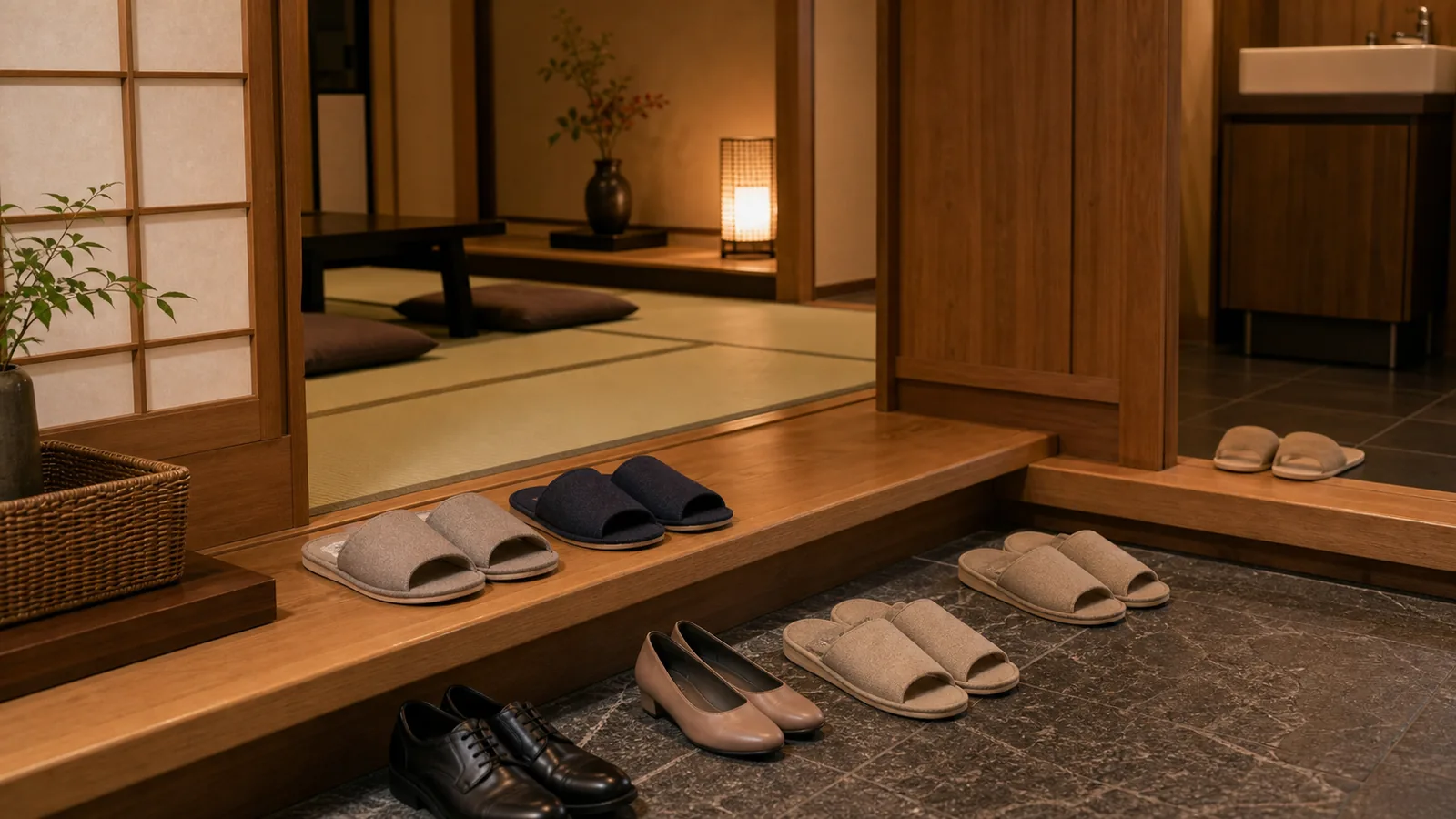
4 Slippers, 4 Rules: Japan Footwear Etiquette Decoded
Japan footwear etiquette can feel like a puzzle — change at the front door, again at the bathroom, off entirely for tatami mats. This guide walks through all four scenarios: the genkan entrance (toes pointing out), dedicated toilet slippers (never forget to switch back), tatami rooms where all slippers come off, and the 3-4 changes you make in a single ryokan stay. Plus one tip: pack good socks. Japan is a country that judges socks.
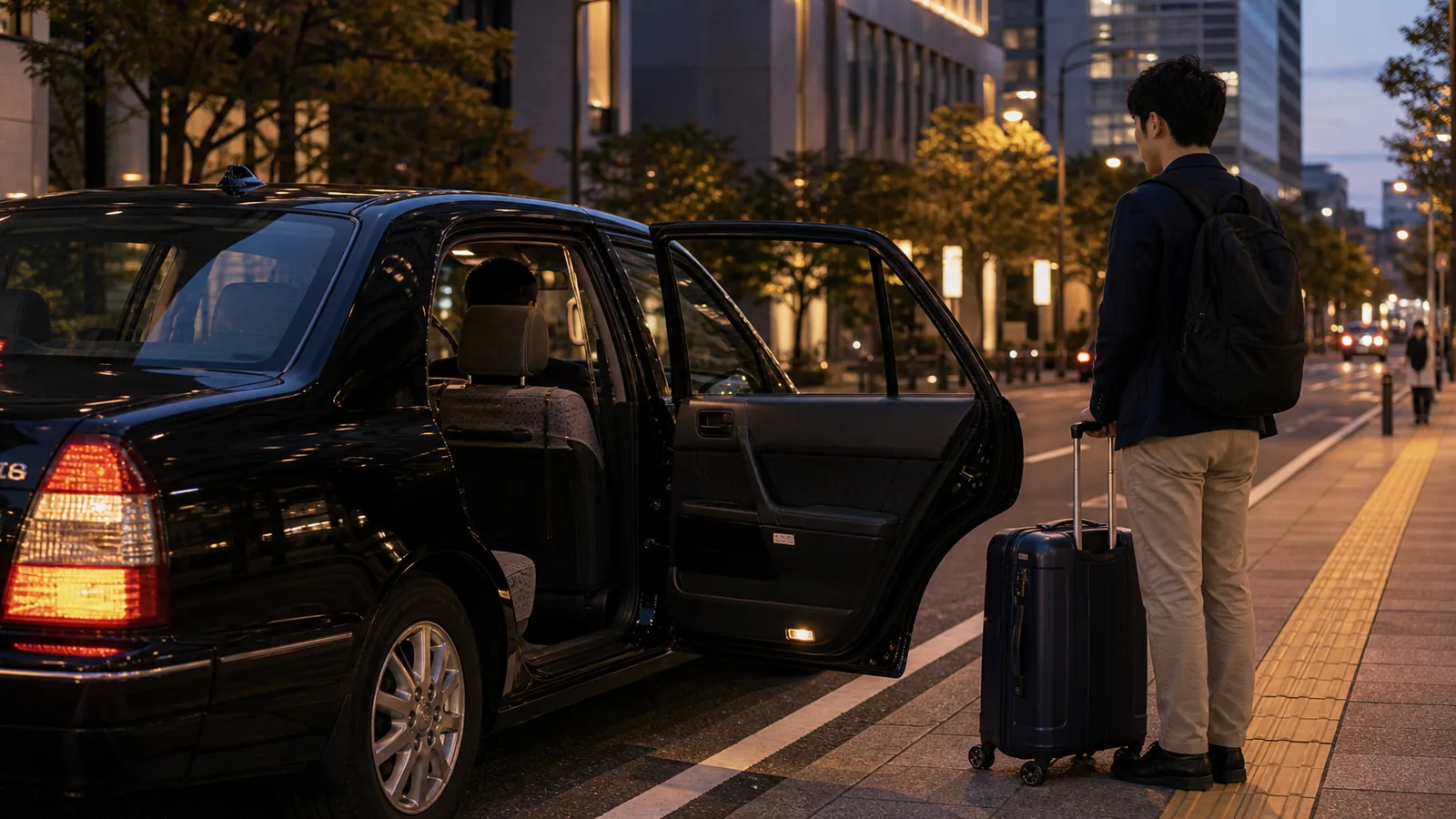
Do Not Touch That Taxi Door: 5 Hidden Rules of Japanese Cabs
The first mistake every tourist makes in a Japanese taxi: reaching for the door handle. Japanese cabs have automatic doors operated by the driver — touch the handle and you fight the mechanism. This guide unpacks 5 hidden rules: the auto-door system, taxi-light language for hailing, luggage etiquette, the no-eating-no-smoking-no-loud-calls rule, and payment (with the strict no-tipping standard). Plus a pro tip: always have your destination written in Japanese.
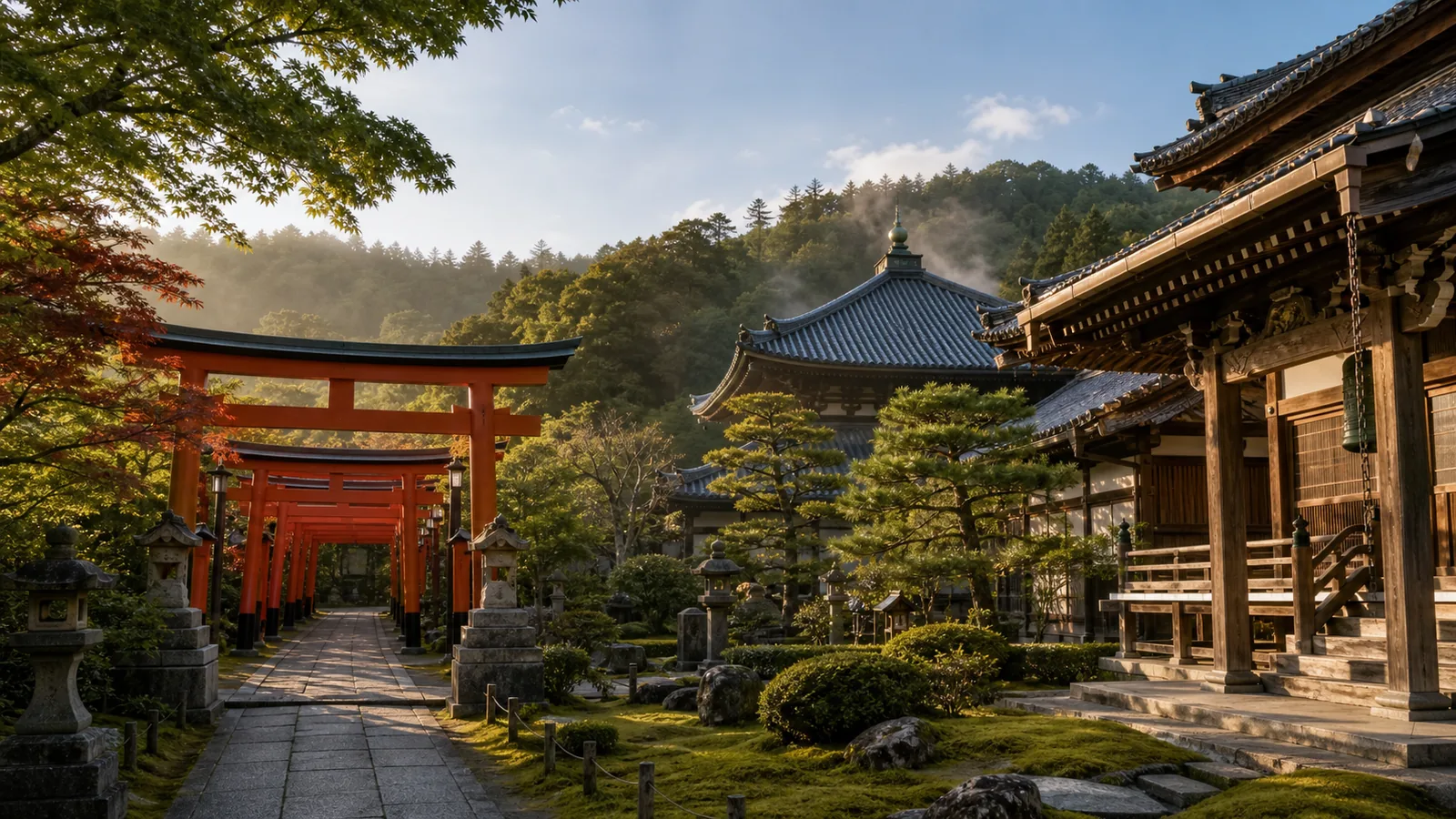
Temple vs Shrine in Japan: 8 Differences Tourists Always Mix Up
Clapping at a Buddhist temple is the fastest way to out yourself as a tourist. This guide unpacks 8 critical differences between Shinto shrines and Buddhist temples: entrance gates (torii vs sanmon), clapping rules, deities, charm styles, why you need two separate goshuin books, bells vs gongs, and photography rules — essential before walking Kyoto.
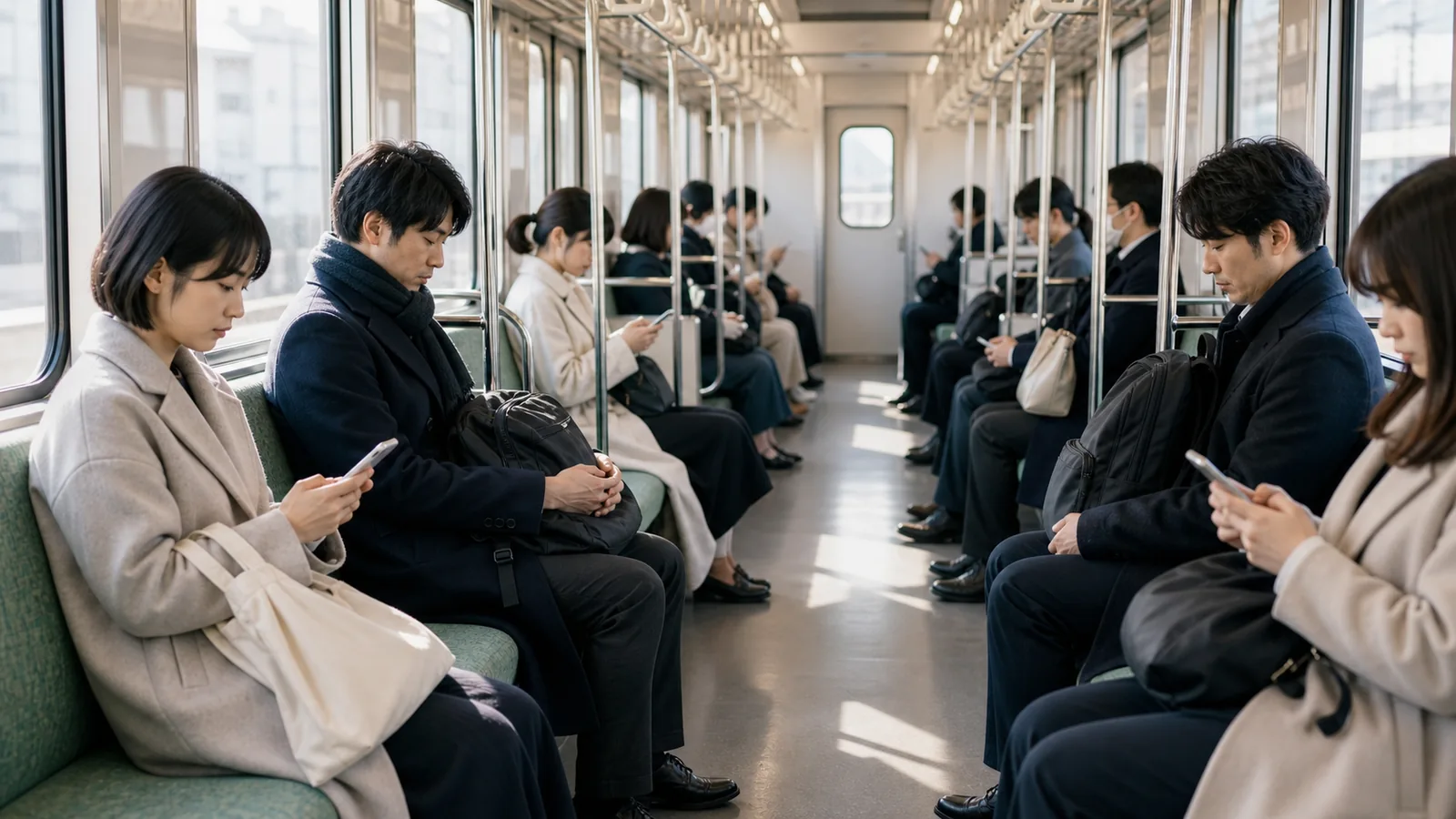
What Japanese Quietly Judge You for on the Train
Japanese train cars are eerily quiet — not because Japanese people are cold, but because of a strict set of unspoken rules. This guide breaks down 9 lines tourists cross most often: no phone calls, backpack rotation, no eating on commuter trains, priority seats stay empty, no makeup, let people exit first, two-line platform queues, and how to navigate women-only cars during rush hour.
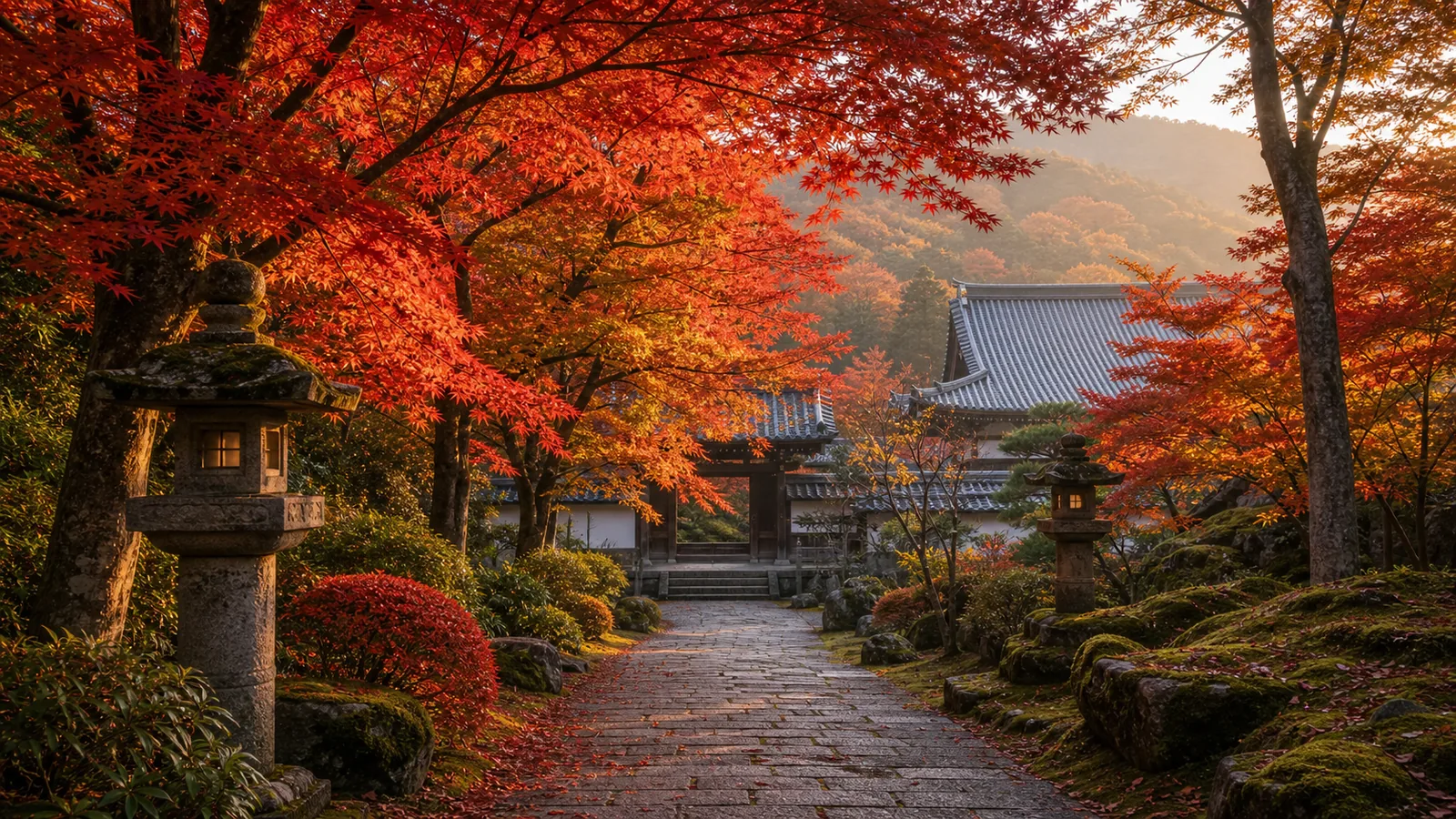
Autumn Leaves in Japan: Where and When to See Peak Koyo
Japanese autumn leaves last over three months, from Daisetsuzan in late September to Okinawa in late December. This guide ranks 13 prime spots by timing, compares Kyoto vs Hokkaido vs Kyushu foliage, and recommends quieter alternatives to the most crowded Kyoto temples plus the exact hours when crowds are thinnest.
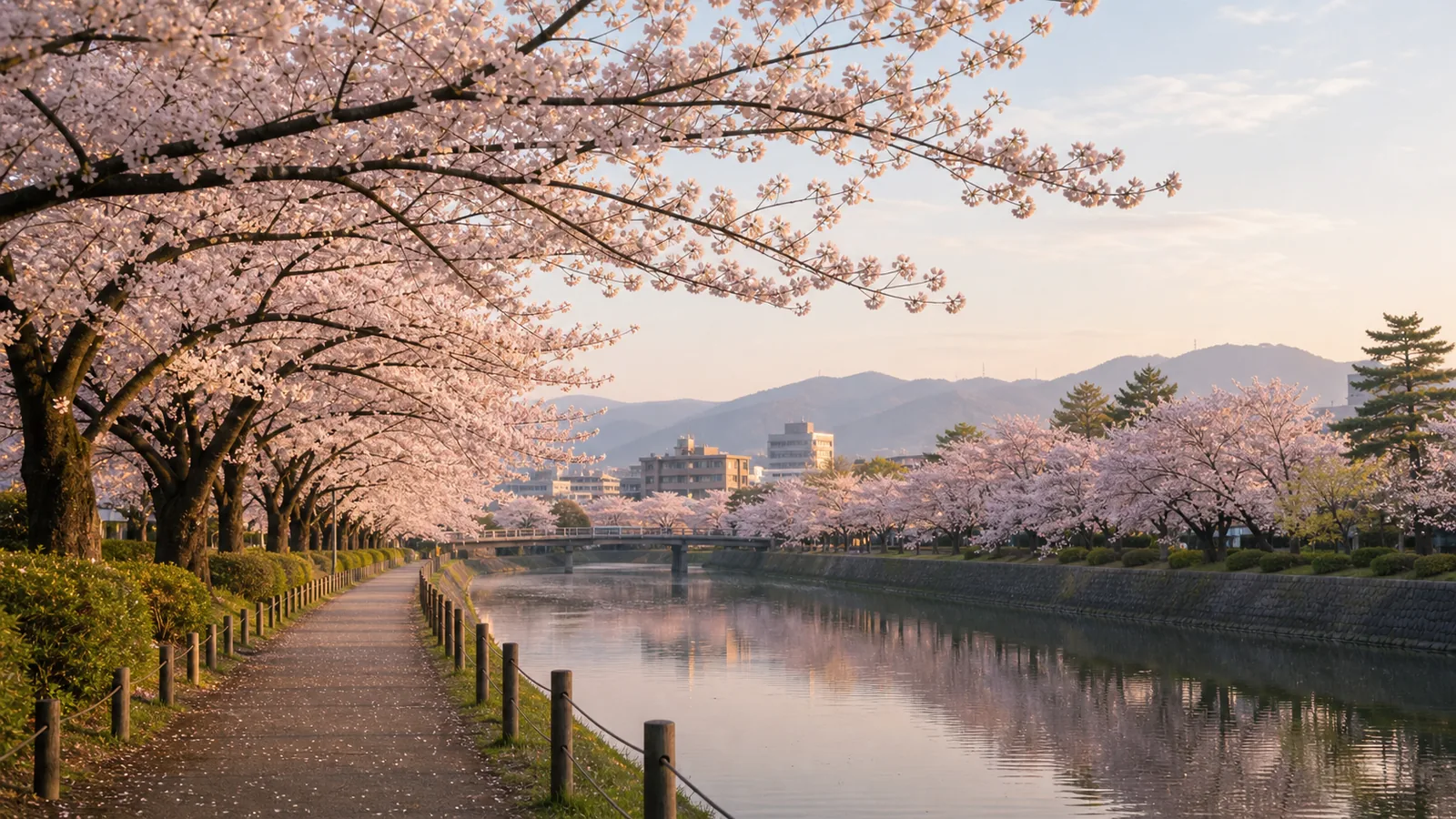
Cherry Blossom Map: When to See Sakura in Every Region
Japan cherry blossom season is not a week, it is a 100-day relay from Okinawa in late January to Hokkaido in mid-May. This guide lists peak bloom dates for ten major regions, recommends official forecast tools, and shares three strategies for avoiding the worst crowds. Get the timing wrong by even a week and your trip wastes a flight.
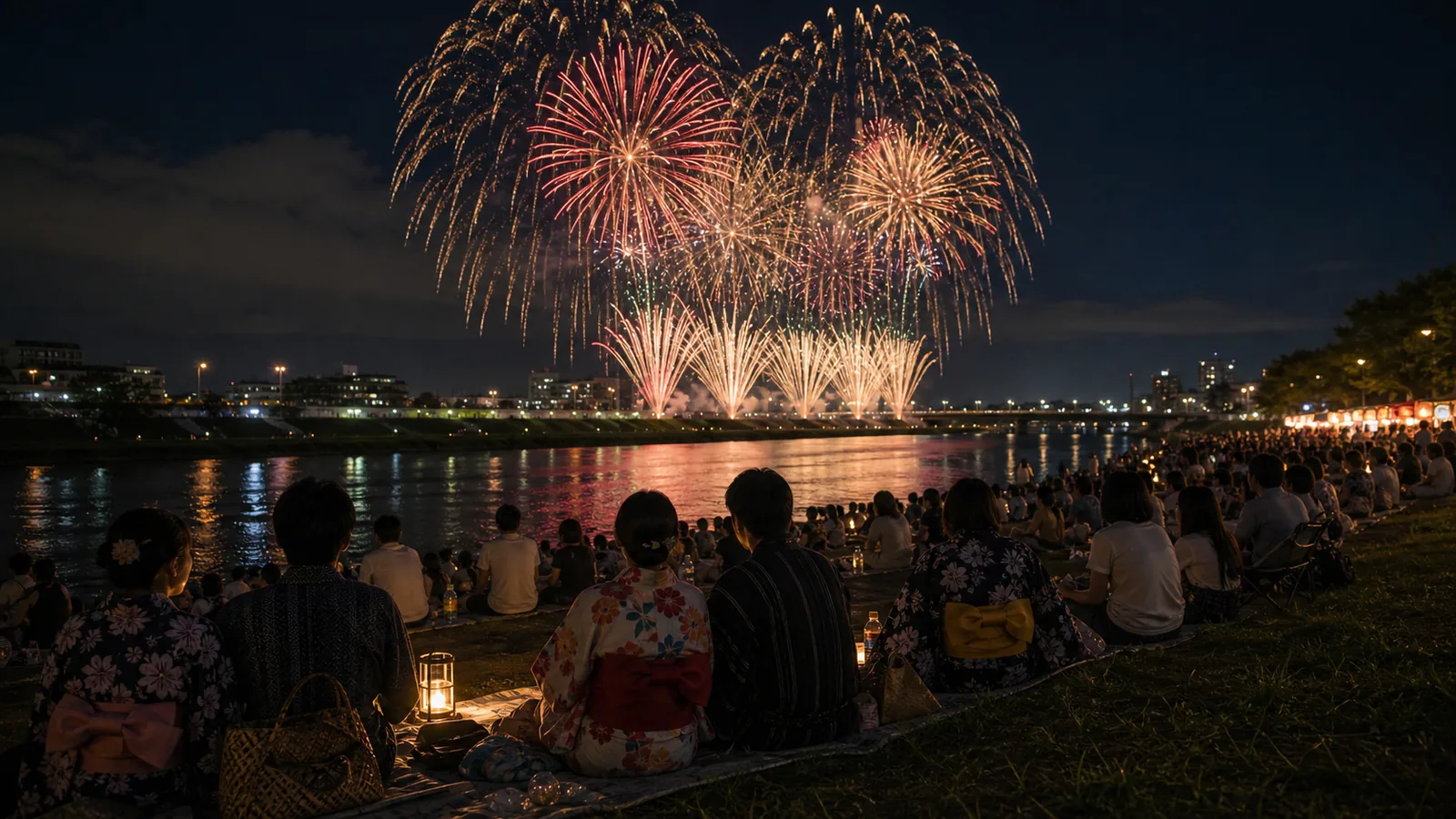
Japan Fireworks Festivals: Top 7 Hanabi Spectacles
Japan fireworks festivals launch 20000 to 40000 shells per show with synchronized music. This guide ranks 7 top hanabi events: Tokyo Sumida River (late July), Osaka PL (August 1), Nagaoka 4-day mega event (August 2-3), Akita Omagari national competition (late August), Tsuchiura autumn competition (early November), plus Kyoto and Fukuoka. Includes booking lead times: Nagaoka hotels sell out 6-12 months ahead.
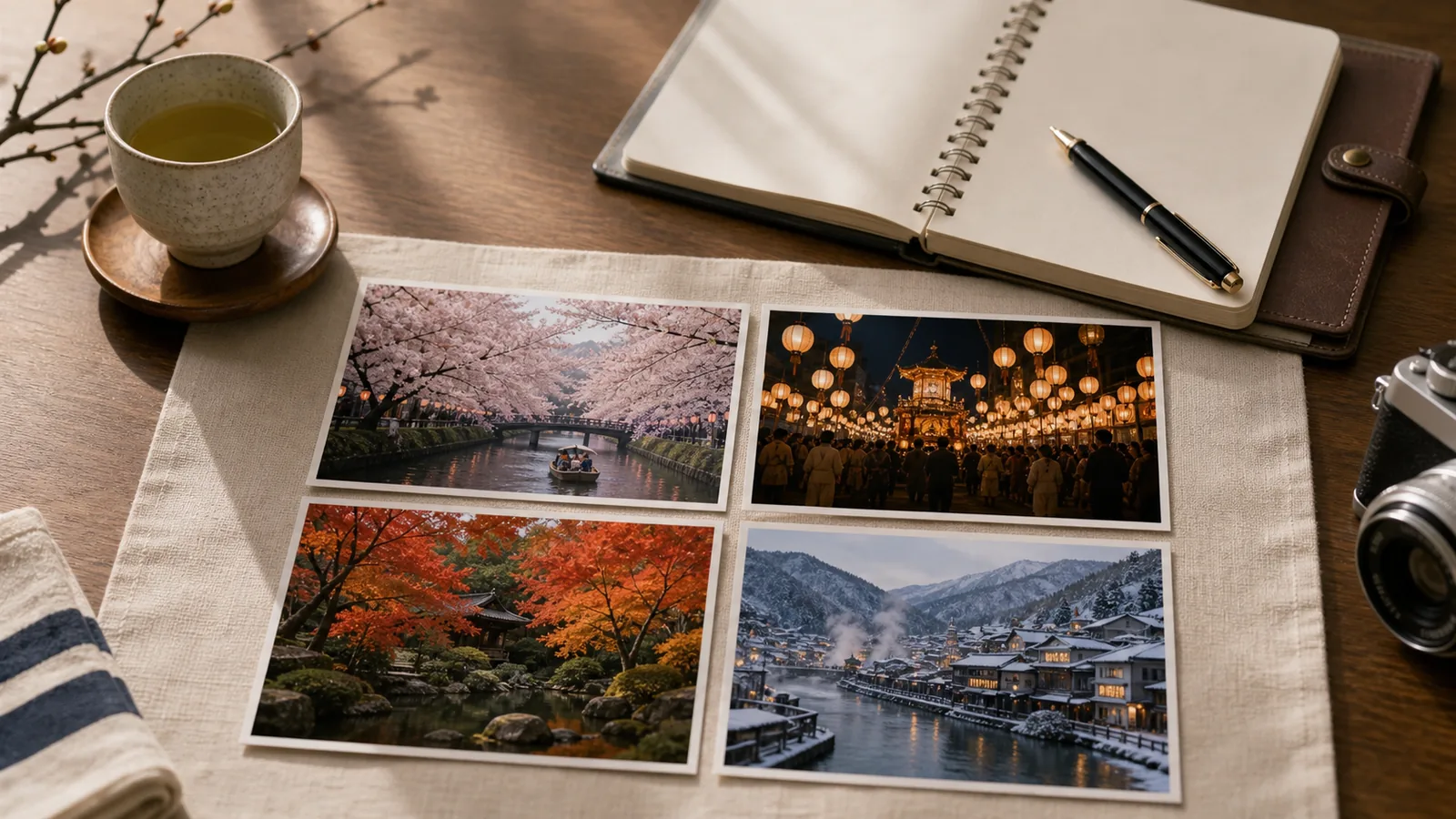
Japan Across Four Seasons: When to Go and Why It Matters
Japan changes dramatically by season. The same Kyoto in April, August, November, and January feels like four different cities. This guide maps out cherry blossom timing from south to north, summer festival highlights, peak autumn foliage windows, and winter snow destinations, plus the two months foreign tourists most often regret choosing.
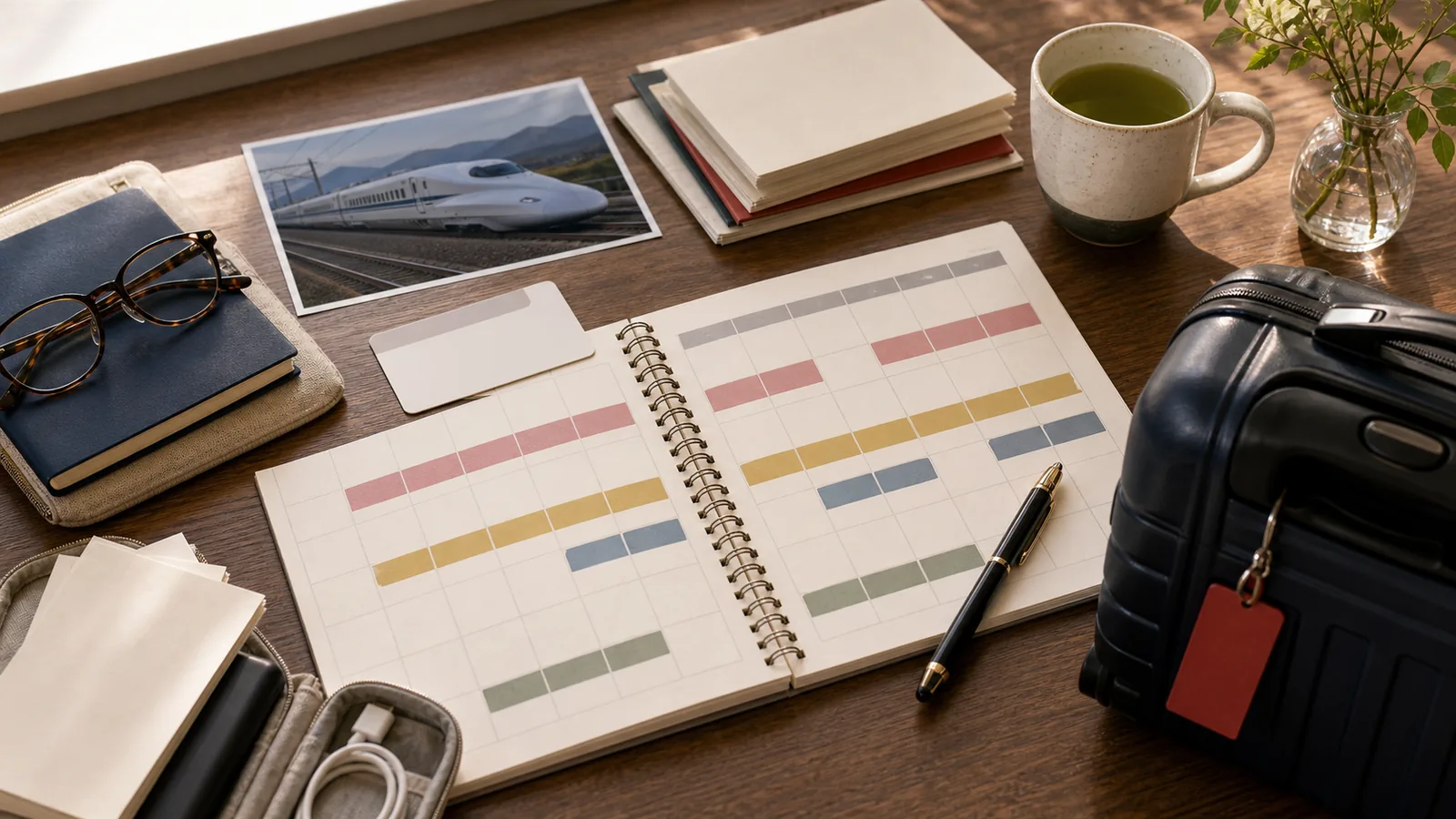
Golden Week Survival Guide: Why You Should Skip These 9 Days
Japan Golden Week (April 29 to May 5) is the worst week for foreign tourists. 120 million Japanese take holiday simultaneously: bullet trains sell out, hotels triple, Kyoto temples queue 2-3 hours. This guide explains what GW is, why it is so bad, and how to avoid it. Top tip: check your flight dates against GW before booking, and shift by one week to save up to 50 percent.
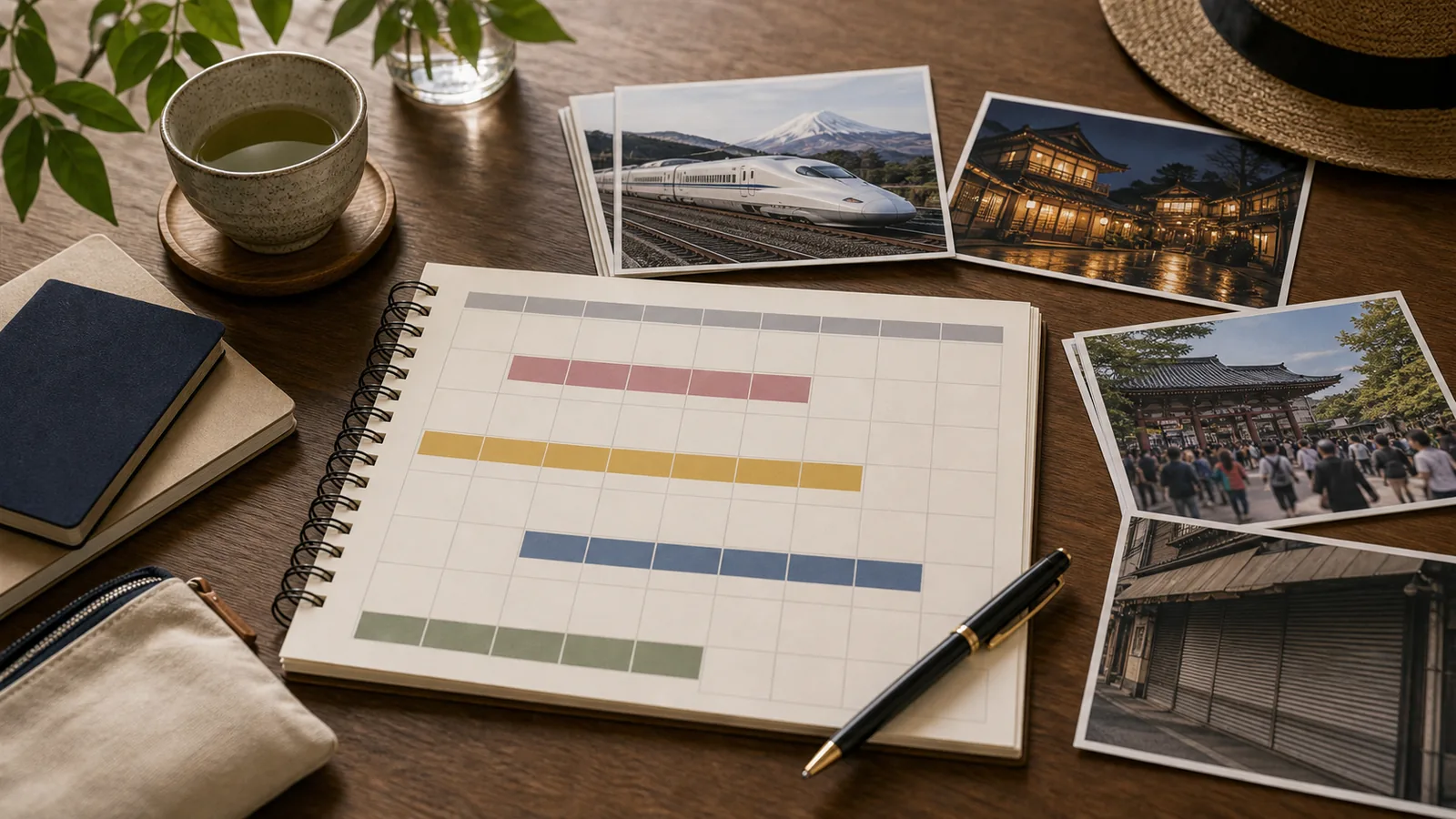
Japan Major Holidays: Why You Should Avoid Golden Week, Obon, and New Year
Japan three major holiday periods (Golden Week, Obon, New Year) are tourist trap zones: trains sell out, hotels triple in price, restaurants close. This guide lists exact dates, explains the transport impact, and suggests reverse strategies. The smartest months for foreign visitors are January-February, June, and weekdays in mid-November.
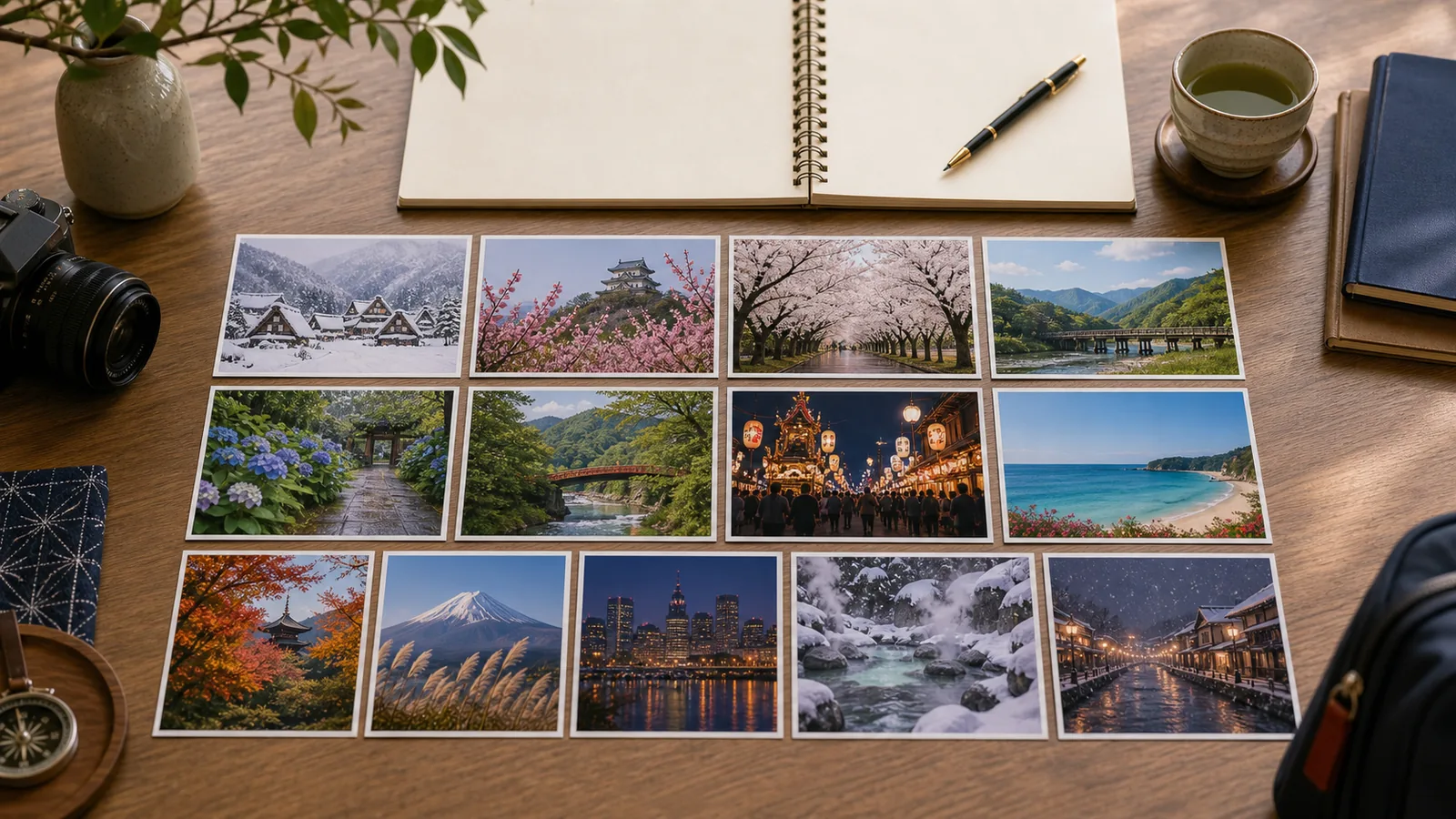
Japan Month by Month: Climate, Events, and Best Time to Visit
Each of Japan twelve months offers something different: snow in January-February, cherry blossoms in April, hydrangeas in June rainy season, festivals and fireworks in July-August, peak autumn leaves in October-November, holiday lights in December. This month-by-month breakdown rates climate, signature events, and pros and cons. Best overall: October and weekdays in mid-November.
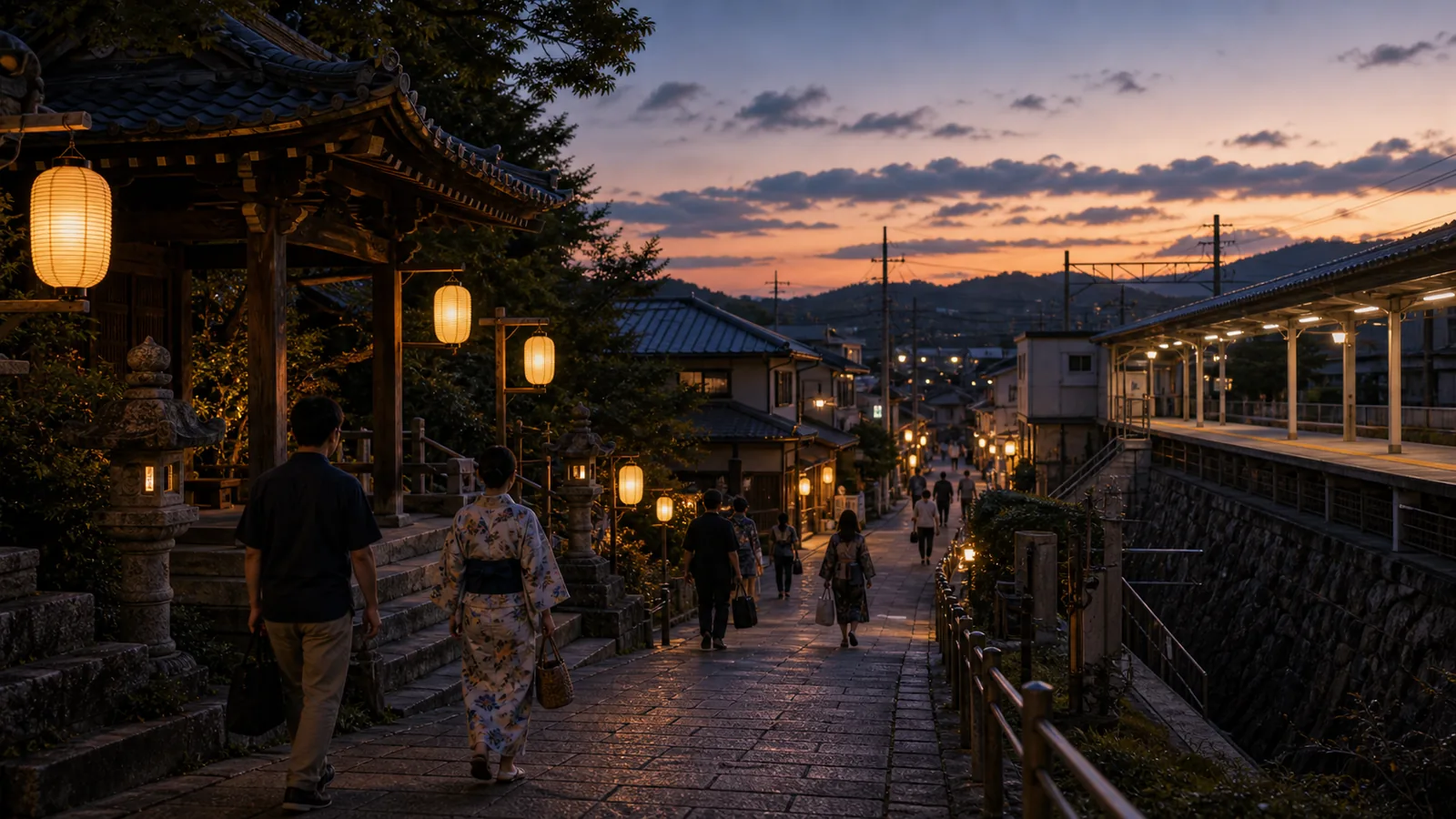
Traveling During Obon: Pros and Cons of Japan Summer Holiday
Obon (August 13-16) is the Japanese Buddhist festival when locals return to hometowns. The crowd impact is two-sided: rural areas and Kyoto pack with travelers, but Tokyo and Osaka actually empty out. This guide explains Obon culture, peak transport days, and the reverse strategy that lets you enjoy a quiet Tokyo plus the iconic Kyoto Gozan-no-Okuribi fire festival on August 16.
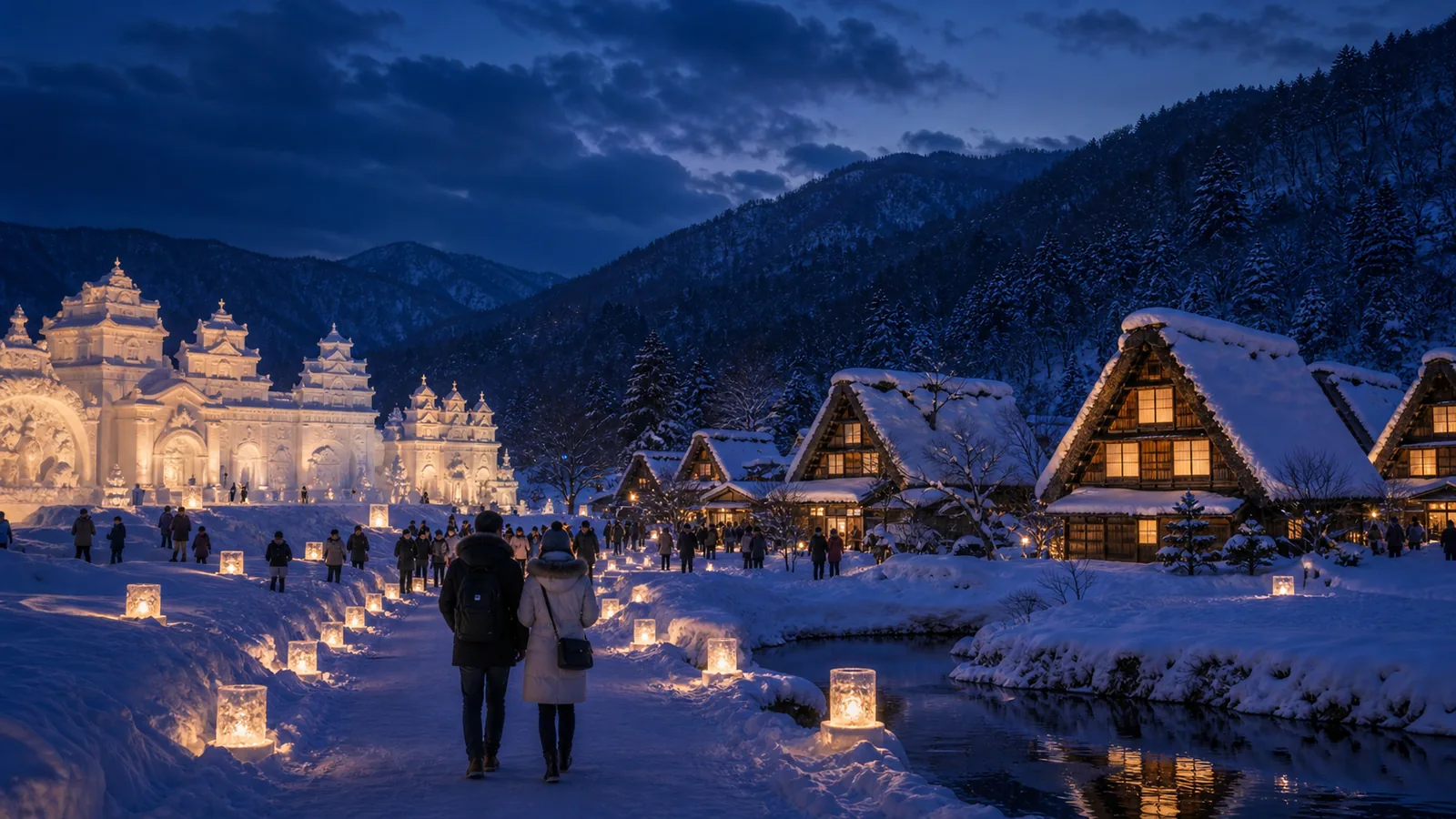
Sapporo Snow Festival and Shirakawa-go: Japan Winter Bucket List
Sapporo Snow Festival (February 4-11) and Shirakawa-go gassho village winter light-ups (only 6-8 nights per year) are Japan winter bucket list pair. This guide details exact dates, the three Sapporo venues, room booking strategies (village has only about 10 homes that book a full year ahead), and a 5-day combined itinerary. Top tip: village light-up days require 4-6 months lead time or you must do a day trip from Takayama.
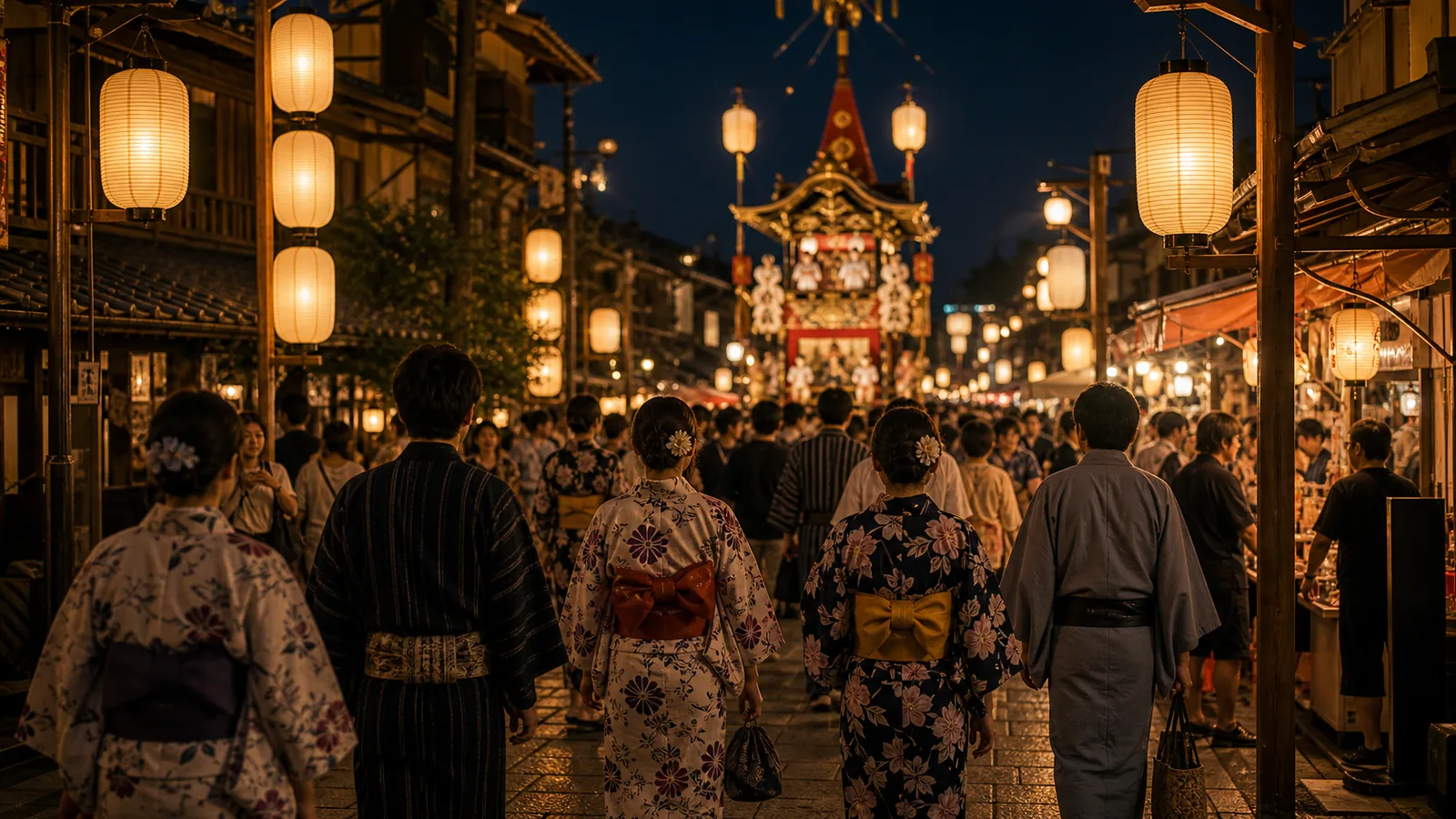
Three Greatest Summer Festivals in Japan
Summer in Japan is festivals. Skip them and you have missed the real Japan. This guide covers the three biggest summer festivals: Kyoto Gion Matsuri (all July), Osaka Tenjin Matsuri (July 24-25), and Aomori Nebuta (August 2-7). Includes exact viewing spots, yukata rental tips, and reasons why the night before parades is often better than the parades themselves.
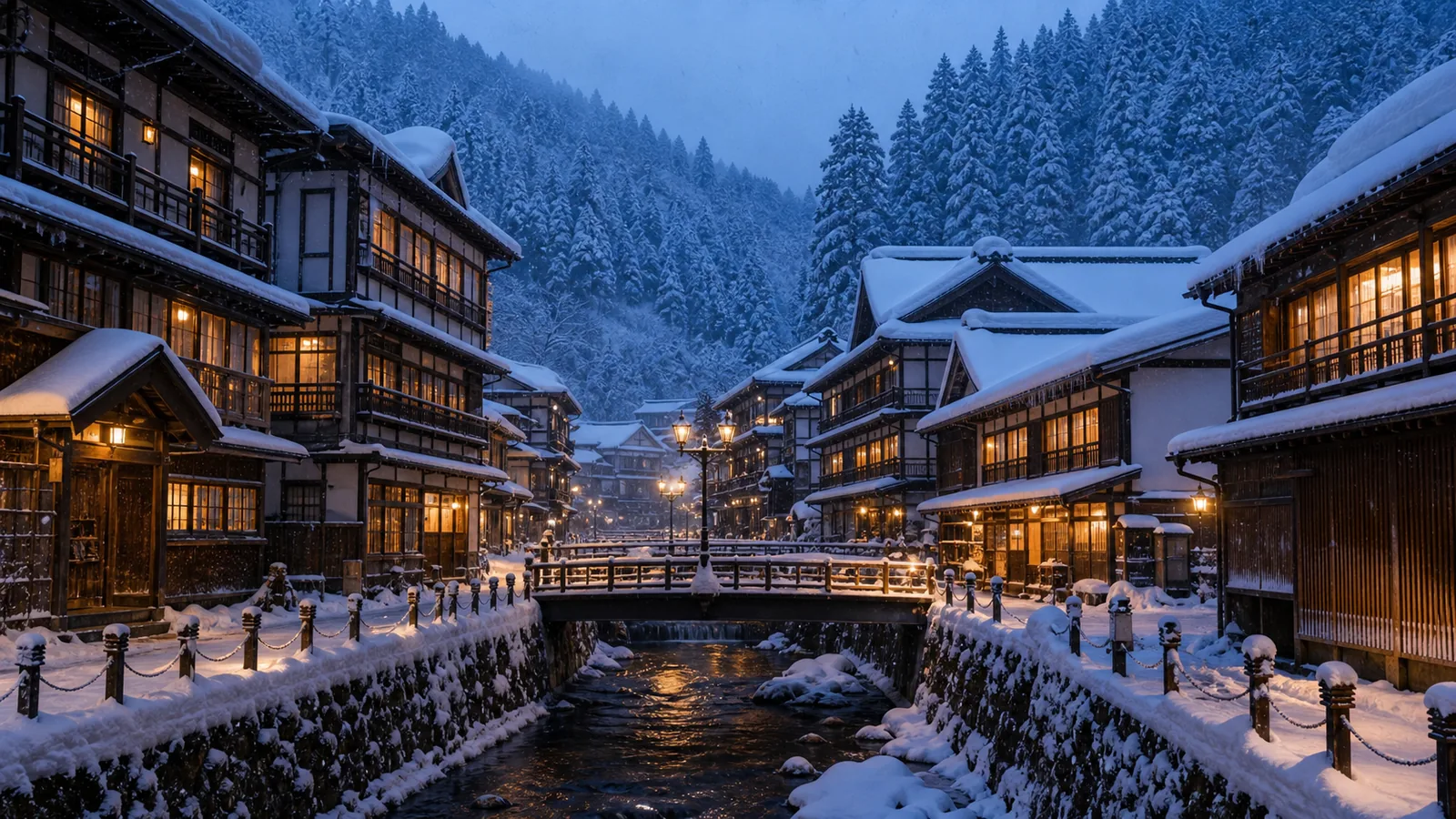
Japan Winter Snow Guide: Best Spots from Hokkaido to Shirakawa-go
Japan winter is not just skiing. This guide ranks 10 top snow destinations: Shirakawa-go gassho villages, Sapporo Snow Festival, Ginzan Onsen, Hokkaido drift ice, Zao snow monsters, and more. Includes peak months, booking lead times, and a warning that Shirakawa-go winter light-ups happen only 6-8 nights per year and book out months ahead.
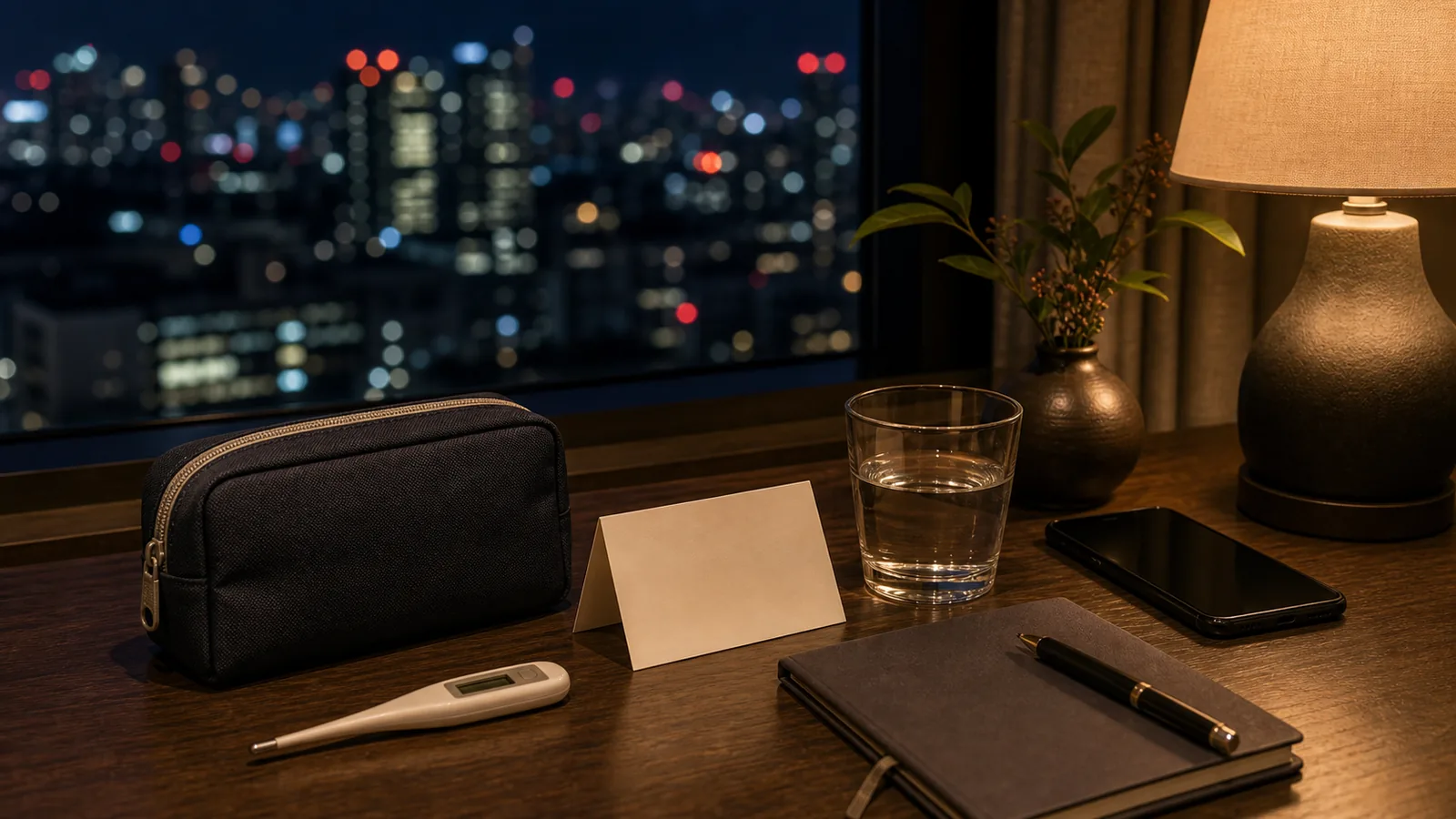
Japan 24-Hour Drugstores and Late-Night Medical Help
Sick at 2 AM in Tokyo and drugstores are closed? Many Japanese drugstores are actually 24-hour. This guide lists Don Quijote and Matsumoto Kiyoshi 24h locations, Japanese OTC drug names by symptom (EVE for headaches, Pabron for colds, Seirogan for diarrhea), the drug classification rules at night, and when to call the 7119 advice line versus going to ER.
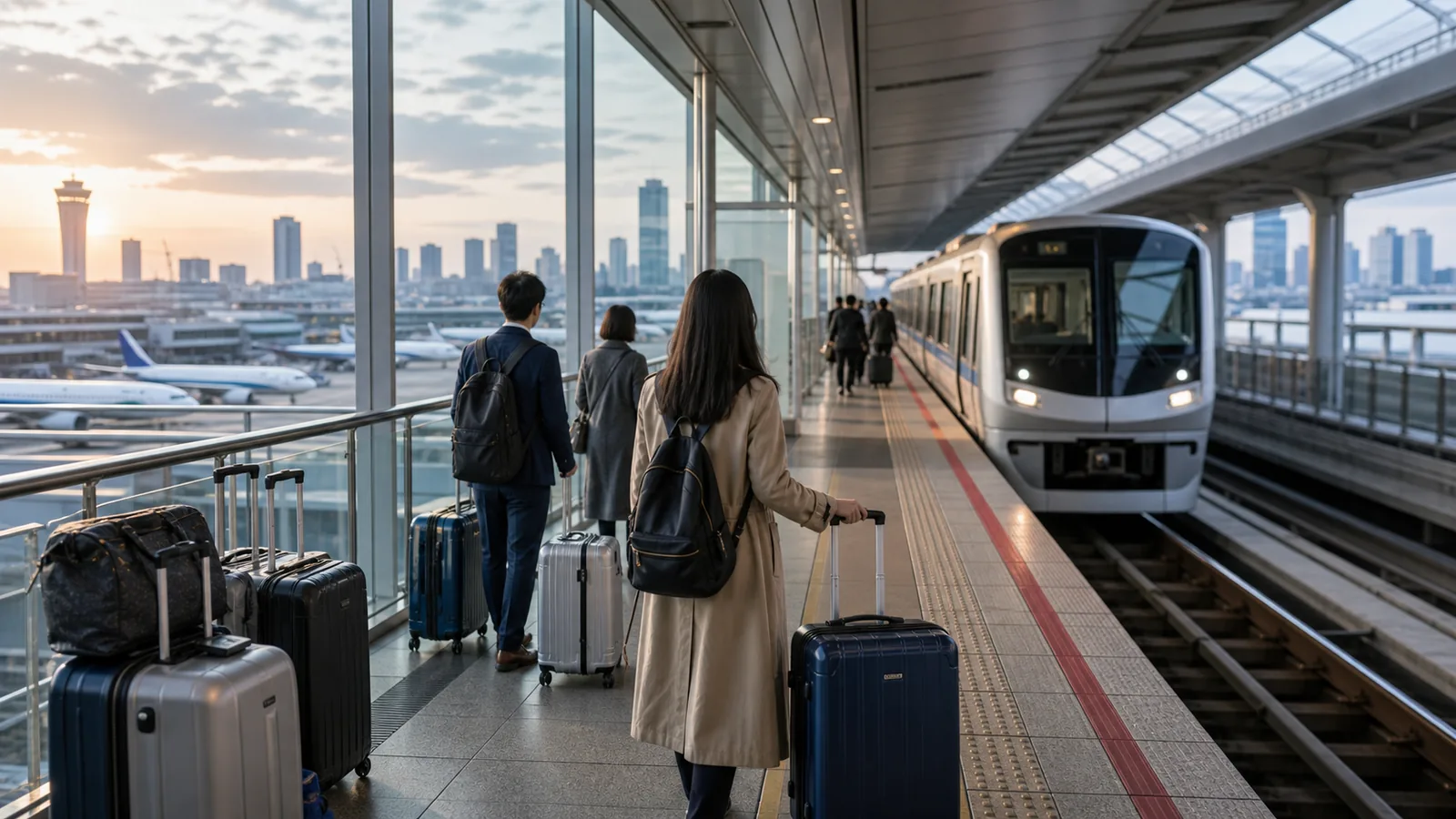
Japan Airport to City — Narita, Haneda, Kansai, Chubu Compared
Landed at Narita and overwhelmed by 13 transport choices? This guide compares all options from Japan four main international airports (Narita, Haneda, Kansai, Chubu) using three criteria: time, cost, luggage friendliness. Plus the decision matrix: fastest goes to Skyliner or HARUKA, cheapest is local Keisei, big luggage takes Limousine Bus, late night calls a taxi.
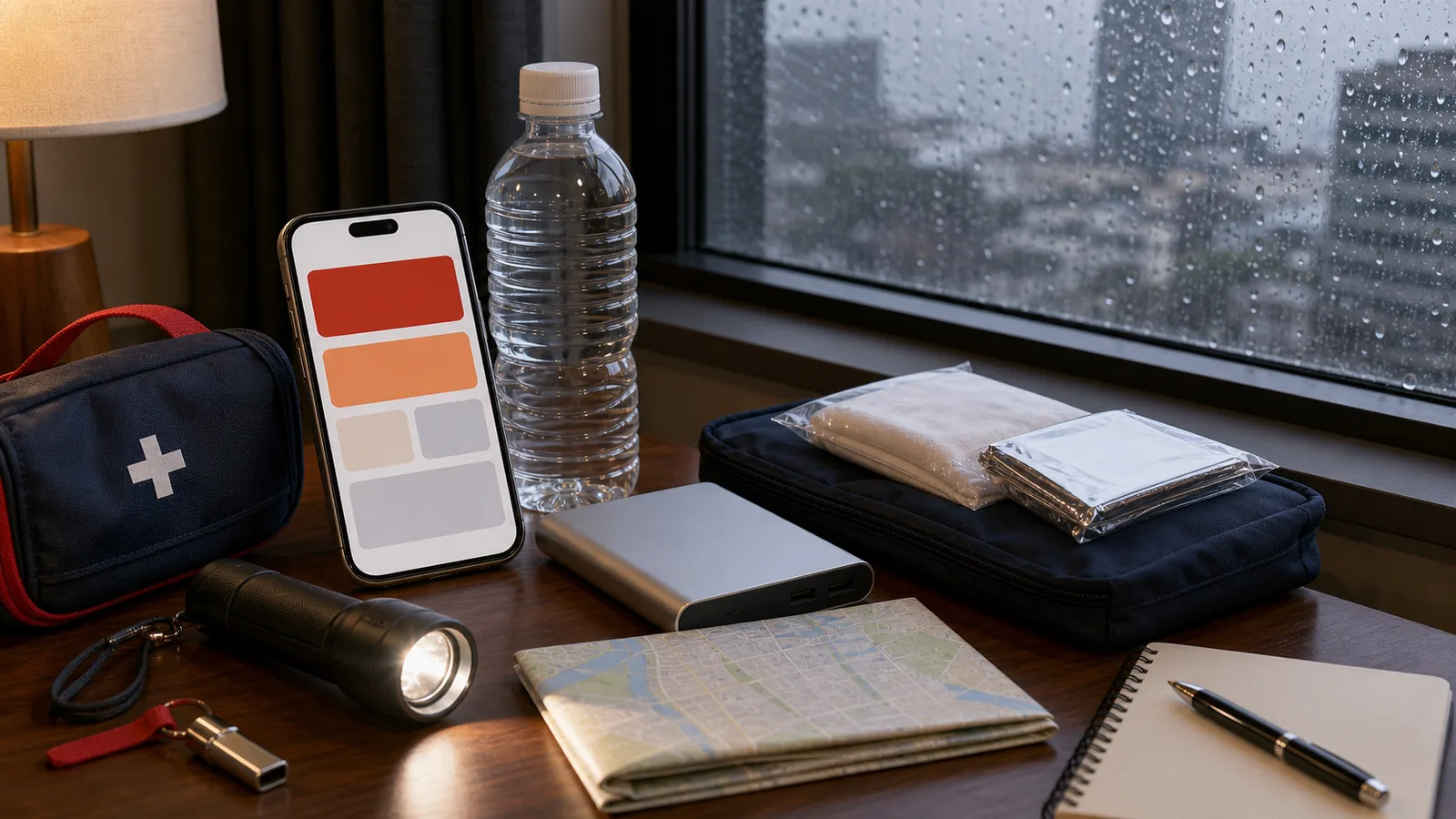
Japan Disaster Apps and Earthquake Typhoon Survival Guide
Felt a shake in Shinjuku — should you worry? Japan has 5 small quakes daily, and tourists feel 1-2 in two weeks. This guide explains the must-install 4 apps (Yahoo Bousai, Safety Tips, NHK World, NAVITIME), why Shindo intensity matters more than magnitude, what to do during earthquakes, tsunamis, and typhoons, plus offline maps as a backup when networks fail.
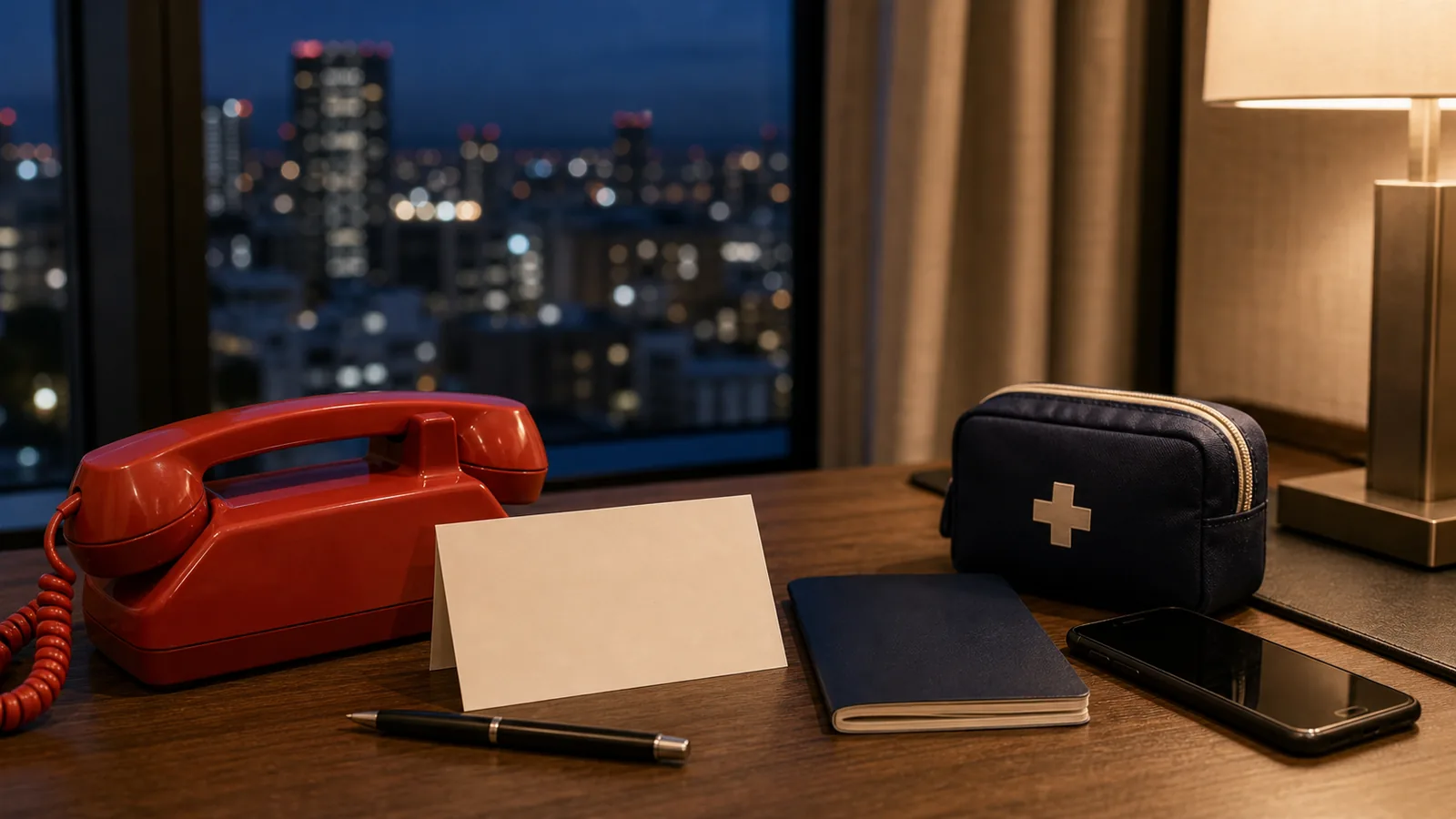
Japan Emergency Numbers — 110, 119, and Multilingual Hotlines
Chest pain in Japan — do you dial 110 or 119? Japan splits police (110) from fire and ambulance (119). This guide covers 5 real scenarios: heart attack, lost passport, traffic accident, food poisoning, earthquake. Plus the 24-hour multilingual hotlines in English, Chinese, Korean, Thai, and more. Save these 5 numbers before you fly.
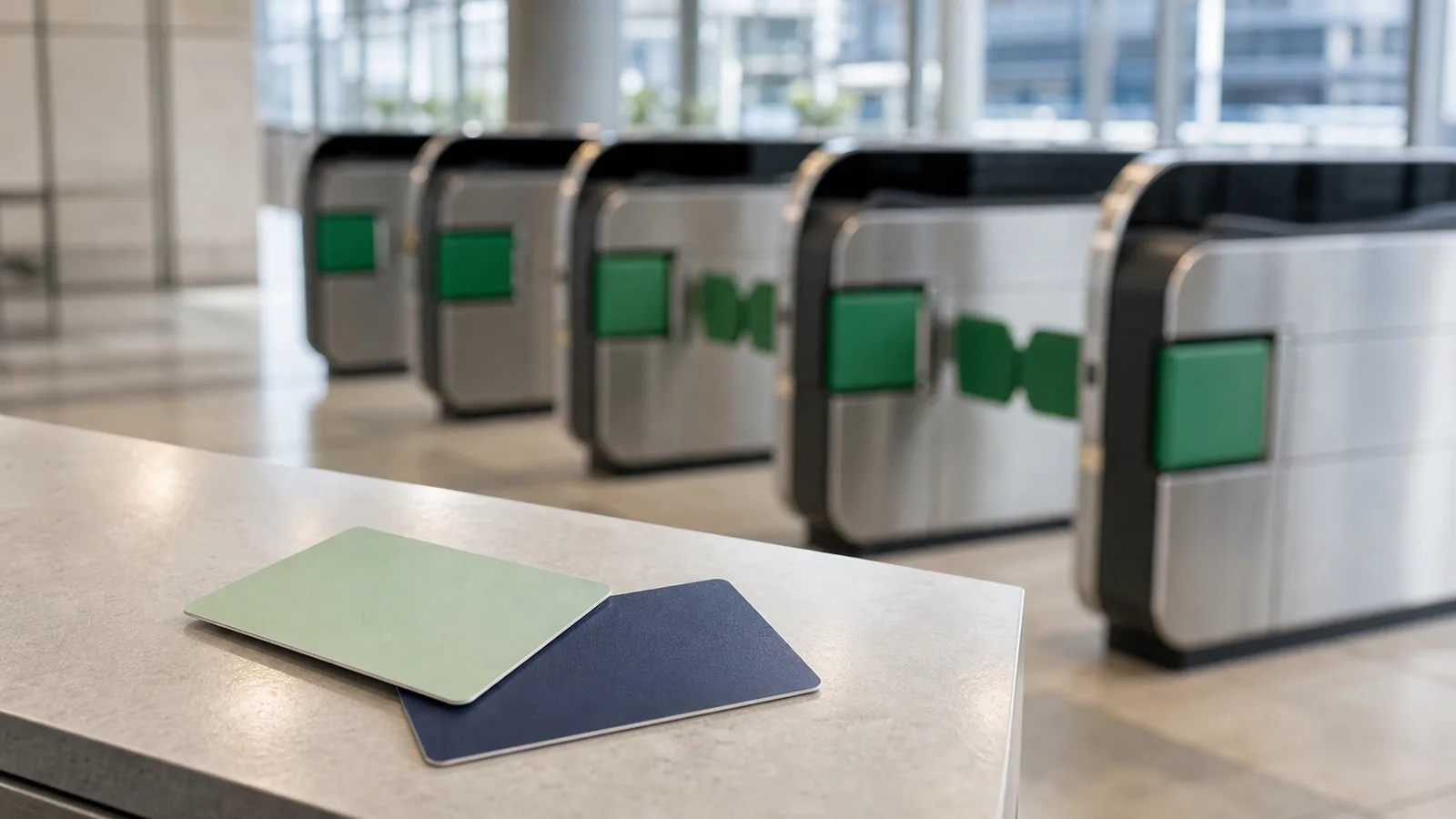
Japan IC Card Guide — Suica, ICOCA, PASMO Compared
Think you need to buy Suica in Tokyo and ICOCA in Osaka? Actually all ten major Japan IC cards have been nationally interoperable since 2013. This guide compares the Welcome Suica vs ICOCA HARUKA bundle, deposit and refund rules, Apple Pay compatibility, and when IC cards do not work (long-distance trains). Pick the right one before you land.
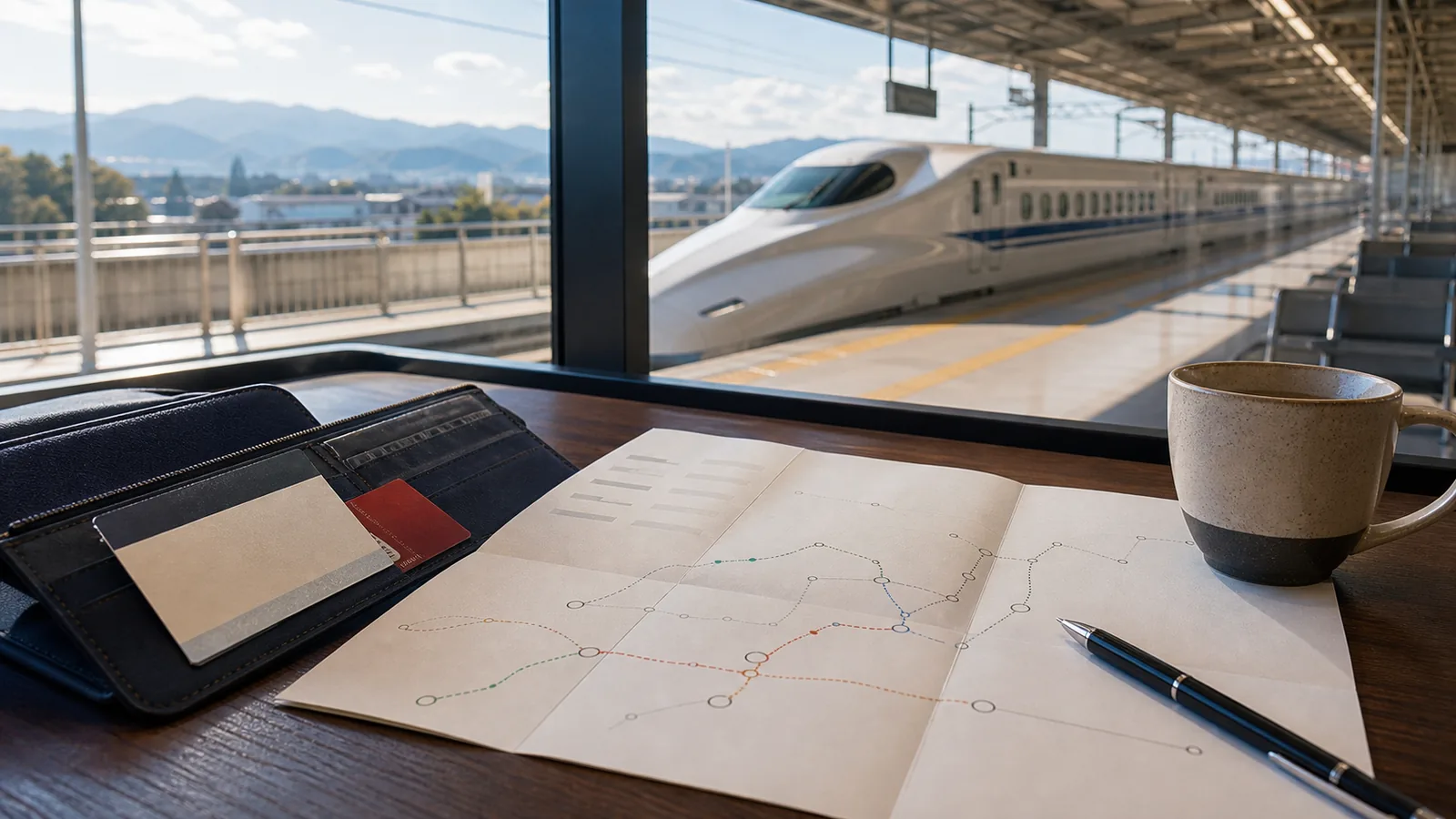
Is the JR Pass Worth It? 5 Real Itineraries Calculated
Japan Rail Pass jumped 70 percent in 2023 to 50,000 yen for 7 days. Worth it? Depends on your route. This guide calculates 5 real itineraries: Tokyo-Kyoto round trip is not worth it, 3 cities marginal, 4 cities saves 7,490 yen, Hokkaido loop saves 15,660 yen. Plus when to choose regional passes instead.
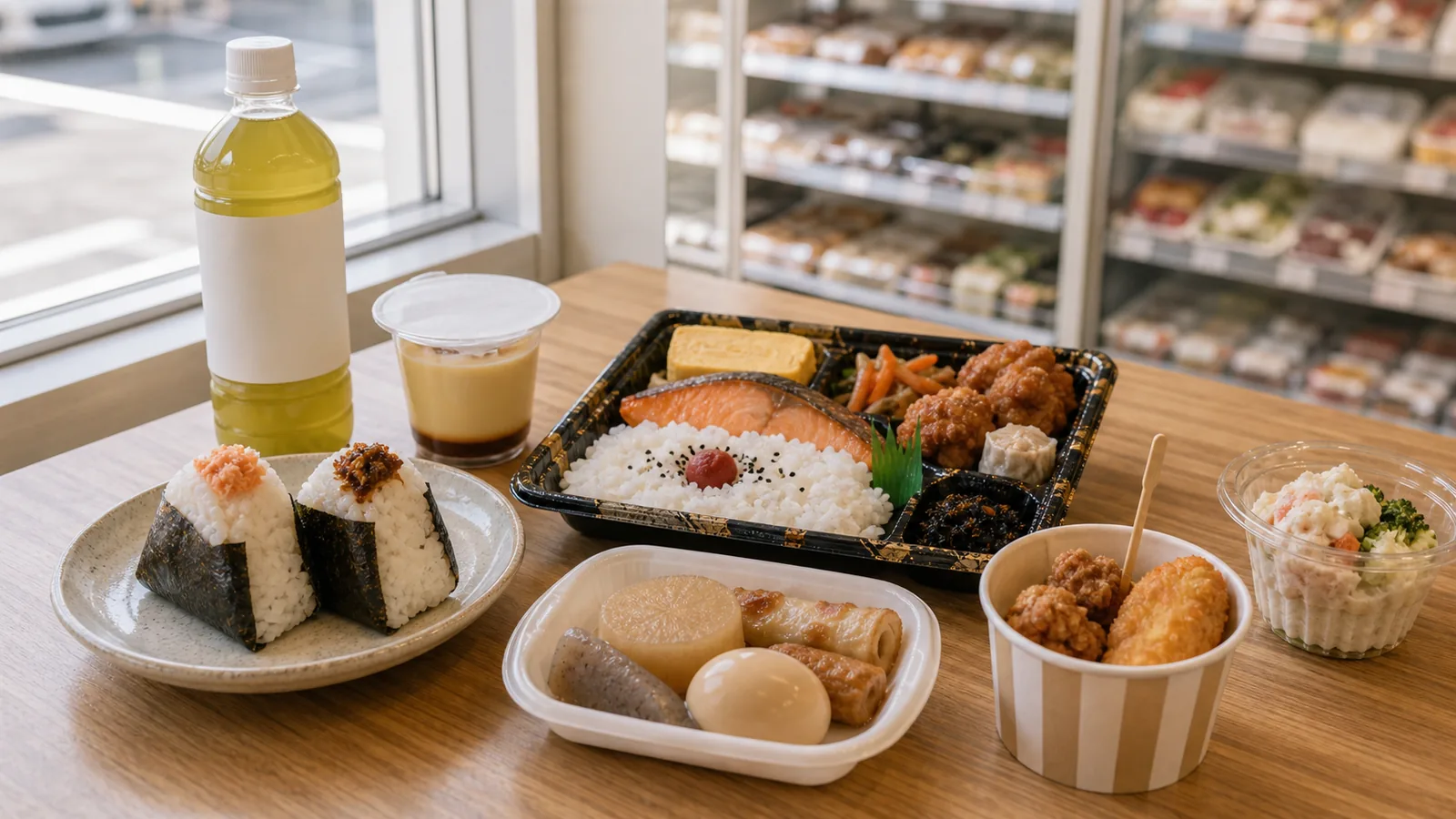
Japanese Convenience Store Food — Top 20 Must-Try
Japan convenience store food is the global ceiling of konbini cuisine. A 200-yen rice ball can beat a 1,500-yen restaurant dish. This guide lists the must-try Top 20 across 7-Eleven, Family Mart, and Lawson, covering rice balls, bento, sandwiches, desserts, hot foods, and oden. Plus pro tips on asking to warm food, spotting fresh delivery times, and chasing the weekly New Release red labels.
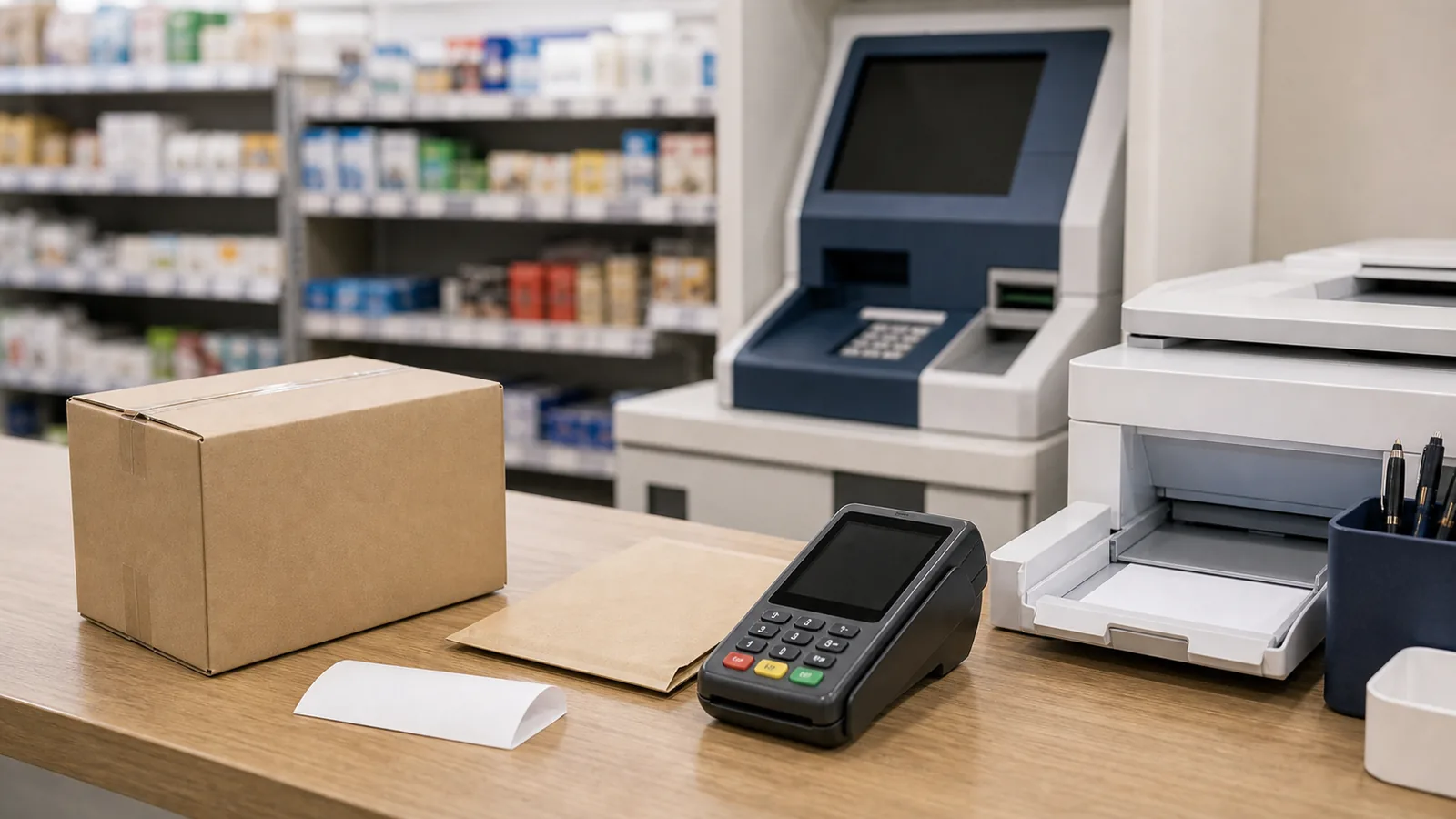
Japan Convenience Stores Beyond Snacks
Japan convenience stores are not just snack shops — they are 24-hour banks, post offices, copy shops, and ticket booths rolled into one. This guide covers all 8 hidden functions: 7-Eleven ATMs (best for foreign cards), multi-function copy machines, picking up theme park and concert tickets, sending packages and postcards, free Wi-Fi, and 24-hour phone charging. Plus the differences between 7-Eleven, Family Mart, and Lawson.
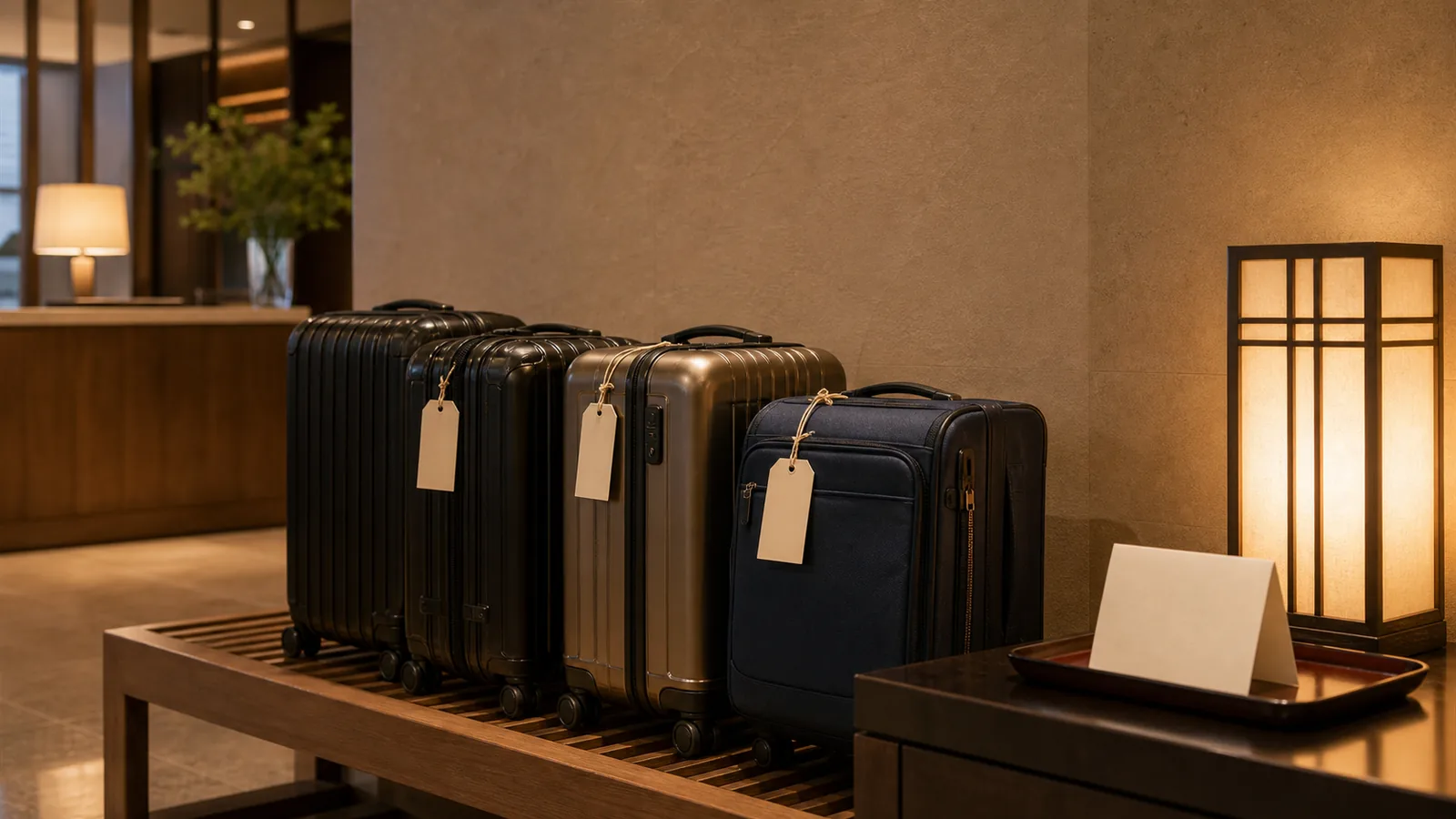
Japan Luggage Delivery — Takkyubin Complete Guide
Dragging 30 kg luggage through Kyoto trains? Locals shake their head — why not use Takkyubin? For 1,500 to 2,400 yen, Yamato delivers your big bag to your next hotel overnight. This guide covers airport-to-hotel sending, hotel-to-hotel transfer, 24-hour convenience store drop-off, address formatting, and the advanced trick: arrive light, ship everything ahead.
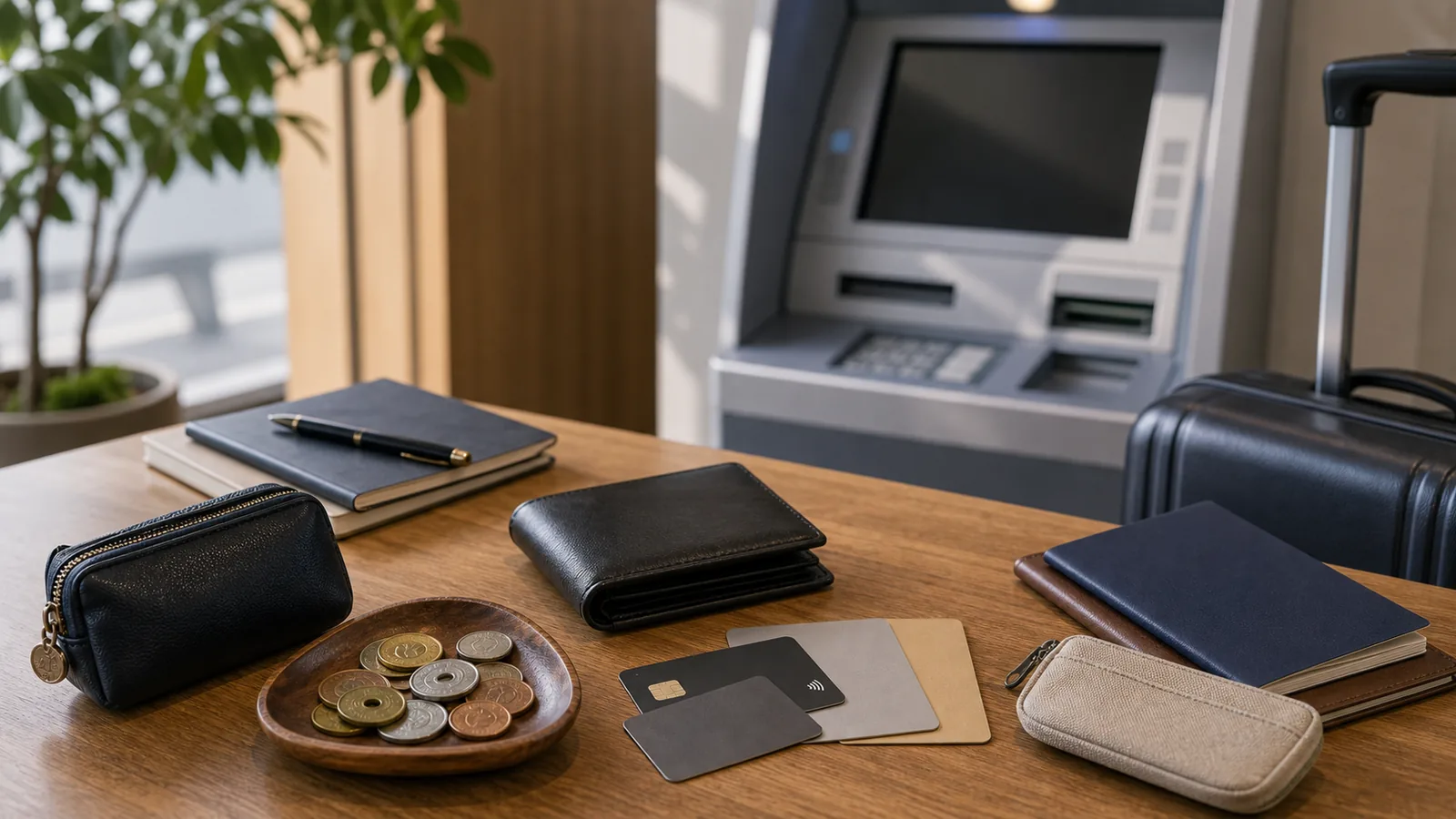
Japan Money Exchange — Airport, City, and Credit Card Compared
Want to change 30,000 yen — should you do it before flying, at the airport, or downtown? This guide calculates 5 real channels: home bank, airport, downtown exchange, credit card swipe, and 7-Eleven ATM. The winner — credit cards actually beat all physical exchanges, but watch for the DCC trap. Plus how to split your money strategy.
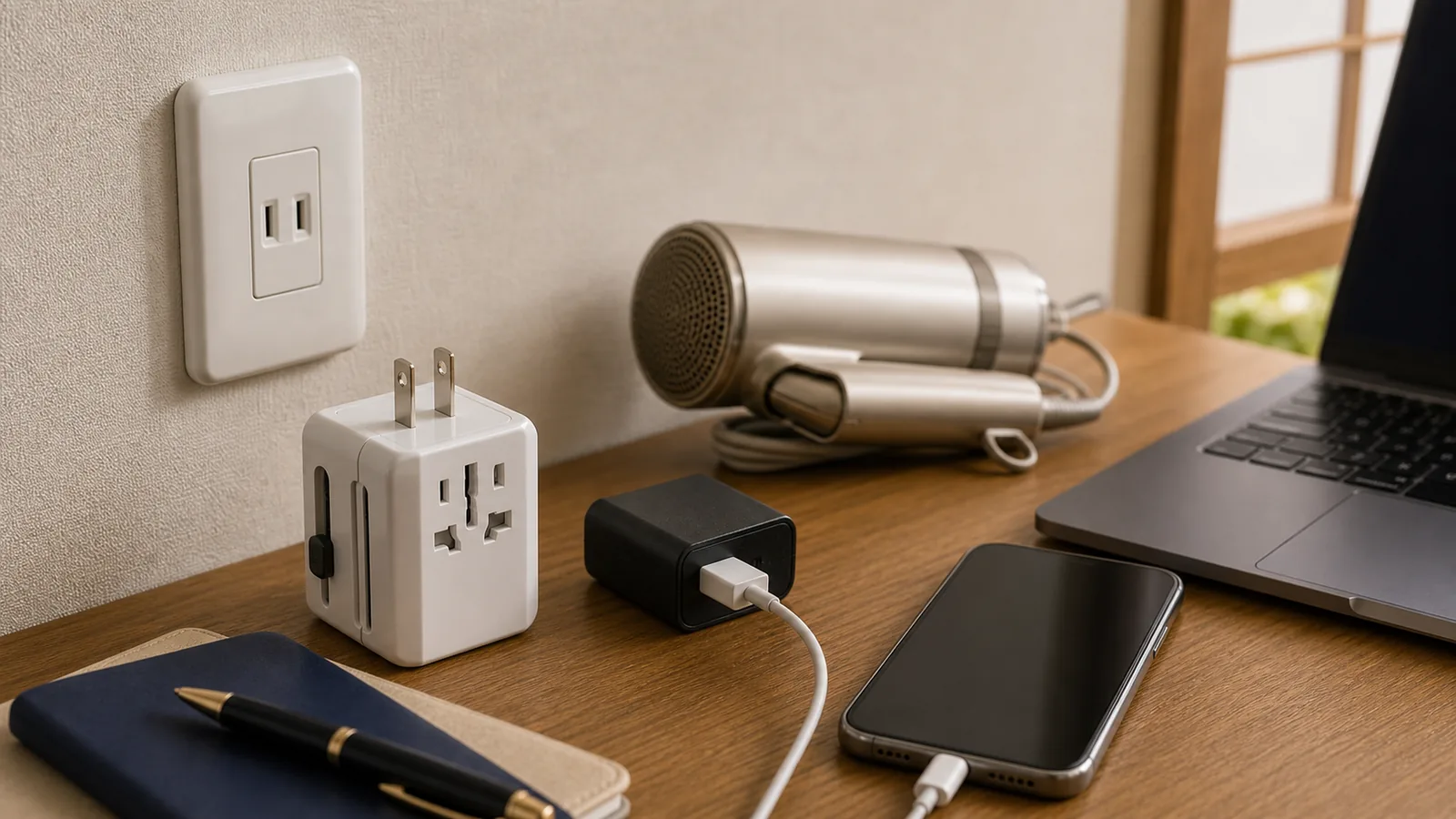
Japan Power Outlets — A Type, 100V, and When You Need an Adapter
Japan runs on 100V Type A outlets — same plug shape as US and Taiwan. Most modern phones and laptops are 100-240V universal so just plug in. But hair dryers, hot pots, and beauty devices need closer look. This guide categorizes what works directly, what needs an adapter, and the smart traveler trick: one 65W USB-C charger handles everything.
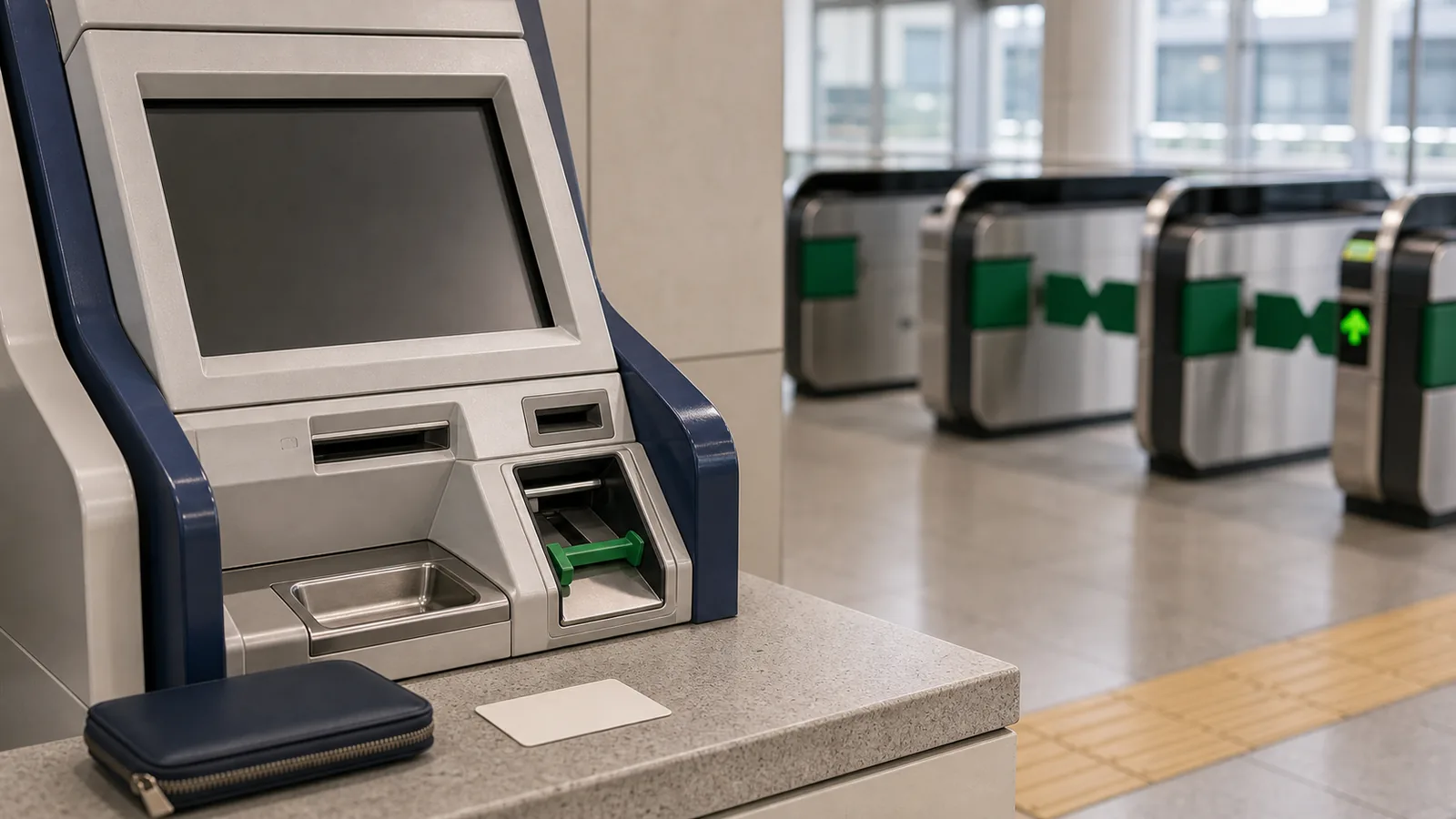
Japan Fare Adjustment Machine — Seisanki Step by Step
Train gate beeped red and rush-hour commuters glaring? Do not panic — Japan has a Seisanki (Fare Adjustment Machine) for exactly this. This guide walks you through 4 steps to fix overrides: insert ticket, drop coins, take adjustment slip, exit gate. Plus IC card vs paper ticket differences, what happens when your balance is low, and inter-company transfer pitfalls.
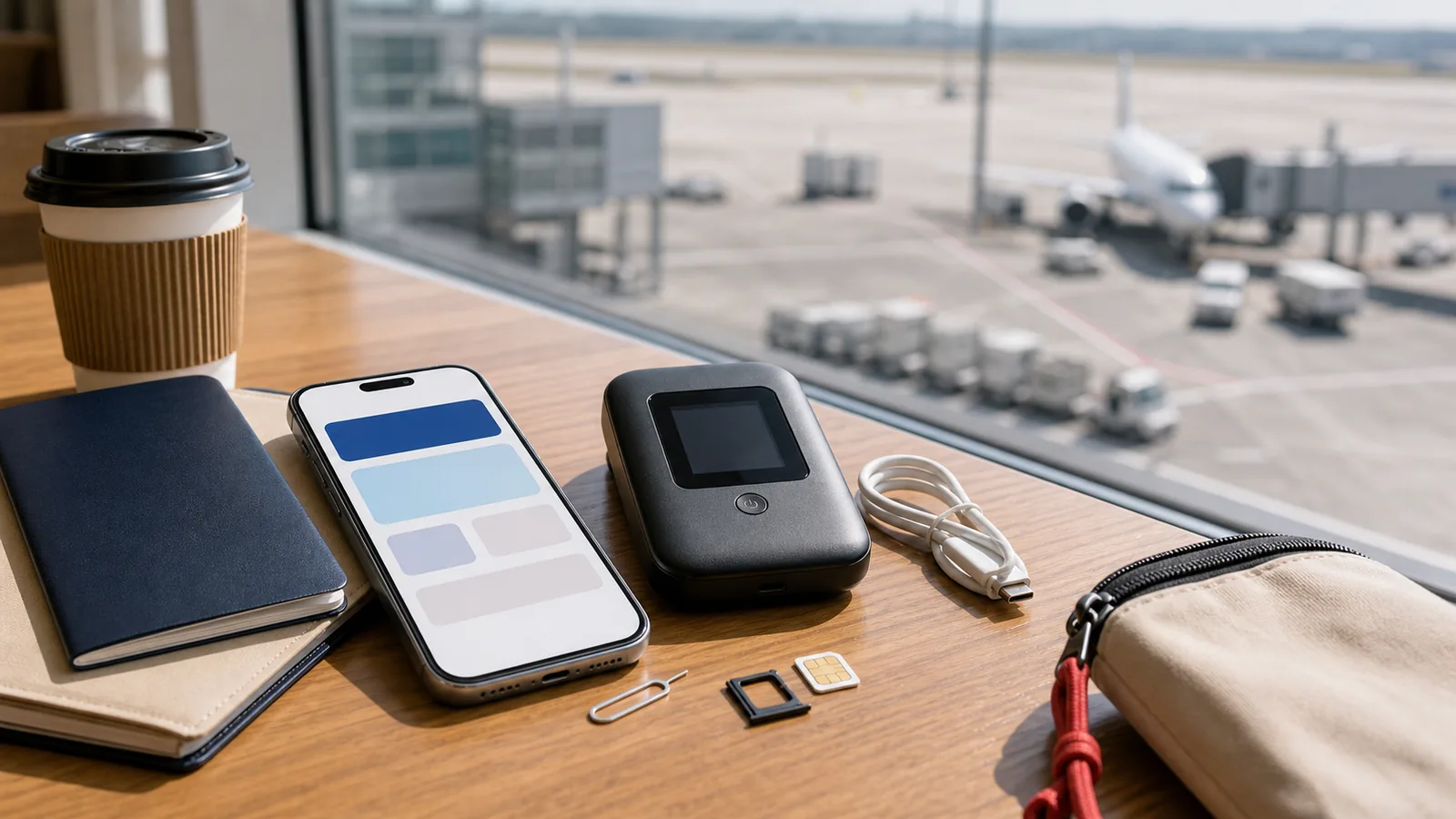
Japan SIM Card vs Pocket Wi-Fi vs Roaming Compared
Buy a SIM card, rent pocket Wi-Fi, or just roam? This guide compares all options for a 7-day Japan trip with 2 people: eSIM is cheapest, Pocket Wi-Fi cheapest per person, roaming costs the most. Plus 6 real scenarios (solo business, family travel, backpacker, group), the three Japanese carrier coverage map, and how to check if your phone is unlocked.
Japan Tax-Free Shopping — Step by Step Guide
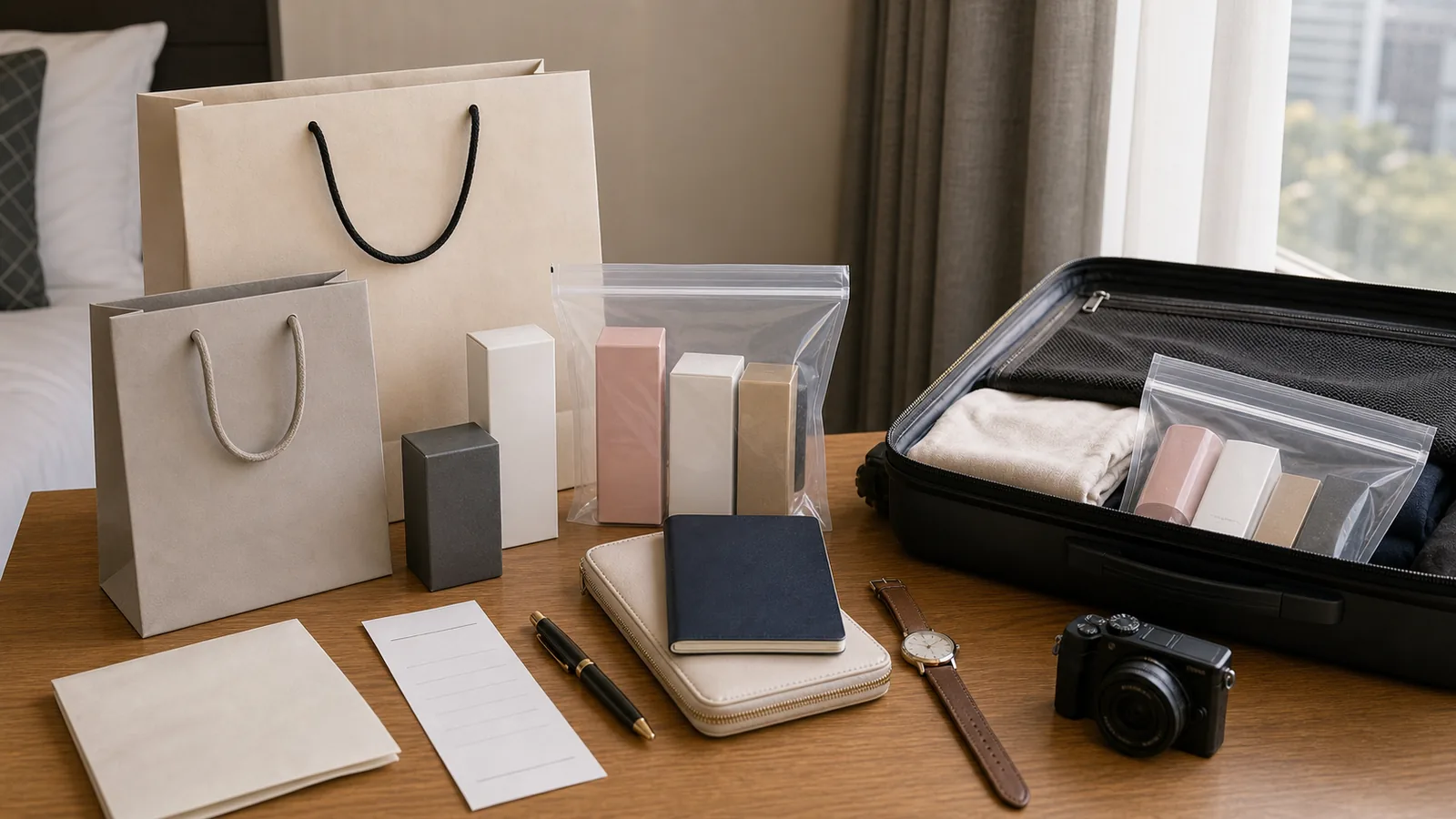
Think Japan tax refund is just show passport at checkout? 2024 rules changed — break the seal and customs makes you pay back the 10 percent at the airport. This guide breaks down 6 steps: spotting Tax-free shops, the 5,000 yen pre-tax threshold, why auto-gate entry rejects refunds, and three real cases of tourists getting caught.
Do You Need Japan Travel Insurance? Real Medical Bills
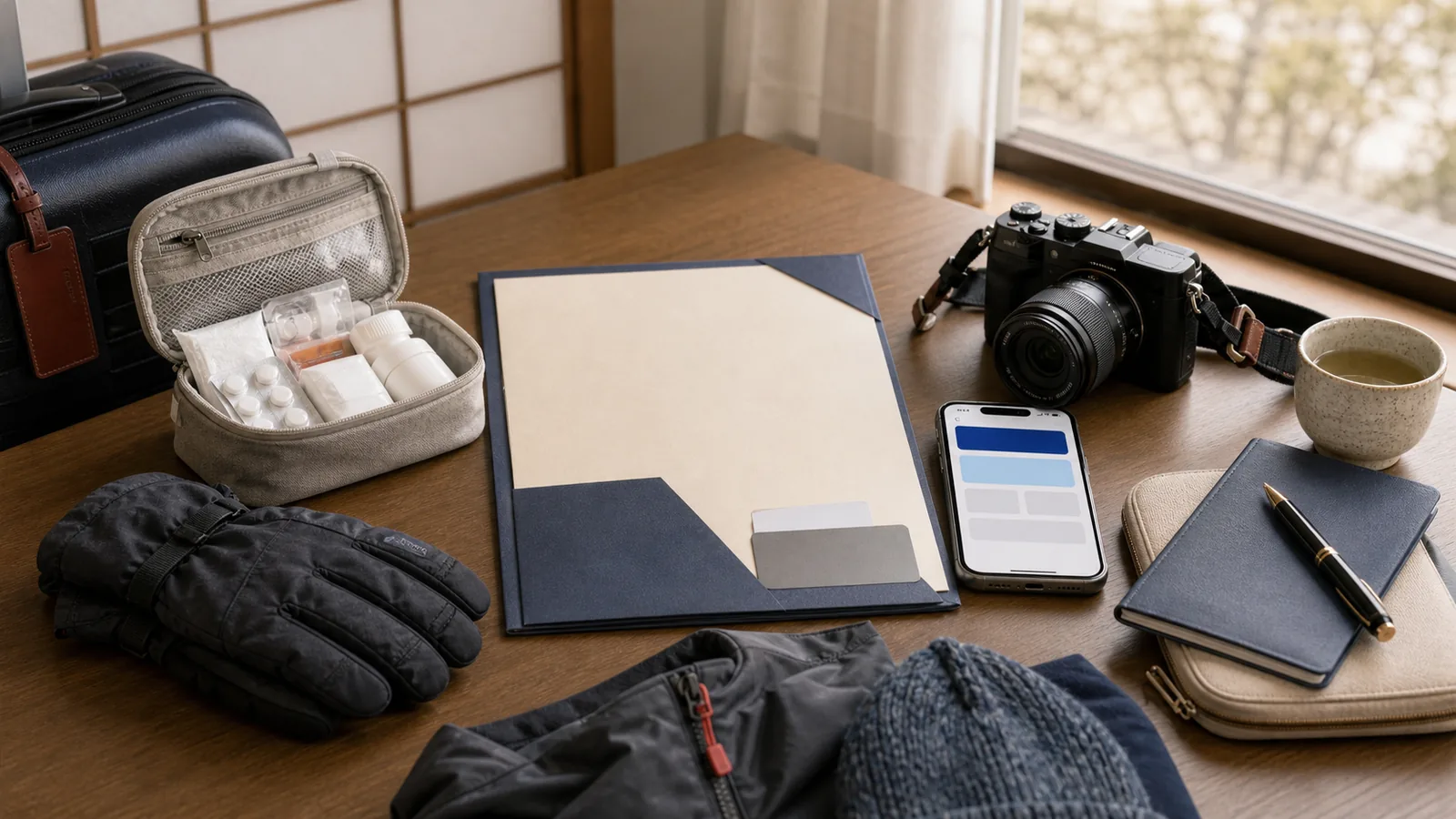
Do you need Japan travel insurance? Real medical bills tell the story: a Niseko ski fracture cost 380,000 NTD, Kyoto food poisoning ran 6,500 HKD, a Tokyo subway slip hit 18,000 RMB. Yet insurance for 7-10 days costs only 500-1,000 NTD. This guide breaks down what insurance covers, credit card vs commercial gaps, when to add adventure riders, and tips for chronic illness and senior travelers.
Japan Vending Machines — More Than Drinks
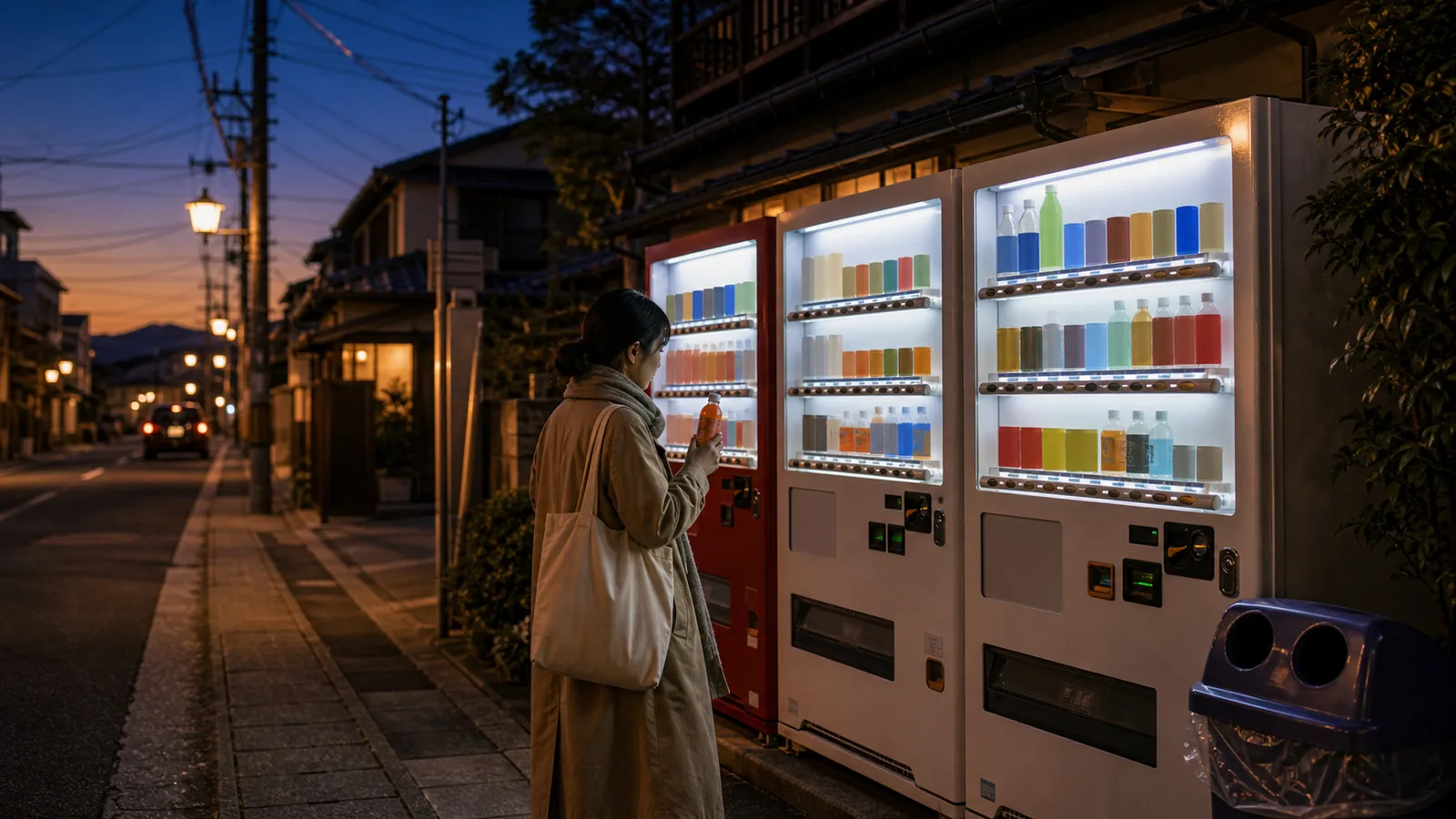
Japan has 4 million vending machines — one for every 33 people. But they sell far more than drinks: hot bento, ramen, umbrellas, neckties, fresh eggs, live crabs, and even rings. This guide lists 10 major categories plus 15 quirky machines you have never seen, covering hot food, clothing, charging, fortune slips, and live seafood. Photograph them as you go.
Want the most useful travel Japanese?
543-word travel Japanese pack
Airport / hotel / restaurant / sightseeing scenes · romaji included · no kana prerequisite
Start →Want to keep learning Japanese?
JLPT main course
N1-N5 curriculum · 12,953 words · 2,682 kanji · 723 grammar points · 140 articles
View course →