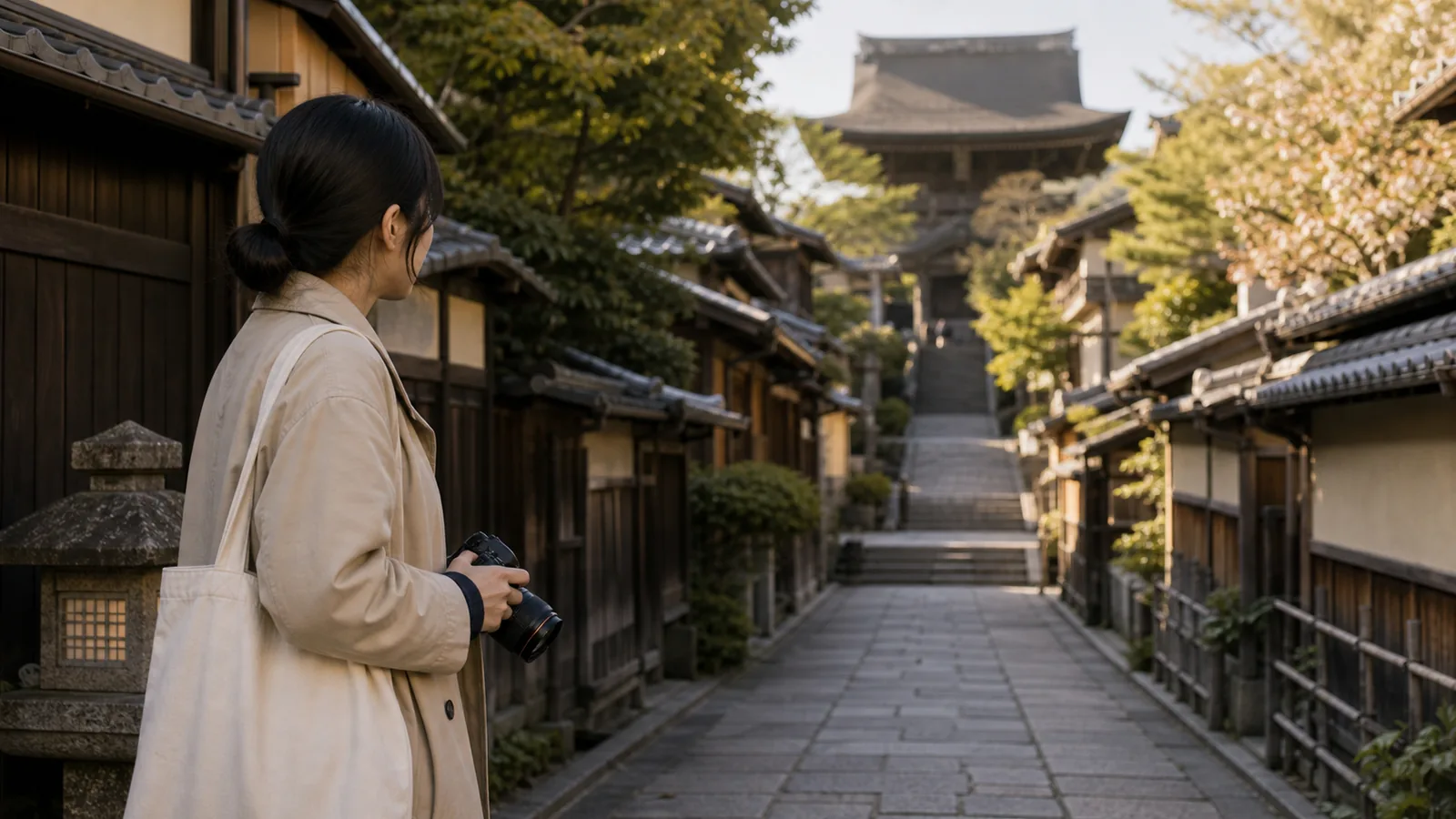
Japan is a photographer’s dream — shrines, cherry blossoms, Mount Fuji, the old streets of Kyoto are all instantly photogenic. But some places will fine you, throw you out, or get you confronted by locals if you take a photo. Tourist cameras keep getting better and the urge to share on social media keeps climbing, yet Japan’s rules around portrait rights, sacred spaces, and private property are stricter than most visitors realize. Here are the six red lines tourists trip over most often.
Red line 1: The inner halls of shrines and temples The outer worship hall, torii gates, approach path, and purification fountain are generally fine to photograph, but the inner hall (where the deity is enshrined) usually prohibits photography. Temples are stricter — the inner sanctum where the Buddha statue is enshrined is typically off-limits entirely. Look for signs reading 「撮影禁止」 (satsuei kinshi) or “No Photography.” — Kyoto’s Kinkaku-ji: the exterior is fair game, and the interior is off-limits to entry anyway, so no problem. — Kyoto’s Kiyomizu-dera main hall: photography forbidden, with abundant signage. — Nara’s Todai-ji Daibutsuden: forbidden, since the Great Buddha is a National Treasure. — Fushimi Inari Taisha: fully open to photography (which is exactly why it goes viral on Instagram). For people in the middle of worshipping, avoid their faces — shoot their backs or the surrounding scene.
Red line 2: Kyoto’s Gion — geisha, maiko, and the streets Gion, Miyagawa-cho, Kamishichiken, and Pontocho in Kyoto are the “flower streets” — traditional districts where geisha and maiko work. Since 2019, certain Gion alleys have been officially closed to photography, with a 10,000-yen fine for violations (tourists being the primary cause). The reason: geisha heading to work were being surrounded, chased with cameras, even grabbed by the sleeve, harming both their livelihood and their mental health. The rules: — Main streets (Hanami-koji, Shijo-dori) allow street photography. — Small alleys and residential areas (often marked with Japanese signs) prohibit photography. — If you encounter a geisha or maiko: never chase them, do not approach, and absolutely do not grab a sleeve for a selfie. — Want to see a maiko? A formal paid tea house experience or public events like the Gion Festival or odori dances are the legitimate routes.
Red line 3: Restaurants and izakayas — follow the establishment’s rules Food photos at ordinary restaurants are fine, but high-end ryotei, sushi kappo, and bars often prohibit photography, especially of other patrons or the chef. — Sushi chefs and itamae: many veteran masters dislike being photographed. Ask first: “Shashin totte mo ii desu ka?” (May I take a photo?). If they decline, smile and put the camera away — do not push. — Michelin-level ryotei: there is an unwritten rule against photographing other customers or publicly posting the food. — Izakayas: chain spots are generally fine, but respect individual customers’ portrait rights.
Red line 4: Restricted areas in stations, airports, and subways Platforms, train cars, and ticket-gate walls at major stations are usually fine to photograph (tourists are everywhere). But there are special no-photo zones: — Close-ups of ticket gates (to prevent tampering and fraud). — Station staff offices. — Signage marking surveillance camera positions at certain stations. — Airport security, customs, and quarantine zones — photography is completely banned. The moment you see a sign, put the phone away.
Red line 5: Strangers’ children — especially sensitive Japan takes minors’ portrait rights very seriously. Close-ups of strangers’ children equal a major breach of etiquette, and a parent may directly confront you with “Why are you photographing my child?” The right approach: — For a cute scene → shoot from behind or in a wide shot. — To photograph a child doing something (eating takoyaki, playing with toys) → ask the parents first. — Outside schools, in playgrounds, and near kindergartens — do not photograph at all.
Red line 6: The entryways and shared spaces of guesthouses and traditional inns Inside the guest room of a traditional 「旅館」 (ryokan), you can of course take photos, but be careful in the entryway, hallways, dining areas, and near the communal baths. Other guests’ portrait rights matter more than architectural beauty. In the communal bath or sento: photography is absolutely banned, and violating this counts as a sexual harassment offense — there are cases of tourists being deported.
Special area: around Mount Fuji — a photographer’s paradise The area around Mount Fuji, Lake Kawaguchi, Lake Motosu, and Oshino Hakkai is sacred ground for photographers, and 99 percent of it is free to shoot. But take care: do not step onto private land (often fenced), do not stand in the road for a better angle (traffic safety, plus police will move you on), and do not climb onto someone’s guesthouse roof (yes, that has happened).
Pro tip: when you cannot read the Japanese signs, watch the Japanese When you see 「撮影禁止」 「写真禁止」 “No Photography” or “No Pictures,” put the phone away immediately. If there is no sign and you are unsure, watch what the Japanese do: if they are taking photos, you are fine; if none of them are, neither should you. Asking is easy: “Shashin totte mo ii desu ka?” (SHA-shin TOT-temo II-deska?). If they shake their head, smile and put the phone away; if they nod, shoot. Next time in Gion, put the phone down and look at the old streets with your eyes — that will become the most beautiful “photo I did not take” of your trip.
Frequently Asked Questions
Is photography banned at all shrines and temples?
No. Exteriors and gardens are often fine, but halls, statues, inner sanctuaries, and prayer areas may restrict photos.
Can I photograph maiko or geiko in Gion?
Do not chase, stop, or demand photos. Some private streets restrict access or photography. Use paid events or public festivals.
Can I photograph food in restaurants?
Your own food is usually fine, but ask before photographing chefs, counters, or other guests. Follow any no-photo signs.
How do I ask if photos are allowed?
Say, Shashin o totte mo ii desu ka. If they refuse or look uncomfortable, put the camera away.