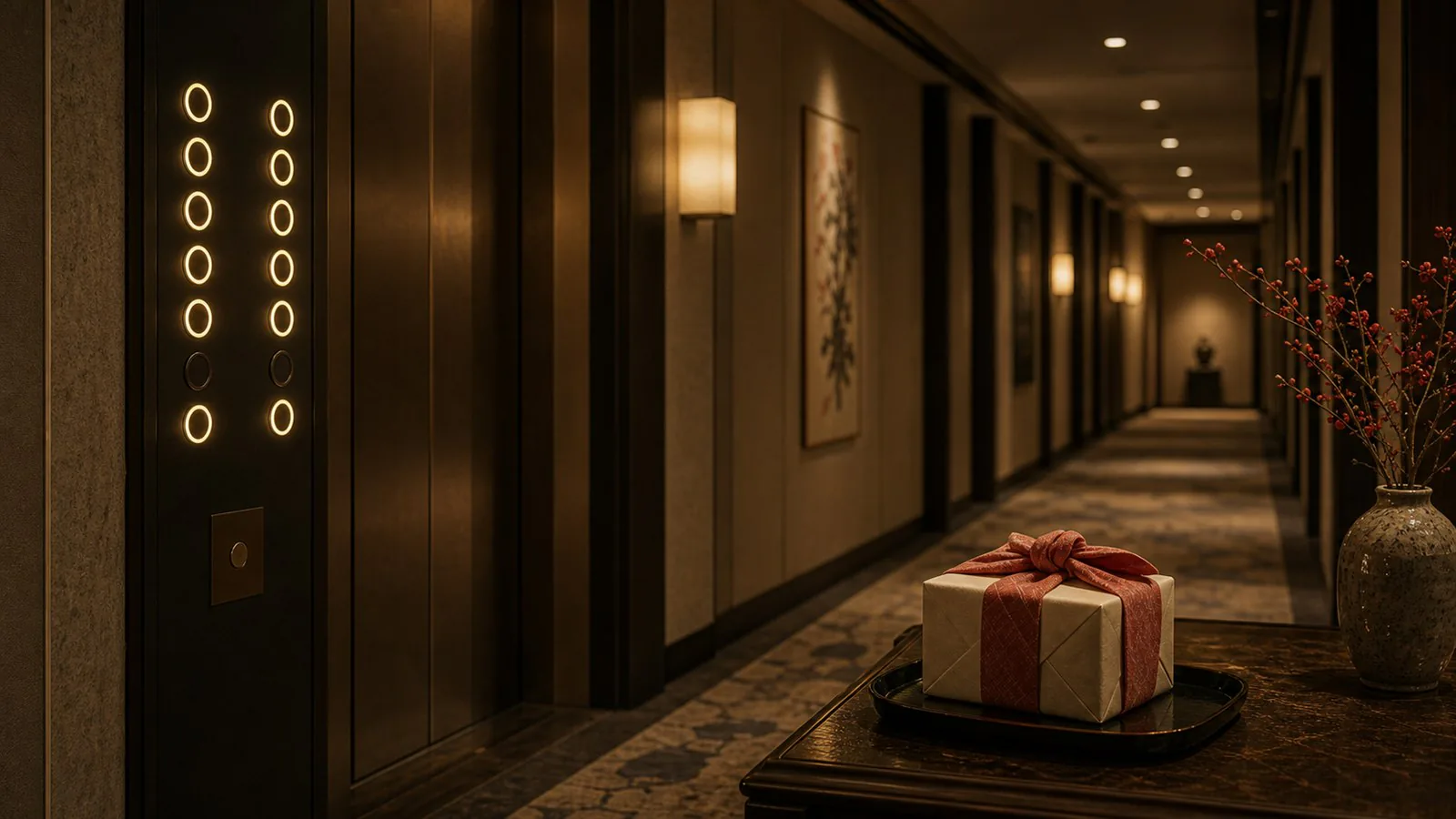
Think Japanese hotels skipping the 4th floor is just whimsy? In reality, 4 and 9 are the two most taboo numbers in Japanese culture, homophones of shi (death) and ku (suffering). This taboo system shapes the entire society — hotel floors, hospital room numbers, wedding gift money, product packaging, license plates — and is everywhere if you look.
Why does 4 equal death?
Japanese has two readings for 4:
- shi — the on-yomi reading, borrowed from Chinese si.
- yon / yo — the kun-yomi reading, native Japanese.
The trouble is that shi (4) and shi (death) are homophones. When kanji entered Japan in antiquity, on-yomi readings 1 through 10 all came from Chinese — ichi, ni, san, shi, go, roku, shichi, hachi, ku, juu. Since death also reads shi, 4 plus death feels ominous.
To avoid the association, Japanese now usually reads 4 as the kun-yomi yon, not shi. The number 7 is often read nana too, avoiding shichi (because shichi sounds close to shichi meaning "place of death").
Why does 9 equal suffering?
9 reads as ku in on-yomi, identical to ku (suffering). Suffering carries connotations of pain, hardship, anguish. 9 plus suffering is bad luck.
So Japanese now usually reads 9 as kun-yomi kyuu, not ku. But the 9 taboo is weaker than the 4 taboo, and ku still gets used in certain contexts (ages like kyuusai for "9 years old" and kokonotsu for the counter form).
Concrete impact on hotels and hospitals
1. Hotel floors: many Japanese hotels skip the 4th floor (going from 3 directly to 5), and some skip the 9th. Modern new construction is less taboo-conscious, but traditional and luxury hotels still avoid these.
2. Hospital room numbers: rooms 4 and 9 are nearly absent in traditional hospitals. The 4th floor is taboo of taboos — being hospitalized on the 4th floor reads as unlucky. New hospitals avoid placing wards on the 4th floor.
3. Hotel room numbers: 404, 444, 490 are all avoided. 428 (shi-ni-ya, "death on Feb 8") is also avoided.
4. Parking spaces: slots 4 and 44 usually get skipped.
Impact on daily life
1. Gift quantities: never give 4 or 9 of anything. 4 or 9 flowers is a no-go. A box of 4 gift items is wrong. Best counts are 3, 5, 7, 10 (odd numbers, a legacy of Chinese culture). 6 is okay despite being even, because roku (6) sounds like roku (good fortune).
2. Wedding gift money: never give 40,000 or 90,000 yen. Standard amounts are 30,000, 50,000, 70,000, or 100,000 yen. Friends of the couple typically give 30,000, while elders and managers give 50,000-100,000.
3. Funeral koden (condolence money): inversely, funerals use amounts containing 4 — 4,000 yen, 40,000 yen, deliberately letting death enter the gift money to complete the farewell. Taboo inverted on purpose.
- License plates: Japanese drivers avoid 42 (shini, "to die"), 49 (shiku, "death suffering"), and plates starting with 4242. Some combinations are banned outright: 42-19, 49-19. **You can pay extra to request a specific plate (kibo number), and almost no one chooses 4 or
- **
5. Product packaging: cake boxes of 4 or 6 exist, but rarely as a featured 4-pack. Wagashi and tea gift sets usually come in 5, 6, or 8.
The taboo is loosening
Since 2000, younger generations care less about number taboos than their elders. Convenience stores and chain operations do not deliberately avoid 4 and 9 in numbering. New apartment buildings are starting to keep the 4th floor (since "keeping it equals lower prices equals lower investment value"). But hospitals, traditional inns, kimono shops, and shrine-related venues still observe strict avoidance.
Younger people sometimes flip the 4 taboo with the four-leaf clover (yotsuba no kuroba) — "unlucky 4" plus leaf becomes lucky. Creative marketing.
Comparison with foreign taboos
The Chinese 4 equals death follows the same logic, so mainland China, Hong Kong, and Taiwan also avoid 4. But Chinese speakers do not taboo 9, because Cantonese 9 (gau) sounds like 9 (gau, longevity) — auspicious. A subtle difference between Japanese and Chinese taboos.
Western number taboos: 13 (the Last Supper plus the Friday the 13th superstition). Japan has no 13 taboo (Christian influence is minimal), so hotels usually have a 13th floor.
Scenarios for tourists
First, picking a hotel room: at check-in, staff assign you a room directly. Rooms starting with 4 or 9 are almost never assigned to Japanese guests, but staff will assign them to foreigners without hesitation (assuming foreigners do not mind). If you do mind, just ask: sumimasen, betsu no heya ni shite itadakemasu ka (sorry, could I have a different room?).
Second, finding the 4th floor in elevators: modern hotels include the 4th floor (sometimes marked F instead of 4F), traditional ones skip it (3F to 5F). Do not be surprised by the jump.
Third, giving gifts to Japanese friends: 4 or 9 items is taboo. Give 5 candies, 3 flowers, 10 pineapple cakes. Avoid quantities of 4 and 9.
Fourth, buying gift money envelopes (shugibukuro): avoid amounts with 4 or 9. 30,000, 50,000, 100,000 are safe. Close friends of the couple give 30,000, bosses or elders give 50,000-100,000.
Fifth, rental car plates: most rental companies already avoid 42 and 49, so you do not need to request specially (they have already done it).
Pro tip: how Japanese handle 4 in unavoidable contexts
When 4 must be expressed, Japanese use substitution strategies:
- Write 4 as the kanji 四 (softening the visual impact of the digit).
- Read 四 with kun-yomi yon or yottsu (avoiding the shi sound).
- Use four-leaf clover symbolism inverted — binding 4 to luck.
- The four seasons (shiki, spring/summer/autumn/winter) carry no taboo — natural cycles are exempt.
Closing: taboo as social memory
The 4 and 9 taboos reflect Japanese psychological avoidance of death and suffering. This system has continued from the 8th century arrival of kanji into the 21st century. Modern attitudes have softened, but it remains cultural DNA.
Next time you stay in a Japanese hotel, watch the elevator buttons — when you see 4 skipped, you are looking at a 1,300-year cultural pattern made concrete. This is not superstition. It is etiquette refined by centuries of social care.
Frequently Asked Questions
Why are 4 and 9 unlucky in Japan?
One reading of 4 sounds like death, and one reading of 9 sounds like suffering. The taboo matters most in gifts, hospitals, and traditional settings.
Do Japanese hotels really skip floors or room numbers?
Some do and some do not. Hospitals, traditional inns, or formal venues are more likely to avoid certain numbers.
Can you give gifts in sets of 4 or 9?
For formal occasions, avoid it. Casual souvenirs are usually fine, but weddings, hospital visits, and funerals require more care.
Are there other number rules in Japan?
Yes, depending on the occasion. Weddings, funerals, and hospital visits each have their own symbolic concerns.