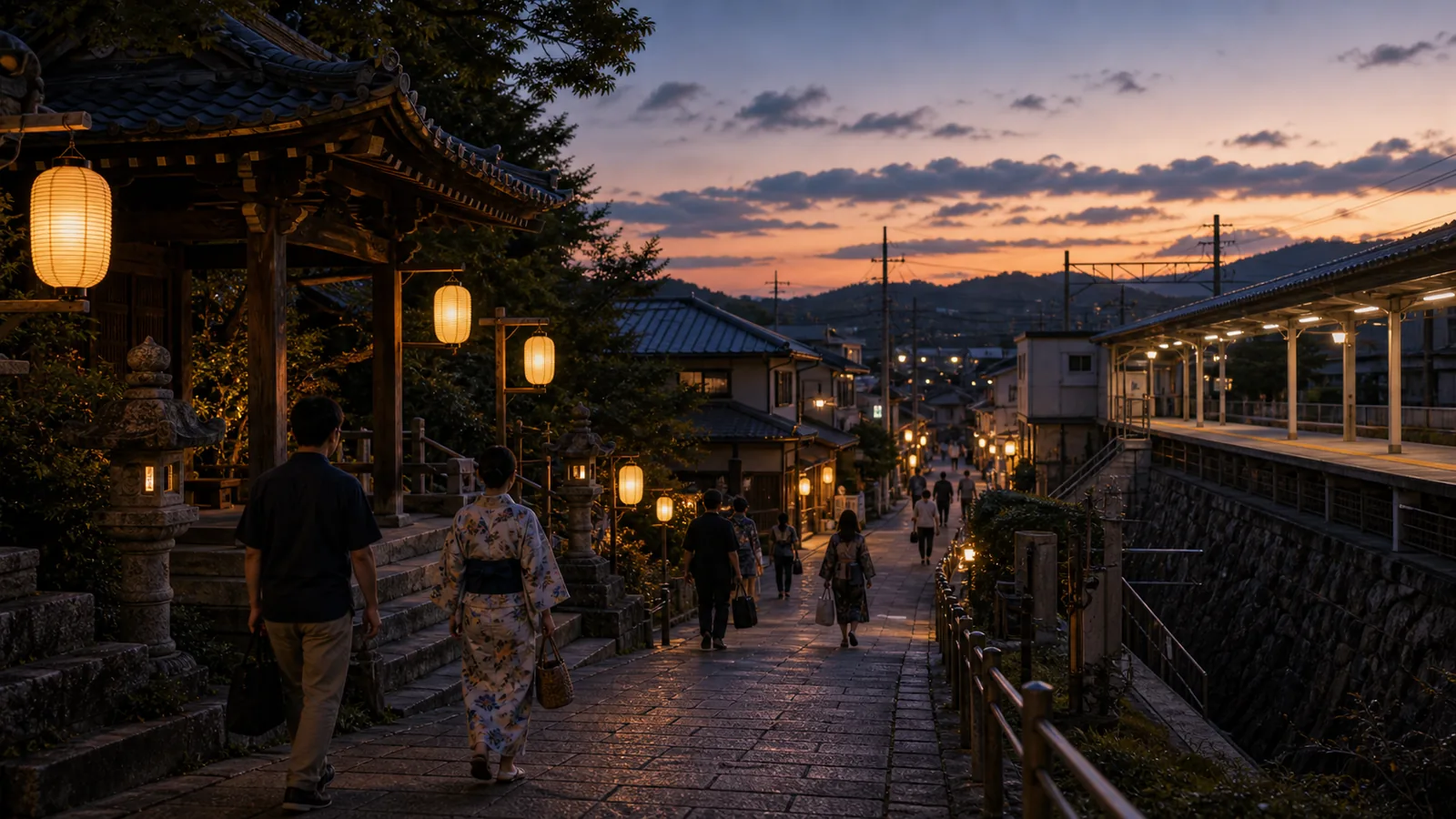
When you hear「Obon」you may think it is hell like Golden Week. Not necessarily — the Obon period actually has a counter-strategy bonus: the big cities of Tokyo and Osaka empty out and tourist sites become easier to walk. This article unpacks what Obon is, which days affect transit, and which sights to dodge versus charge.
What is Obon?
「お盆」 (the Obon break) is Japan’s Buddhist mid-summer festival, comparable to the Chinese Zhongyuan ancestor festival. Every August 13-16, Japanese people 「帰省」 (return to their hometowns) to clean graves and spend time with family. Tradition holds that ancestral spirits return home during these four days, so households hang 「迎え火」 (welcome fires) and lay out 「精霊馬」 (spirit horses). Some regions follow the old calendar and observe Obon in July (downtown Tokyo, Aomori), but most of the country observes it in August.
Transit impact during Obon
1. August 11-12 outbound: from Tokyo, Osaka, and other major cities toward the regions, shinkansen are packed and flights double in price. The Tohoku shinkansen out of Tokyo is the worst.
2. August 14-16 inbound: the reverse — tickets and flights from the regions back to the big cities are equally packed. The peak is the evening of 8/16 into the early hours of 8/17.
3. Sandwiched between, 8/13-15 in the big cities: actually empty. Tokyo and Osaka see a 30 percent drop in foot traffic these days, sights are not crowded, and hotel rates stay steady. Reason: Tokyoites have all gone home with their families.
Two-sided impact: regional sites vs cities
1. Regional sites are packed: Hokkaido, Okinawa, and Kyoto see extremely high tourist density. Hokkaido flights are already in peak season in July-August, and Obon adds another 50 percent on top.
2. Big cities empty out: Shinjuku Isetan in Tokyo, Ginza, and Asakusa are 30 percent quieter on 8/13-15. This is the best window for counter-strategy.
3. The Kyoto paradox: Kyoto is both a tourist city and a ritual city. On one side 「五山送り火」 (the Daimonji Fire Festival on the evening of 8/16) is an internationally famous event that packs the city; on the other, weekday Japanese tourism actually drops, creating a chaotic foot-traffic pattern.
What is the「Gozan Okuribi」?
On the evening of August 16, five mountainsides east of Kyoto light huge bonfires in the shapes of「大」「妙」「法」「鳥居」, and 「舟」, sending the ancestral spirits back to the other shore. This is one of Japan’s three great fire festivals and is visible from anywhere in central Kyoto. It begins at 8 p.m. on 8/16, and the best viewpoints are the Kamogawa riverbank, the Imperial Palace area, and around Shijo-Kawaramachi — but the crowds are massive.
Counter-strategy bonus during Obon
If your trip happens to fall during Obon, reorder your itinerary for the benefit:
1. Stay in regional cities before 8/12 (Naha, Sapporo, Fukuoka) for photos without crowds
2. Move to Tokyo or Osaka on 8/13-15 to enjoy emptied big cities plus weekday hotel rates
3. If you are in Kyoto the evening of 8/16, pair it with Gozan Okuribi for a deep cultural experience
4. Avoid the peak on 8/17 return, choosing an LCC airport flight or an early shinkansen
Obon vs Golden Week vs Year-End comparison
— Golden Week (4/29-5/5): a nine-day stretch, both sites and cities completely packed — the worst — Obon (8/13-16): four days, regions packed but cities empty — counter-strategy possible — Year-end and New Year (12/29-1/3): 6-7 days, shrine visits plus homecoming, sights emptier and restaurants closed — suited to「shopping plus big-city New Year」travelers
When to book flights and hotels
If you must come during Obon, book four months in advance. August is already peak season for flights to Japan, and with the Obon premium LCC fares approach full-service airline prices.
Pro tip
The smartest Obon play: leave Tokyo on August 13, skip the regions, play in Tokyo for three days, take the shinkansen to Kyoto on the evening of 8/16 for Gozan Okuribi (same-day tickets are hard but non-reserved standing room remains), then early train back to Tokyo on 8/17.
If your budget allows, book a hotel near a Japanese friend’s house and live the family Obon experience deeply — join the 「お墓参り」 (grave visit), eat 「精進料理」 (vegetarian ancestral cuisine) in the evening — a slice of real Japanese life that few foreign visitors experience. Next time you plan an August trip to Japan, do not skip it because 「flights are expensive」 — look at the dates carefully. If they overlap with Obon, the counter-strategy can produce a trip far better than any normal week.
Frequently Asked Questions
When is Obon in Japan?
Travelers usually need to watch the period around August 13 to 16, though some regions observe Obon in July and company leave varies.
Where does Obon get crowded?
Homecoming routes, regional destinations, onsen areas, and festival locations need the most planning. City business districts can feel quieter, but tourist zones may still be busy.
Is Obon good for staying in Tokyo or Osaka?
Yes, if you move less. Museums, neighborhoods, shopping streets, summer festivals, and fireworks can make a calmer city-based trip.
Do I need to plan Kyoto Gozan Okuribi in advance?
Yes. Check viewing spots, crowd controls, transport routes, and hotel location before the August 16 evening event.