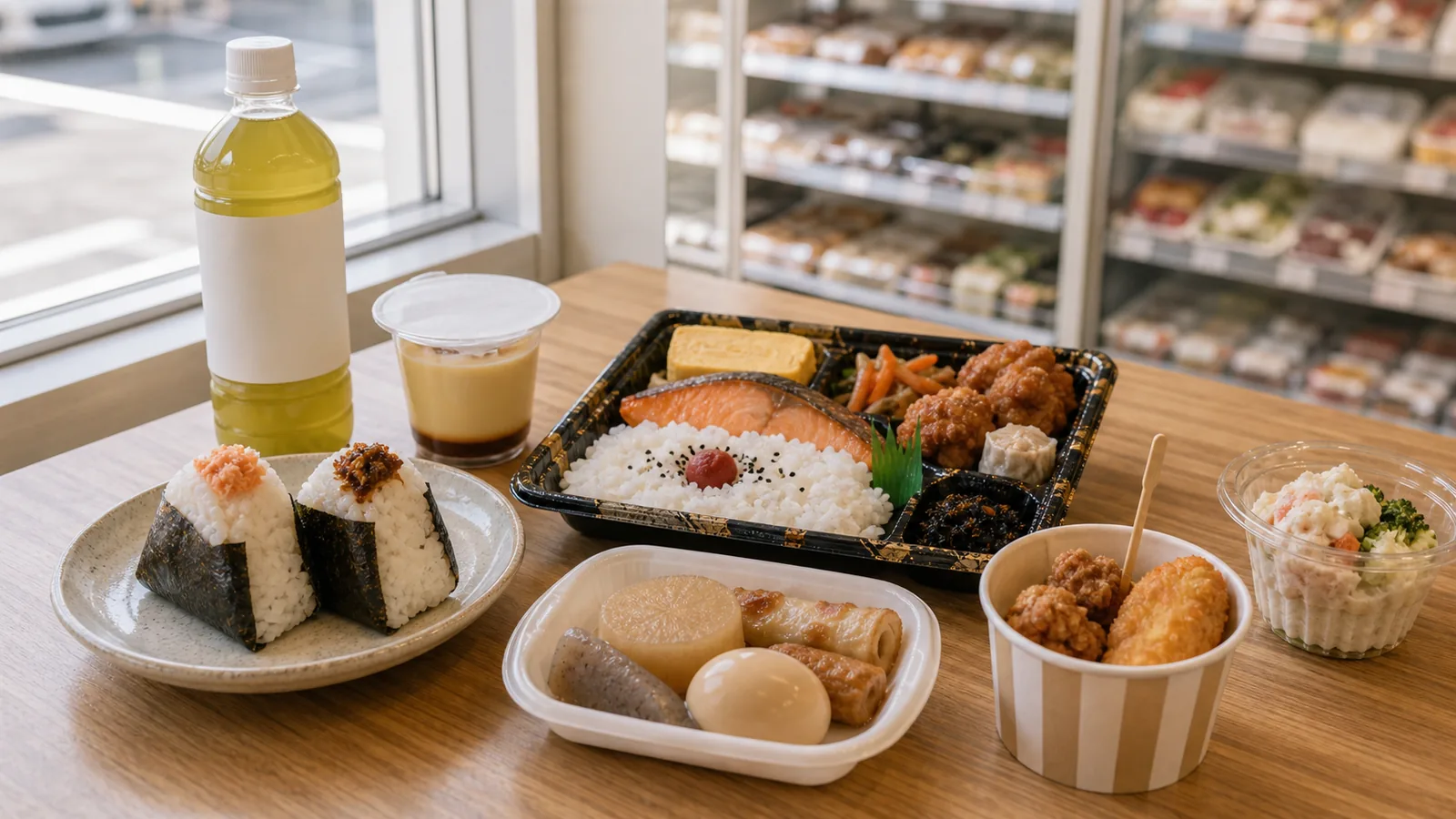
Japanese convenience store food is the world ceiling for konbini food. Many tourists arrive determined to eat "high-end cuisine in Japan," only to discover that a 200-500 yen konbini onigiri beats a 1,500 yen restaurant dish. This article ranks the top 20 must-buy items across the three major chains, turning every konbini visit into a treasure hunt.
The bottom line: konbini food breaks into 4 tiers — onigiri, bento, sweets, seasonal limiteds
Why is Japanese konbini food this good?
1. Extreme competition: the big three chains launch 50-100 new SKUs each week, with a monthly turnover of around 30%. Products that fail to gain traction are pulled within a month.
2. Advanced supply chain: 3-4 deliveries per day, and refrigerated bento must be sold within 24 hours (otherwise discarded that day).
3. Contract farms and factories: 7-Eleven holds long-term contracts with designated farms in Hokkaido, Niigata, and Kyoto, ensuring fresh ingredients with consistent specifications.
4. Rice quality: major chains source premium varieties like Nanatsuboshi, Yumepirika, and Koshihikari.
Tier 1: onigiri (rice balls)
Japanese konbini sell roughly 300 million onigiri per day.
7-Eleven onigiri top 5:
1. Tuna mayonnaise — the classic of classics, 110-130 yen
2. Salmon — grilled salmon chunks, the healthy default, 130-150 yen
3. Okaka (bonito flakes with soy sauce) — traditional flavor, 110 yen
4. Ume (pickled plum) — sour and refreshing in summer, 110 yen
5. Mentaiko — a Fukuoka specialty, 150-170 yen
Family Mart picks: aburiyaki-shake (seared salmon), shio-musubi (salted onigiri), shake & negi (salmon and scallion).
Lawson picks: shio karaage (salted fried chicken), baretsu mentaiko (overflowing mentaiko).
Selection tip: check the date and time slot label on the package (morning / midday / evening delivery). Freshest right after restocking — typical drop times are 4pm and 8-10pm.
Tier 2: bento and hot foods
Priced 500-800 yen, portions equal restaurant servings of 1,000-1,500 yen.
7-Eleven bento picks:
1. Karaage bento (fried chicken) — 550-650 yen, 12 large pieces of karaage (limited availability at certain hours).
2. Gyudon (beef bowl) — 450-550 yen, an alternative to Matsuya / Yoshinoya.
3. Hamburg steak bento — 550-650 yen.
4. Soba bento — 500-600 yen, a cold noodle option.
Lawson picks:
1. Lawson Original Karaage — larger pieces than 7-Eleven, fewer count.
2. Yakitori (grilled chicken skewers) — 80-150 yen per skewer, located at the hot food case beside the register, the top late-night drink companion.
Family Mart picks: Famichiki (fried chicken) — 220 yen per piece, the best-selling konbini fried chicken.
Tier 3: sandwiches and salads (lighter fare)
200-400 yen, portable and quick.
7-Eleven:
1. Tuna sandwich — 250-300 yen.
2. Salad chicken (chicken breast salad) — 180-220 yen, a protein top-up beloved by gym-goers.
3. Potato salad — 180-220 yen.
Family Mart: the Famima Premium Sand series (upgraded sandwiches, 300-400 yen, with better bread and richer fillings).
Lawson: MACHI no Pan (freshly baked bread in select large stores), freshly baked croissants at 130-180 yen.
Tier 4: sweets
Konbini sweets in Japan are the "affordable version of upscale patisseries" — for 300-500 yen, you reach Tokyo Ginza confectionery quality.
Lawson Premium series (the king of konbini desserts):
1. Premium Roll Cake — 150 yen, fluffy sponge wrapped around heavy cream, the best-selling konbini sweet.
2. Basque cheesecake (Basuchi) — 200-280 yen, a konbini original that went viral in 2019.
3. Uchi Cafe cream-loaded pudding — 220 yen.
7-Eleven:
1. Gold Smooth Pudding — 150 yen, exceptionally silky.
2. Warabi mochi — seasonal limited, 200-300 yen.
Family Mart: the Famima the Sweets series (premium desserts, including rich roll cakes).
The full top 20
- 7-Eleven tuna mayo onigiri (130 yen)
- 7-Eleven salmon onigiri (150 yen)
- 7-Eleven karaage bento (550 yen)
- 7-Eleven Gold Smooth Pudding (150 yen)
- 7-Eleven Salad Chicken (220 yen)
- Lawson Premium Roll Cake (150 yen)
- Lawson Basque cheesecake (220 yen)
- Lawson karaage (bento format, 350 yen)
- Lawson yakitori (80-150 yen each)
- Lawson Premium Pudding (280 yen)
- Family Mart Famichiki (220 yen)
- Family Mart seared salmon onigiri (170 yen)
- Family Mart Premium Sand (350 yen)
- Family Mart seasonal daifuku (180 yen)
- All three chains: oden — winter limited, 80-200 yen per skewer, 5 skewers = a 500 yen filling meal
- All three chains: cup noodles — premium versions 250-350 yen, Nissin, Maruchan, Acecook all offer specialty flavors
- All three chains: frozen pizza and frozen pasta — 200-400 yen, microwave-ready in 3 minutes
- All three chains: 100% juice and vegetable juice (Ito En, KAGOME) — healthy supplements
- All three chains: freshly roasted satsumaimo (sweet potato) — select large stores, winter limited, 300-500 yen
- All three chains: freshly ground coffee from in-store machines — 100-300 yen, Seven Cafe and Lawson MACHI cafe coffee rivals Starbucks
Pro tip 1: heating onigiri
For convenience store onigiri, ask the clerk "atatamete kudasai" ("please heat it"). Staff microwave for 20-30 seconds. Foreign travelers often forget this step and end up eating cold rice balls.
Pro tip 2: 24-hour stores versus short-hours stores
Most urban konbini are 24-hour, but rural and suburban locations sometimes close from 22:00 to 6:00.
Pro tip 3: freshest right after delivery
Major chains restock onigiri and bento at these times: 4-7am (breakfast and commute), 1-4pm (after lunch, before dinner), 8-11pm (late-night demand). The 4-6 hours after each delivery are the freshest window.
Pro tip 4: cold versus hot bento
Cold bento (onigiri, salads, sandwiches) sit on the refrigerated shelves. Hot bento and hot food (fried chicken, yakitori, oden, hot soup packs) live in the warmer case beside the register, where staff ask whether you want it heated (some are automatically warmed).
Pro tip 5: follow the "shinhatsubai" labels
The red and yellow "shinhatsubai" ("new release") shelf tags mark items launched that week, typically the highest in quality and creativity. Konbini push 50-100 new SKUs weekly, and missing the red tag means waiting 1-3 weeks for restocks.
Pro tip 6: health and supplement aisles
Larger 7-Eleven and Family Mart locations stock eiyo drinks (energy drinks like Lipovitan D), protein bars and powders, and vitamins. Useful for fatigue during long trips.
On your next konbini run, do not just buy water and instant noodles — hunt for the red "shinhatsubai" tags, browse Lawson’s dessert case or 7-Eleven’s onigiri shelf, and try a Famichiki paired with a Premium Roll Cake. Konbini are the cheapest yet deepest cultural experience of Japanese travel. With a daily 1,000-1,500 yen konbini budget, you can eat at chef-grade quality.
Frequently Asked Questions
What should I buy first at a Japanese convenience store?
Start with onigiri, sandwiches, hot snacks, sweets, and unsweetened tea. Try classics first, then seasonal or new-release items.
Should convenience store onigiri be heated?
Most seaweed-separated onigiri are eaten cold. Grilled rice balls, meat-heavy rice items, bento, and hot snacks are better candidates for heating.
Is 7-Eleven, FamilyMart, or Lawson best for food?
There is no single winner. 7-Eleven is steady for onigiri and bento, FamilyMart is popular for hot snacks and Famichiki, and Lawson is known for sweets and Karaage-kun.
How do I choose fresher convenience store food?
Check the consume-by time, store turnover, and shelf condition. Station, office-area, and tourist-area stores often restock quickly; late-night rural stores may have fewer choices.