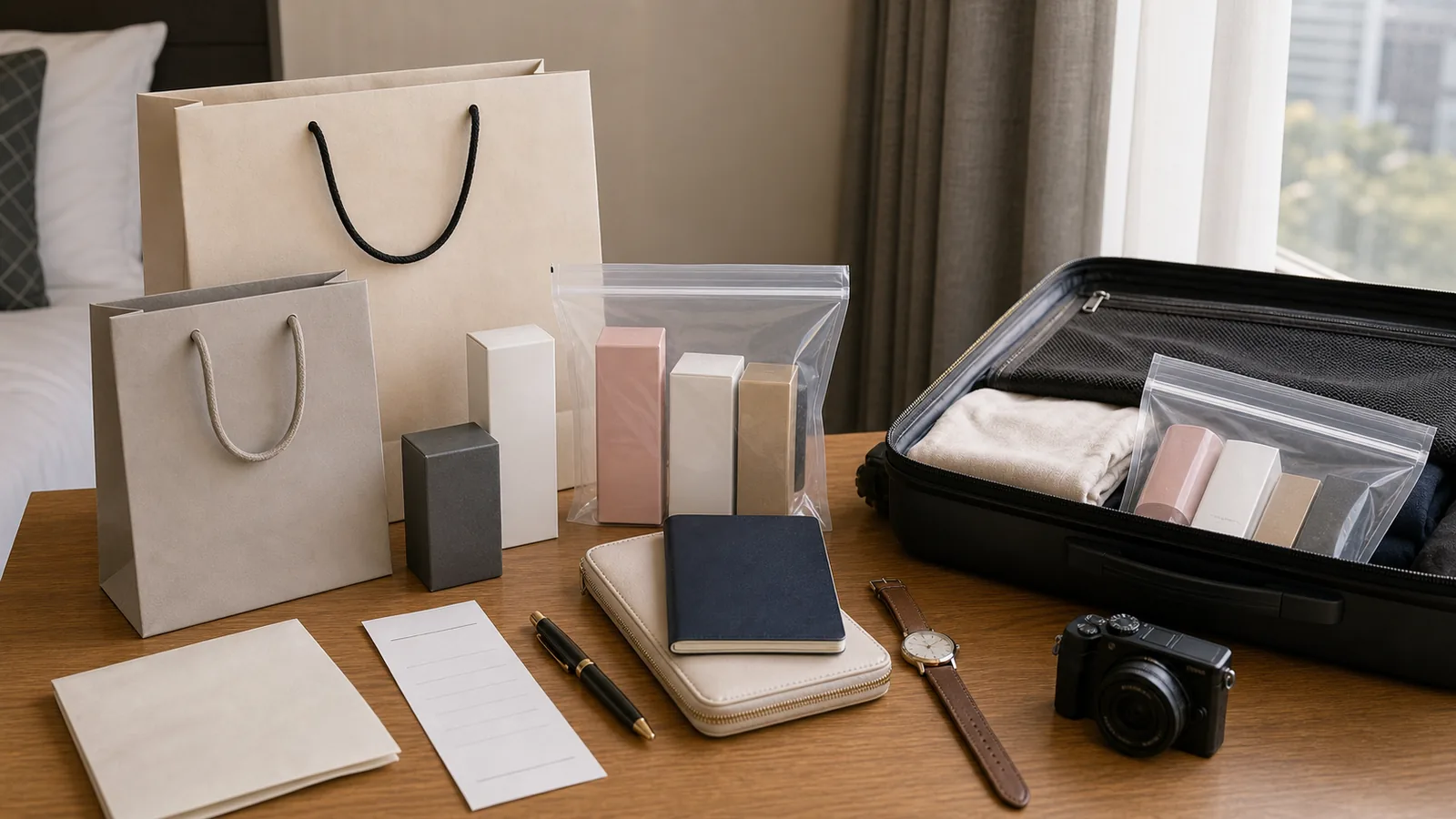
Think Japan tax refund just means flashing your passport at checkout? In reality, the rules have shifted significantly since 2024, and getting the process wrong can mean being stopped at customs and forced to pay back the 10% tax. This guide lays out the complete flow from store to airport.
Baseline: Japan consumption tax is 10%, and tax-free goods fall into two categories
Foreign tourists in Japan qualify for menzei (tax-free) status, meaning the 10% consumption tax gets waived at point of purchase.
Goods split into two types:
1. General Goods: clothing, bags, electronics, watches, jewelry — tax-refundable when the same-store same-day pre-tax total hits 5,000 yen or more.
2. Consumables: food, cosmetics, medicine, alcohol, tobacco — tax-refundable at the same 5,000-yen pre-tax threshold, and once sealed, cannot be opened inside Japan.
Since 2018, the two categories can be combined to meet the 5,000-yen threshold, but combined purchases follow the consumables rule (sealed, cannot be opened in Japan).
Step 1: Look for the Japan. Tax-free Shop sign
Only stores displaying the Japan. Tax-free Shop logo at the entrance or counter offer tax-free purchases. This covers drugstore chains (Matsumoto Kiyoshi, Don Quijote, Daikoku), electronics retailers (Yodobashi, Bic Camera), department stores, and UNIQLO branches nationwide.
Convenience stores, supermarkets, and restaurants generally do not offer tax refunds (as of 2024, with some large-chain exceptions).
Step 2: Show your passport at checkout (physical passport — copies and photos do not work)
Tell the cashier menzei tetsuzuki (tax-free procedure) and present your original passport. Staff will scan it, fill in the forms, and create an electronic tax-free record (since 2021, paper refund slips are digitized, no longer attached to your passport, but the passport still needs an entry stamp).
Note: travelers who entered via auto-gate QR code have no physical entry stamp and need to request one manually from customs (ask on arrival). No entry stamp means automatic rejection of the refund.
Step 3: Pay the pre-tax price at checkout
Staff ring up the pre-tax price directly (the 10% is already deducted). Example: a bag tagged at 11,000 yen, you actually pay 10,000 yen. A few department stores still use the older model of "pay full price, then go to a separate counter for cash refund of the 10%" — check each store policy.
Step 4: Consumables get sealed in a bag (clear or opaque)
Cosmetics, food, and medicine are sealed in plastic with a tax-free label after purchase. Do not open the seal before leaving Japan, or customs will charge the consumption tax back. Exception? Bought lotion and want to try it mid-trip? Sorry — wait until you are home.
Step 5: Carry-on or checked? Depends.
New rules from 2024: tax-free consumables as a rule cannot be checked (to prevent resale of duty-free goods stolen out of the bag domestically). General goods (clothing, electronics) can be checked. If you bought a large quantity of consumables (say, 20 bottles of SK-II), you can declare to customs for special handling, but the process is cumbersome.
Step 6: Departure customs inspection (Narita, Haneda, and Kansai all run spot checks)
Before boarding, present your passport at the departure customs counter; the system auto-reads your tax-free record. The sealed bags get checked for integrity — if opened, you pay back the consumption tax.
Common mistakes
Case 1: Bought 12,000 yen of cosmetics in Osaka, sealed bag contained one used lipstick — customs charged 1,200 yen back.
Case 2: Matcha chocolate bought in Kyoto was never sealed (cashier oversight), customs charged back. Confirm the seal is secured at the moment of checkout.
Case 3: Tourist opened consumables in Korea during a transit layover — Korean customs do not care about Japan tax-free, but the opened seal was noticed on re-entry to Japan, and the traveler ended up on a watchlist (rare but real).
Not every store refunds the full 10% — some charge handling fees
Some drugstores charge a 1.1% handling fee (administrative cost), meaning your actual refund is 8.9% rather than 10%. Check the price tag before checkout.
Pro tip: cluster all tax-free shopping in the last 2-3 days before departure
Airport departure customs run aggressive spot checks, and Japanese weather extremes can damage consumables in storage. Best to shop in the final 48 hours before flying out — fewer sealed bags to lug around, and you remove the temptation to open them mid-trip.
The 5,000-yen single-store single-day threshold is pre-tax
An item tagged at 5,500 yen just crosses the threshold (pre-tax is 5,000). An item tagged exactly 5,000 yen (tax-included) does not qualify. That is why drugstores so often price items at 4,980 yen.
Mobile Pay works for tax refunds? Yes.
Apple Pay, credit cards, and cash all qualify for the refund. But the passport remains mandatory.
One more reminder before you fly: the 2024 tax-free reform is still in progress, and some rules (like limiting eligible store types, or moving to airport-only refunds rather than in-store refunds) may shift further in 2025 and beyond. Check the latest official notice (Japan National Tax Agency website) before traveling.
Frequently Asked Questions
What changes for Japan tax-free shopping in 2026?
Until October 31, 2026, eligible visitors mainly receive exemption at the store. From November 1, 2026, shoppers pay tax-included prices first and receive the tax-equivalent refund after customs confirmation on departure.
Will sealed bags still be required after November 2026?
The new system abolishes the consumables packaging requirement and the general-goods versus consumables distinction, but tax-free goods still need to be taken out of Japan.
Can I put tax-free goods in checked baggage first?
Do customs confirmation before airline check-in. If inspection is required, you need to be able to present the relevant tax-free goods.
What is the minimum purchase amount for tax-free shopping?
The basic threshold remains 5,000 yen before tax at the same store on the same day. Gold and platinum bullion and coins are outside the ordinary scope.