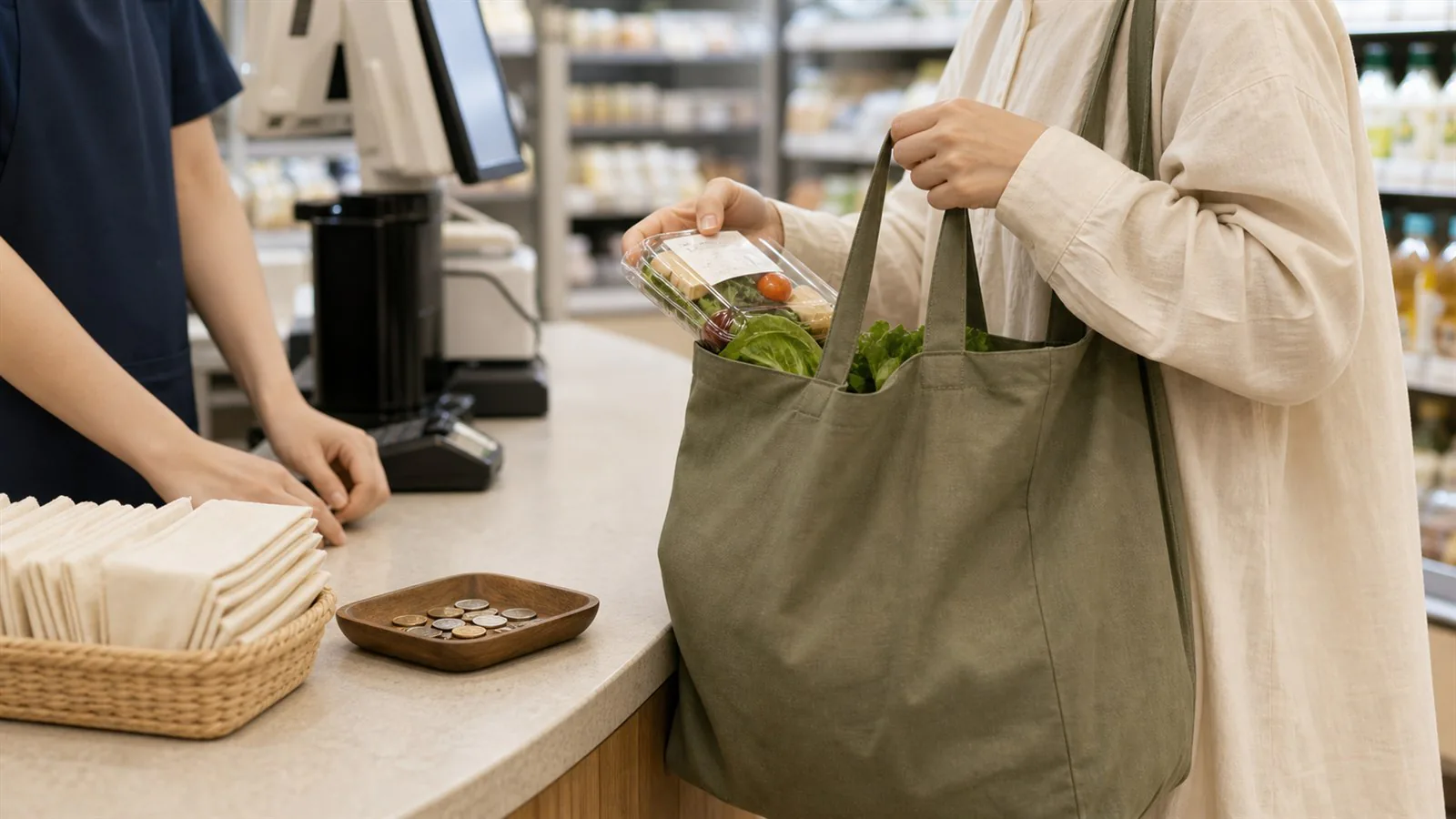
You might assume Japan’s environmental discipline runs bone-deep, but the country-wide plastic bag fee only began in July 2020 — and it came from regulations forced by the global ocean waste crisis, not a voluntary awakening.
July 1, 2020: simultaneous nationwide rollout
On July 1, 2020, Japan’s Ministry of Economy, Trade and Industry made the 「プラスチック製買物袋の有料化」 (mandatory pricing of plastic shopping bags) enforceable. All retail businesses (convenience stores, supermarkets, drugstores, department stores) had to start charging customers for plastic bags. The price was not fixed but it could no longer be free. Common rates ran from 1 yen up through 3, 5, and 10 yen.
Why did this only start in 2020? The backdrop was the 2018 G7 Ocean Plastics Charter and the 2019 G20 Osaka Declaration. As host nation, Japan committed to “zero ocean plastic pollution by 2050,” but at the time Japanese per-capita plastic packaging consumption was second highest in the world (after the United States). The pressure was intense, and the law arrived at exactly that moment.
Pre-fee Japan: bags were free and handed out excessively
Before 2020, the standard convenience-store routine was: buy one bottle of water, get a bag. Buy two rice balls, get another bag. Plus a small bag for the chopsticks. A single shopping trip could yield three or four bags. It was a disaster for the environment and a reflex “service motion” drilled into clerks.
After the fee took effect, the standard clerk line became 「レジ袋ご利用ですか?」 (Need a plastic bag?) or 「袋にお入れしますか?」 (Would you like a bag?). If you do not actively say yes, you will not get one.
Differences across the three major convenience-store chains
7-Eleven, Lawson, and FamilyMart all charge 3 yen (small) or 5 yen (large). But drugstores (Matsumoto Kiyoshi, Cocokarafine) start at 5 yen. Department store paper bags are sometimes still free (paper falls outside the mandate, though some department stores charge voluntarily). The bento box itself does not count as a bag, but the plastic carry bag wrapped around it does.
Exceptions: these bags can still be free
The 2020 rule has three exceptions that can remain free. First, bags with at least 25 percent bio-based plastic (plant-derived). Second, marine-biodegradable plastic bags (which break down naturally). Third, reusable thick bags at least 50 micrometers in thickness. So you may still see supermarkets handing out free bags — they will have small print on them indicating they meet one of these exceptions.
The scenarios tourists actually encounter
First, buying a drink at a convenience store: the clerk asks 「袋いりますか?」 (Need a bag?). If you only bought one bottle, you can carry it out and save 3 yen. Second, buying cosmetics at a drugstore: the total is high and the bag can rip easily, so 5 yen is worth it. Third, fresh groceries at a supermarket: take the bag. Fourth, a gift from a department store: usually still a free paper bag, accept with confidence.
Pro tip: a foldable shopping bag is a must
Every Japanese person now carries an 「エコバッグ」 (eco bag, foldable shopping bag) — smaller than a phone when folded, easy to pocket. Tourists can pick one up at a 100-yen shop and save 100 to 200 yen in bag fees over a three- to four-day trip, while also looking more like a local. FamilyMart and Lawson have released collaboration designs, some printed with city names (Kyoto edition, Hokkaido edition) that double as souvenirs.
The real impact from 2020 to 2025
Ministry of the Environment data released in 2022 showed plastic bag usage had dropped about 70 percent from 2019. But overall plastic waste only fell 5 to 10 percent, because excessive packaging, plastic wrap, and PET bottles are the real bulk of the problem. The law was a good first step, but “true environmental friendliness” still lies further out.
Next time at a convenience store, try saying it in Japanese: 「袋はいりません」 (I do not need a bag). The clerk will give you a smile — the kind that says, “You are not just passing through; you understand what we are trying to do.”
Frequently Asked Questions
Why do plastic bags cost money in Japan?
Japan moved to paid retail plastic bags in 2020 to reduce single-use plastic. Convenience stores, drugstores, and supermarkets often ask if you need a bag.
How much do plastic bags cost in Japan?
Usually a few yen per bag, depending on the shop and size. The amount is small, but you still need to answer clearly at checkout.
What should I say when the clerk asks about a bag?
Say “fukuro wo onegaishimasu” if you need one, or “fukuro wa daijoubu desu” if you do not.
Should travelers bring an eco bag to Japan?
Yes. A small foldable bag makes convenience stores, drugstores, and souvenir shopping easier.