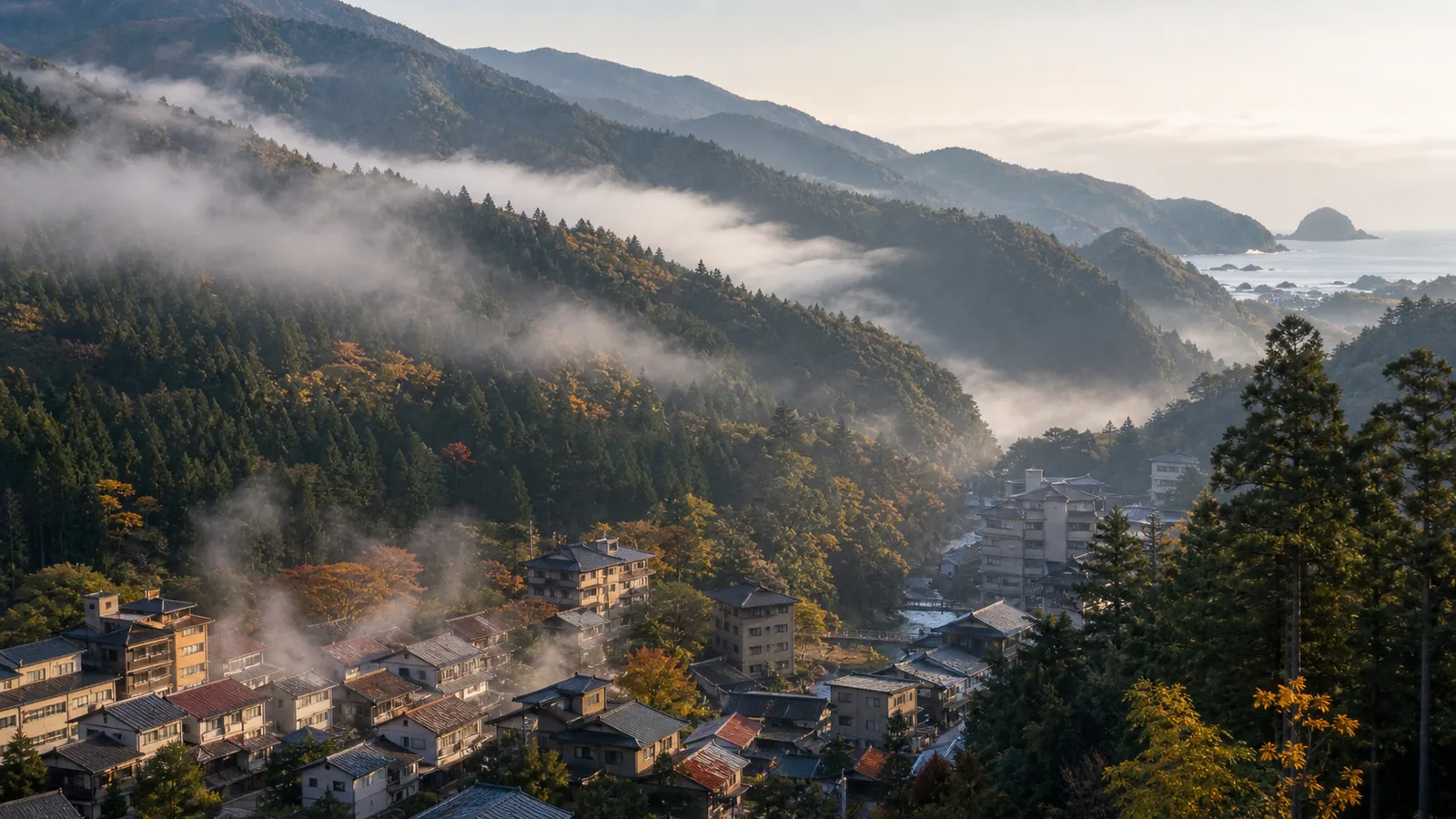
If you ask a Japanese person "where should I go after Tokyo and Kyoto?", half will say Hokkaido and half will say Kyushu. Almost no one mentions Tohoku. Yet seasoned travelers often give a different answer — Tohoku. Why? Because it has the best snow in Japan, the fewest tourists, the most authentic festivals, and the cheapest lodging.
Where is Tohoku? The six northernmost prefectures of Honshu: Aomori, Iwate, Miyagi, Akita, Yamagata, Fukushima. From Tokyo by Shinkansen: Sendai in 90 min, Morioka in 2 hr 10 min, Aomori in 3 hr 20 min. Population is 8.4 million over an area of 67,000 square km (1.9 times the size of Taiwan), giving it a density just one fifth of Taiwan — streets are comfortably uncrowded.
Why is it overlooked? Three reasons. First, it is far from Tokyo (the Shinkansen is convenient, but psychologically the distance feels large). Second, the 2011 Great East Japan Earthquake struck here (with its epicenter off Miyagi), and the shadow of the Fukushima nuclear accident kept international tourists away for a decade — but the Fukushima exclusion zone covers only 5% of the prefecture, the rest is completely safe, with Japanese people continuing to live there. Third, the region is so off the radar that guidebooks barely cover it, no one sees it, no one recommends it, and the cycle continues.
Aomori — apples, snow, festivals, and the Sannai-Maruyama site The northernmost tip of Honshu. Apple production is number one in Japan (60% of national output), with Fuji, Orin, and Sekai-ichi all Aomori varieties.
Winter snowfall is the heaviest in Japan — Aomori City sees snow daily through winter, with accumulations exceeding 8 meters (a frequent Guinness record holder). At Sukayu Onsen, the roof gets buried in snow each winter, creating a yukimi onsen spectacle.
The Nebuta Matsuri (early August every year): one of Japan three great festivals, with massive paper-mounted samurai floats parading alongside haneto dancers, drawing 2.8 million spectators.
The Sannai-Maruyama Site: a major settlement ruin from the Jomon period 5,500 years ago, registered as a World Heritage Site in 2021, a crucial piece of evidence for prehistoric Japanese civilization.
From Tokyo, the Hayabusa Shinkansen runs direct to Shin-Aomori in 3 hr 20 min.
Iwate — Hiraizumi gold, Ryusendo, and wanko soba The largest prefecture in Honshu by area (15,275 square km).
Hiraizumi: the 12th-century golden civilization ruins of the Oshu Fujiwara clan. The Konjikido at Chuson-ji, an entire building covered in gold leaf, is a World Heritage Site. The Fujiwara clan built a "Kyoto of the North" at Hiraizumi for nearly a century, until being destroyed by Minamoto no Yoritomo in 1189.
Ryusendo: one of Japan three great limestone caves, with an underground lake of world-class clarity.
Wanko soba: a Morioka specialty, small bowls of soba refilled endlessly, with the challenge being 100 bowls (roughly 8 regular servings).
Miyagi — Sendai, Matsushima, and beef tongue Sendai is the largest city in Tohoku (1.08 million). The hometown of Date Masamune, who built Sendai Castle in 1600 and laid out the city in a neat grid.
Matsushima: one of Japan three great scenic views, with 260 small islands scattered across the bay, 40 min by JR from Sendai. Natsume Soseki also came to see it.
Sendai gyutan: thinly sliced charcoal-grilled beef tongue served with barley rice and oxtail soup — Sendai station area has a Gyutan Street lined entirely with shops.
Mount Zao Okama: a crater lake of emerald green, with juhyo (snow monsters — trees encased in ice and snow at ski resorts) in winter, a sight unique to Japan.
Akita — rice, beauty, and secret hot springs The prefecture with the fastest-declining population (most aged), but the most original scenery.
Akita rice (Akitakomachi): one of Japan top rice varieties. Akita bijin (Akita beauties): pale, fair skin has long been the archetype of traditional Japanese beauty.
Nyuto Onsen-kyo: a remote mountain hot-spring village with 7 ryokan scattered through the deep forest. Tsuru no Yu, a 350-year-old thatched-roof hidden hot spring, is one of Japan three greatest hidden onsen. Soaking in the winter snow looks straight out of a Japanese drama.
Kakunodate: one of Japan "Little Kyotos", with intact samurai residences and stunning spring cherry blossoms and autumn foliage.
Yamagata — Ginzan Onsen, Dewa Sanzan, and soba Ginzan Onsen: a Taisho-era wooden hot-spring street where snow-night gas-lantern light feels like stepping back in time, said to be one of the inspirations for the bathhouse in Spirited Away.
Dewa Sanzan (Mount Gassan, Mount Haguro, Mount Yudono): a sacred mountain triad for mountain worship, a 1,400-year-old Shugendo training site. The Five-storied Pagoda of Haguro, hidden deep in cedar forest, is the oldest wooden five-storied pagoda in Tohoku.
Yamagata soba: handmade soba in the Dewa style, served generously on wooden boards.
Fukushima — Ouchi-juku, Aizu-Wakamatsu, and a reassurance Important note: Fukushima Prefecture covers 13,784 square km (third largest in Honshu), of which the nuclear-affected zone is only 5%. The rest has radiation levels identical to Tokyo and is fully safe, with the Japanese government publishing monthly readings.
Ouchi-juku: an Edo-era post town with 40 perfectly preserved thatched-roof buildings, the birthplace of negi soba (soba eaten with a single green onion as chopsticks).
Aizu-Wakamatsu: an old battlefield of the Boshin War (1868-1869, the final clash between old and new governments), where the story of the Byakkotai — 16-17-year-old samurai youth who committed mass suicide — took place. Tsuruga Castle (the castle defended by the Byakkotai) still stands.
Mount Bandai plus Goshikinuma: five differently colored lakes formed from a crater eruption — absolutely beautiful.
How to travel Tohoku A 7-day route: enter Sendai, then Yamagata (overnight at Ginzan Onsen), then Akita (Kakunodate plus Nyuto Onsen), then Aomori (Nebuta or winter snow), exit Sendai.
The JR EAST Pass Tohoku Area is 14,890 yen for 5 days of unlimited Shinkansen and regular trains — cheaper than the Hokkaido Pass and covering a wider area.
For your third trip to Japan (after Tokyo, Kyoto, and Hokkaido), Tohoku will surprise you — few tourists, low prices, raw nature, and unpretentious local warmth. It is Japan last untouched corner.