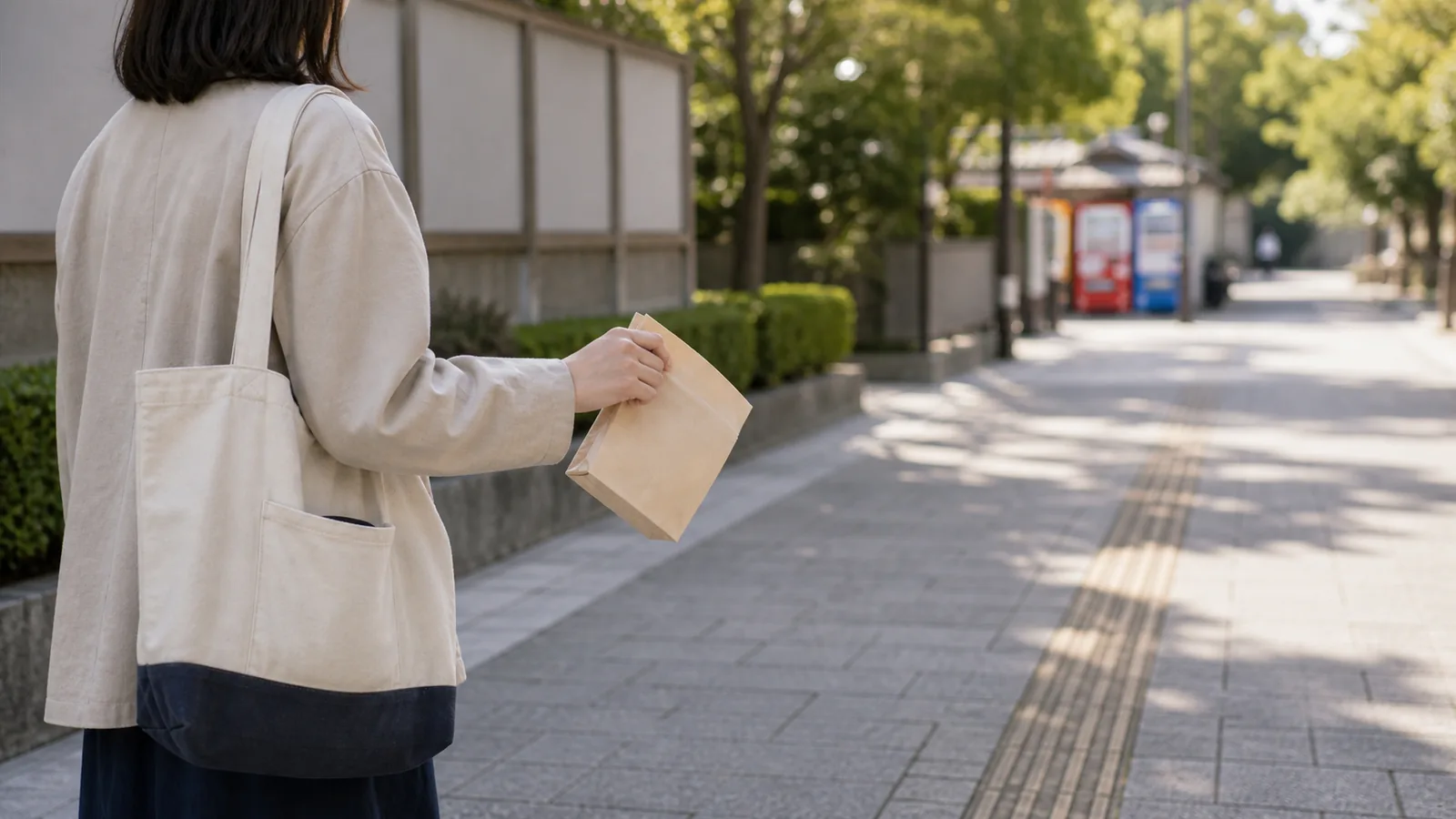
You think such a clean country must have trash cans everywhere on the street? Wrong. Japanese streets almost never have public trash cans. You buy a Pocari Sweat, finish a stick of grilled squid, and find yourself holding a wad of garbage with nowhere to dump it. Yet Japan is somehow spotless — and the contradiction has three layers: history, security, and culture. To avoid carrying your trash all day, tourists need a few tricks.
Why so few trash cans? Three main causes: First, the 1995 subway sarin attack. Aum Shinrikyo left gas canisters in Tokyo subway trash bins, and after the event public-transit bins were removed in large numbers nationwide. Second, 「carry your own trash home」 is something Japanese people learn from childhood. Both home and school teach 「持ち帰り」 (bring it home). Strict sorting plus fewer street bins is a logical extension. Third, manpower savings. With an aging population and not enough cleaning staff, fewer bins mean fewer maintenance hours.
So how do Japanese streets stay clean? The answer is simple: every person takes their own trash home, or to a convenience store or station to dispose of it. Japanese people leave home with a 「ゴミ袋」 (small garbage bag) in their bag, and when they have trash they tuck it away, dumping it at home or wherever there is a bin. Tourists who learn this trick solve half the problem.
Seven tricks for handling trash
Trick 1: convenience stores have bins 7-Eleven, Lawson, and FamilyMart have bins inside or just outside the store, usually divided into 「燃やすゴミ」 (burnable), 「ペットボトル」 (PET bottles), 「缶」 (aluminum cans), 「ビン」 (glass bottles), and 「燃えないゴミ」 (non-burnable). The etiquette: you should really buy something at the store first (no one enforces it, but the bin is for customers).
Trick 2: stations have bins, but fewer and fewer JR and metro stations usually have bins near the ticket gates, with finer sorting (burnable, paper, PET bottles, cans). Shinkansen stations have more bins, since people eat ekiben and toss the packaging. But some smaller stations and Tokyo Metro will remove bins during certain periods (major events or terror alerts), so do not rely on them.
Trick 3: vending machines have PET-bottle and can recycling bins Vending machines appear every few hundred meters in Japan, and there is usually a dedicated PET-bottle plus can recycling bin alongside. But only those two — do not jam in bento boxes or paper bags. That counts as unsorted trash, and Japanese people will frown.
Trick 4: bring a small plastic bag as a「mobile trash can」 Before heading out, pop one or two small plastic bags into your bag (convenience-store bags are fine). Trash goes into the bag, and you empty it at the hotel, the guesthouse, or the next convenience store. It sounds tedious, but in practice the daily trash volume is small, and once it becomes habit you barely notice.
Trick 5: big parks, shrines, and tourist sites usually have bins Ueno Park, the Imperial Palace outer gardens, Kiyomizu-dera, and Arashiyama have bins in marked spots (the maps usually mark them). Tokyo Disney and Universal Studios have plenty of bins inside.
Trick 6: eat where you bought it, finish before you walk Japan has an unwritten rule that 「eating while walking」 is impolite. Buy takoyaki, grilled squid, or a crepe, and most stalls ask you to stand at the stall and finish before leaving. Standing to eat ensures the trash goes into the nearby bin and does not fall as you walk. At tourist sites like Asakusa Nakamise-dori, you will see everyone clustered around the stall finishing first — not because they fear bumping into people, but because they fear food droppings making a mess.
Trick 7: hotels and guesthouses have full sorting Back at your accommodation you will see 3-5 sorting bins — 「可燃」 (burnable), 「不可燃」 (non-burnable), 「リサイクル」 (recyclables), 「ペットボトル」 (PET), 「缶」 (cans). Cleaning staff will sort it for you, but you should still get it roughly right. The most common tourist mistake: a PET bottle must have the plastic label peeled off, the cap unscrewed, and the body crushed flat, then the three parts go into their respective bins. Sounds tedious but takes five seconds once you know.
Special case: long-term guesthouses and Airbnb If you stay at an Airbnb or long-term guesthouse, the host will clearly tell you 「what trash on which day」 (Monday burnable, Tuesday non-burnable, Wednesday recyclables, Thursday bottles and cans). Japanese garbage collection is day-coded, and trash put out on the wrong day is rejected or left at the door. Read the instructions before arrival and put trash in the designated spot (the front door, or the collection station).
Pro tip: pin trash-can locations on Google Maps Before you go, find convenience stores, stations, and parks near your itinerary, and pin 「nearest trash bin」 on Google Maps. During the day, swing by a convenience store and offload — you will rarely accumulate much. Once the rhythm clicks, you stop being burdened by trash. You also realize Japan’s clean streets come from everyone’s careful cooperation.
Frequently Asked Questions
Are there really no trash cans on Japanese streets?
There are some, but fewer than in many countries. Large stations, theme parks, parks, and shops may still have sorted bins.
Can I use convenience store trash cans freely?
Do not treat them as public dump stations. Small trash from store purchases is usually reasonable; outside bulk trash is not.
What goes in vending machine bins?
Usually drink containers such as plastic bottles, cans, and glass bottles. Do not put food boxes, cups, or general trash there.
What is the easiest trash strategy for travelers?
Carry a small bag, keep trash with you, and dispose of it later in proper sorted bins or at your lodging.