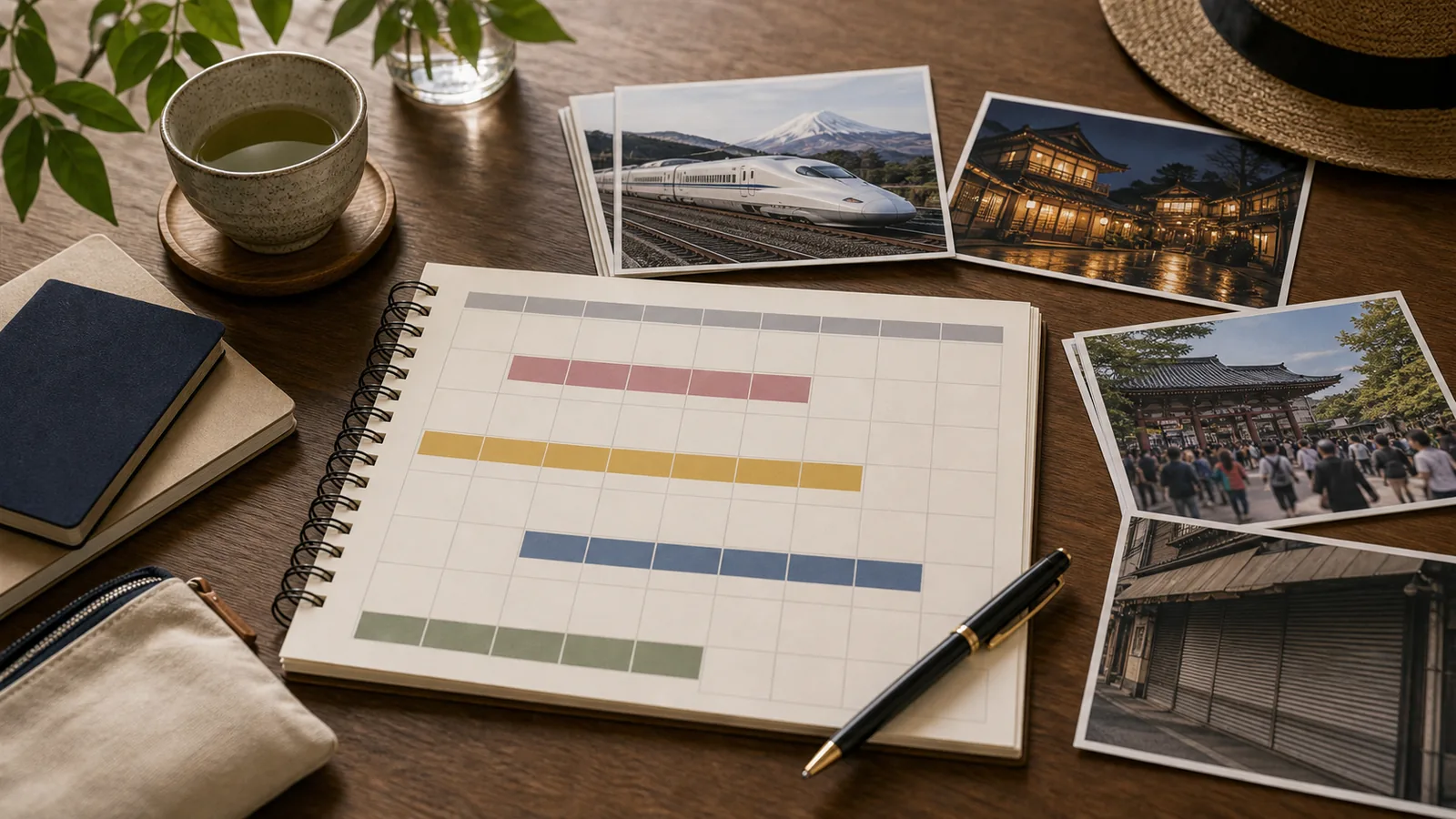
You book your tickets, fly off to Japan excited — only to land in 「ゴールデンウィーク」 (Golden Week) or 「お盆」 (Obon). Shinkansen seats vanish, hotel rates triple, restaurants close, and tourist sites pack solid. This article walks you through the exact dates of Japan’s three big holiday stretches, why these days are the worst, and what to do about it.
Why Japanese national holidays hit tourists so hard
Japan is a country that takes time off in lockstep — all 120 million people travel during the same nine-day window. Shinkansen load factors hit 130 percent (the extra 30 percent stand in the aisles), Tokyo-Osaka flights cost 2.5 times more, and Kyoto hotel rates jump from 15,000 yen to 40,000 yen a night. Taiwan’s 228 weekend and Mid-Autumn break look tiny by comparison.
The Big Three
1. お正月 / Year-end and New Year (Dec 29 - Jan 3)
Japan’s most important traditional holiday, when everyone「帰省」(returns to their hometown). The tourist impact:
— From 12/31 to 1/3 most small and mid-sized restaurants are「お休み」(closed) — Major department stores close early on 12/31, then shut entirely on 1/1 — Shrines are packed for「初詣」(first shrine visit), with 100 million people nationwide — Shinkansen peaks fall on 12/30 plus 1/2-1/3 — On 12/31 trains stop after the 23:30 last service and do not resume until 5 a.m. on 1/1 (the Kanto JR network runs all night for 大晦日 as an exception)
What to do: if you must come at this time, fly in 12/25-29 and out 1/4-5 to dodge the worst peaks. Or flip it — fly into the big cities for 「カウントダウン」 (countdown) on 12/31, then shift to a regional inn from 1/3 (countryside rates are cheaper).
2. ゴールデンウィーク / Golden Week (April 29 - May 5)
Four national holidays chained into a nine-day stretch — the single worst tourist window of the year. We have a full Golden Week avoidance guide elsewhere. The headline: we strongly recommend foreign visitors avoid these nine days unless you are heading deep into the mountains.
3. お盆 break (August 13-16)
A Buddhist ancestral festival when Japanese 「帰省」(return home) and visit graves 「お墓参り」. The tourist impact:
— Aug 12-13: Shinkansen outbound (Tokyo to regions) packs out; Aug 15-16 the inbound reverse — Flights double in price (Tokyo to Okinawa or Hokkaido) — But Aug 14-15 in Tokyo and Osaka are actually 30 percent quieter — locals have all gone home
What to do: flip the script — stay in Tokyo for 8/13-15, when hotels are reasonable and sights clear out. Hit the countryside after 8/16.
Secondary holidays (moderate impact)
1. シルバーウィーク (mid- to late September, 3-5 days): the Respect for the Aged Day plus Autumn Equinox combo. A nine-day version only appears every 5-6 years; usually 3-4 days. Popular sites get a little crowded.
2. Vernal / Autumn Equinox (around 3/20 and 9/22-23): three-day weekends. Most Japanese take short domestic trips. Kyoto and Nara get busy.
3. Sports Day (the second Monday of October): three-day weekend. Foliage has not really started yet, so the impact is moderate.
4. Culture Day (November 3): three-day weekend. Peak Kyoto fall foliage season, hotels fully booked.
The smartest windows for foreign visitors
1. Jan 7 through end of February (except Sapporo Snow Festival week) — the cheapest stretch nationwide, hotels wide open.
2. Late February through mid-March — pre-cherry-blossom, warm days, light crowds.
3. June (rainy season) — wet days, but hotels are 40 percent cheaper, and indoor sights are unaffected.
4. Mid-November weekdays — Kyoto fall foliage on a weekday is one third the crowd.
5. Early December through 12/28 — the pre-New-Year sweet spot. Tokyo Christmas lights and early-winter Kyoto both shine.
The riskiest windows
1. April 29 - May 5: Golden Week
2. August 13-16: Obon
3. December 30 - January 3: Year-end and New Year
Pro tip
Before you go, check the 「全国祝日カレンダー」 (national holiday calendar — search「japanese holidays 2026」on Google) and steer around the relevant connecting days. Pick dates first, price second — flipping that order will cost you 30,000-50,000 extra yen and you still will not find a hotel. One rule to remember next time: wherever Japanese people take a holiday, foreign tourists should stay far away.
Frequently Asked Questions
Which Japanese holiday periods affect travel most?
Year-end and New Year, Golden Week, and Obon matter most. New Year affects opening hours, Golden Week affects transport and hotels, and Obon affects travel direction and festivals.
Do I need to avoid all Japanese holidays?
No. If you move less, book transport and hotels early, and place famous sights on weekday mornings, a holiday period can still work.
What should I check before booking flights?
Check Japanese national holidays and long weekends, then compare them with your intercity movement dates.
Which periods are easier for Japan travel?
After early January, before peak cherry blossoms, June weekdays, and early December are often easier to pace than major holiday periods.