Think Japanese winter just means skiing? There is far more — Shirakawa-go houses dusted in snow, Ginzan Onsen frost-coated lanterns, the ice sculptures of the Sapporo Snow Festival, and the drift ice spectacle off Hokkaido. This guide rounds up the TOP 10 winter snow destinations, from tourist must-sees to skier conquests.
Snow season timing concepts
Central Honshu (Shirakawa-go, Niigata, Nagano): snow begins accumulating in mid-December, with the deepest period running mid-January through late February
Hokkaido: snow appears by late November, accumulates over 1 meter from December, peaks in February
Kanto plains (Tokyo, Yokohama): 3-5 snowfalls a year that melt the same day. Tokyo does not count as a snow-viewing destination.
Kansai (Kyoto): an occasional snowfall from late December through February — Kinkaku-ji dusted in snow is a dream scene but only a 10% probability.
TOP 10 winter snow destinations
1. Shirakawa-go Gassho Village (Gifu) — peak snow in January, with gassho-zukuri thatched roofs blanketed in white. Weekend evening illuminations run about 6 days a year, January-February only. Book lodging 4 months ahead — it is a hot ticket.
2. Sapporo Snow Festival (Hokkaido) — roughly February 4-11 (dates shift slightly yearly), with 200-plus snow sculptures at Odori Park. Concurrent ice sculpture exhibit at the Susukino venue and snow activities at the Tsudome venue. Free admission, a must for tourists.
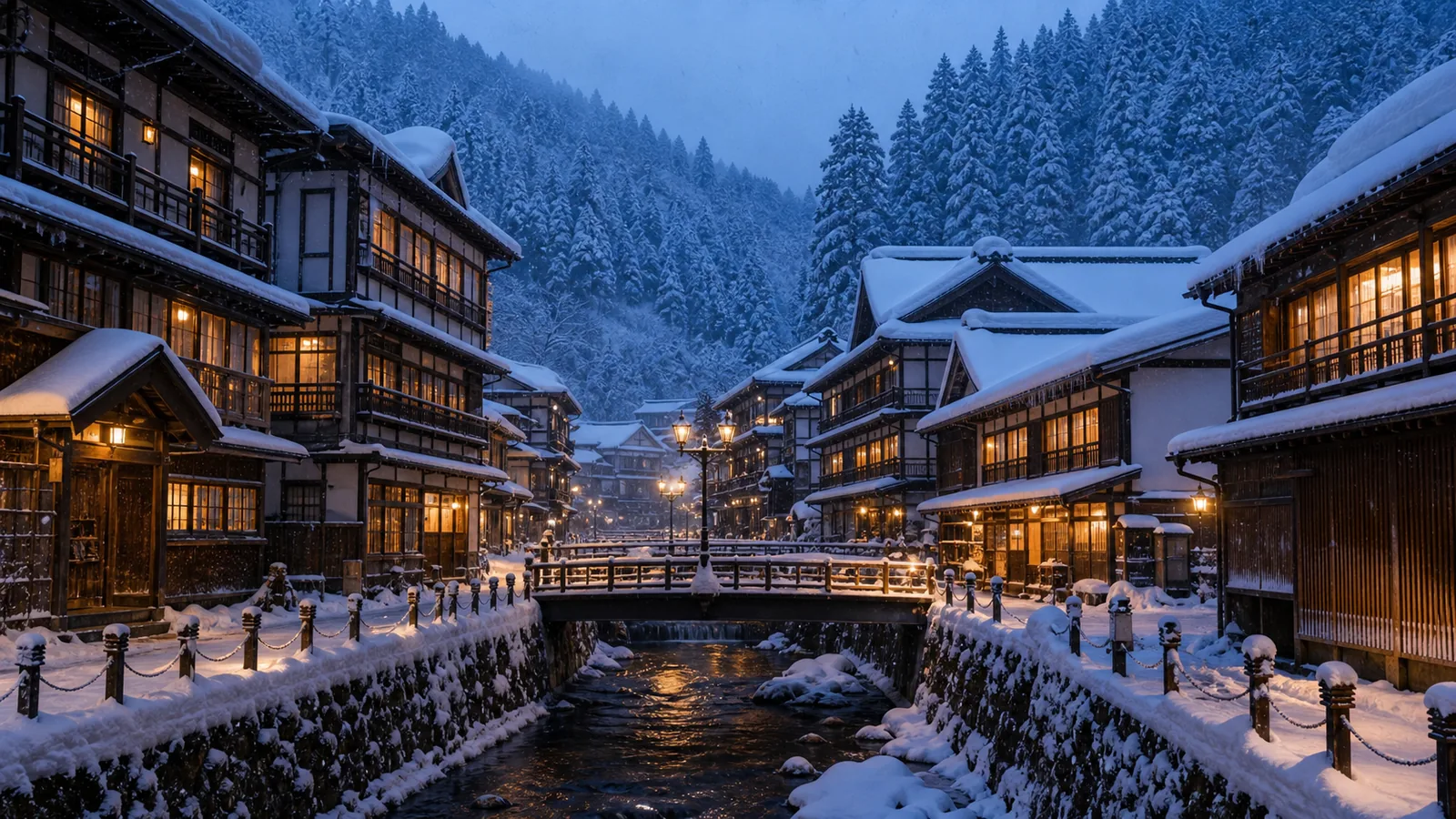
3. Ginzan Onsen (Yamagata) — Taisho-era wooden architecture plus snowy nights plus gas lanterns, the filming location for the Japanese drama Oshin. Mid-late January through early February has the most beautiful snow. Lodging requires booking 6 months ahead.
4. Abashiri drift ice (Hokkaido, February) — ice floes drifting in from Siberia across the Sea of Okhotsk, viewable up close on the Aurora icebreaker cruise. One of the few spots on earth where drift ice is observable.
5. Mount Zao snow trees (Yamagata) — trees encased in snow and ice into Snow Monsters, peaking late January through early February. Take the ropeway to the summit or visit during the evening juhyo illumination.
6. Kusatsu Onsen (Gunma) — the yubatake hot-spring field covered in snow, with steam against snowy backdrop creating a stark contrast. Heaviest snow January-February.
7. Niigata Echigo-Yuzawa — 1.5 hours from Tokyo by Shinkansen, ideal for a day-trip snow-viewing plus skiing combo. Consistent snow from early January to early March.
8. Nagano Shiga Kogen — one of Japan largest ski regions, with a snow season from mid-December through late April. Also home to the Jigokudani wild monkeys soaking in hot springs — a winter-only spectacle.
9. Hokkaido Niseko — globally acknowledged as the best powder skiing on earth, with snow depths of 2-3 meters in January-February and an extremely high density of Western skiers.
10. Kinkaku-ji in snow (Kyoto) — only a 10% probability, but a single photo justifies the trip. Snow-chasing tactic: if Kyoto drops to -2C with 5 cm of accumulation, race over at dawn the next morning — do not wait until afternoon when it melts.
Beginner ski resort recommendations
Beginners: Niigata Naeba, Nagano Hakuba Goryu
Intermediate: Hokkaido Furano, Nagano Shiga Kogen
Advanced (powder): Hokkaido Niseko, Rusutsu
Gear and clothing
Honshu snow tourism: waterproof snow boots plus an insulated coat (-5C rating) plus gloves plus heat packs
Hokkaido: heavy gear — polar-rated coats (-15C standard) plus double gloves plus scarves plus anti-slip boot grips (essential, or you will fall on frozen pavement) are mandatory
Skiing: rent equipment on site — Japanese rental shops are Chinese-language friendly
Surprise pitfall: snow-day transit
Heavy snow can delay JR lines 2-3 hours or shut them down. Shirakawa-go has been cut off for 3 consecutive days by snow in January. When booking express buses, pick companies experienced with snowy mountain routes (Nohi Bus, Hokuriku Railway) — do not blindly book a cheap mini-bus that may get stuck mid-route.
Pro tip:
Shirakawa-go winter illuminations run only 6-8 days a year, so deciding on a January trip in late March means lodging will be fully booked. If you want to see the illumination, start booking in September-October, or fall back on the "Shirakawa-go evening 1-day bus tour" (departing from Kanazawa or Takayama, same-day round trip, no overnight). For your next winter Japan trip, do not fixate on Hokkaido skiing alone — the central mountain Shirakawa-go snow, Tohoku Ginzan Onsen, and Yamagata juhyo each offer world-class unique experiences.
Frequently Asked Questions
Where should I go for snow in Japan?
For a first snow trip, choose Sapporo, Echigo-Yuzawa, or Shirakawa-go. For onsen snow nights, consider Ginzan Onsen or Kusatsu.
Can I visit Shirakawa-go winter light-up on the day?
Usually no. Winter light-up is held on limited dates and commonly requires advance reservation or designated transport.
Is Sapporo Snow Festival on the same dates every year?
No. It is usually in early February, but exact dates should be checked on the official site each year.
What gear matters most for winter Japan?
Waterproof shoes with traction matter most. Warm clothing helps, but slippery soles are the main winter travel problem.