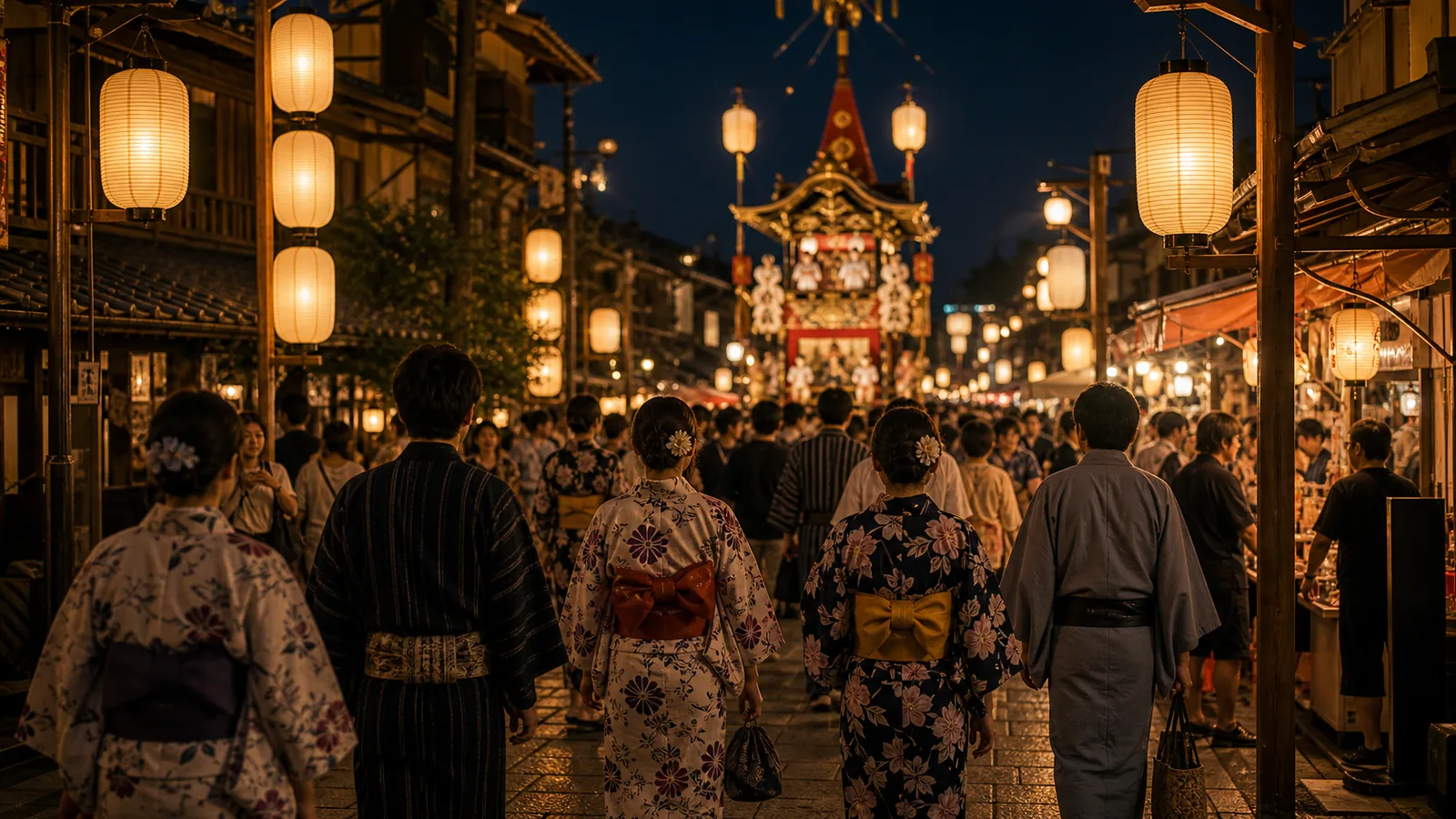
Think Japan is too hot in summer for travel? Wrong. The soul of a Japanese summer is matsuri — the festival. Without attending at least one, you have not really experienced Japanese summer. This guide covers timing, highlights, and a practical yukata-wearing playbook for the three biggest summer festivals.
What are Japan three great festivals?
Japan officially groups the Kyoto Gion Matsuri, Osaka Tenjin Matsuri, and Tokyo Kanda Matsuri as the three great festivals. But for summer specifically, the trio that draws global crowds is the first two plus the Aomori Nebuta Matsuri.
1. Kyoto Gion Matsuri — all of July
The Kyoto Gion Matsuri traces back to plague-warding rituals in 869, giving it more than 1,100 years of history. UNESCO has inscribed it as Intangible Cultural Heritage.
Timing: July 1 through July 31, with different events spread across the month.
Main highlight: the July 17 Saki Matsuri Yamahoko Junko procession and the July 24 Ato Matsuri Yamahoko Junko. Thirty-three yamahoko floats, towering over 12 meters and weighing up to 12 tons, are hand-pulled down Kawaramachi avenue — pure spectacle.
The Yoiyama nights beforehand (July 14-16 and 21-23) bring a night-market atmosphere — Kawaramachi and Shijo-dori close to traffic, lined with food stalls and lanterns, packed with yukata crowds you can barely walk through. These nights are arguably better than the procession itself, because you become part of the scene rather than just watching.
Renting yukata: Kyoto is full of rental shops starting from 3,000 yen, including full dressing service. Return them at day end — no need to bring anything.
2. Osaka Tenjin Matsuri — July 24-25
The Tenjin Matsuri is a 1,000-year-old Osaka summer festival, dedicated to Sugawara no Michizane, the deity of scholarship.
Timing: July 24-25 (fixed dates every year).
Main highlight: the evening of July 25 — land procession into river procession into the fireworks display. Mikoshi shrines parade from Tenmangu, transfer onto boats traveling the Okawa river, and the night closes with 4,000 fireworks. Land, water, and sky in one show.
Osaka locals say if you skip Tenjin Matsuri, you have not really had summer. Spectators line both sides of the Okawa, crowds dense but electric.
Best viewing spots: near Kawasaki Bridge, Gin Bridge, or Sakuranomiya Park — claim your spot before 4 PM if you want a clear view of the 7 PM boat procession.
3. Aomori Nebuta Matsuri — August 2-7
The Aomori Nebuta Matsuri is the largest festival in Tohoku, and the giant illuminated paper floats parading through the night sky offer a sight you will not find at any other festival.
Timing: August 2-7 (fixed annually).
Main highlight: the 19:00-21:00 nebuta parade each evening. More than 20 floats, over 5 meters tall, paper-mounted warrior and mythological figures lit from within by LEDs, glide through the darkness.
The haneto dancers wear traditional costumes, and spectators are welcome to jump into the procession freely — a rare open-participation format among Japanese festivals. Just wear black athletic pants plus a white T-shirt and you can join; local rental shops have full costumes too.
Worthwhile detours: Lake Towada, the Oirase mountain stream, and Aomori local noresore cuisine.
Other summer festivals not to miss
1. Tokyo Sumida River Fireworks (last Saturday of July): 20,000 fireworks along both banks — Tokyo oldest fireworks festival.
2. Tokushima Awa Odori (August 12-15): the dance festival of Tokushima, Shikoku, famous for the chant odoru aho ni miru aho (fools who dance, fools who watch). Like Nebuta, audience members can join the dance.
3. Sendai Tanabata Matsuri (August 6-8): Sendai shopping arcades hang massive paper Tanabata decorations, creating a uniquely atmospheric scene.
4. Yamaguchi Kintaikyo Bridge Festival (various dates): traditional performances near the Iwakuni Kintai bridge.
Practical guide to wearing yukata
1. Rental shops: Kyoto Gion, Osaka Shinsaibashi, Tokyo Asakusa, and most major stations — 3,000-6,000 yen covers full costume, hair styling, and a 1-hour photo session.
2. Mind the heat: July-August temperatures hit 30-35C, and yukata can feel suffocating. Bring water and a sensu folding fan.
3. Footwear: yukata rentals come with geta wooden sandals — walk more than 30 minutes and you will get blisters. Stick bandages on your toes and heels in advance.
4. Restrooms: yukata are nearly impossible to take off solo — plan your bathroom strategy ahead (empty your bladder before putting it on).
5. Hair: rental packages usually include simple updos or floral accessories.
Lodging notes
Hotels in festival cities book solid. Kyoto Gion Matsuri rooms for July 14-17 sell out 6 months ahead; Tenjin Matsuri and Aomori Nebuta hotels mark up 2-3x. Book at least 3 months in advance, or choose nearby secondary spots (Uji near Kyoto, Hirosaki near Aomori).
Pro tip
The ideal festival sequence: Kyoto Gion Yoiyama (July 16) into Aomori Nebuta (August 2-7) into regional fireworks festivals. Across July-August you can absorb the full force of Japanese summer. For your next trip, deliberately plan dates around festival season — even with the heat it is worth it. Yukata plus night festivals plus fireworks plus food stalls is a summer memory only Japan delivers.
Frequently Asked Questions
Which summer festivals should first-time visitors consider?
Start with Kyoto Gion Matsuri, Osaka Tenjin Matsuri, or Aomori Nebuta. Pick one for a deeper evening instead of rushing several.
When should I visit Gion Matsuri?
Events run through July. Travelers usually target the July 17 and 24 Yamahoko processions and the Yoiyama evenings before them.
Do I need to wear yukata to a summer festival?
No, but it adds atmosphere. For a first time, choose an evening with short walking distance and prepare blister protection.
Should I book lodging early for summer festivals?
Yes. Gion Matsuri, Tenjin Matsuri, and Aomori Nebuta dates fill quickly and often involve traffic controls. Book once dates are fixed.