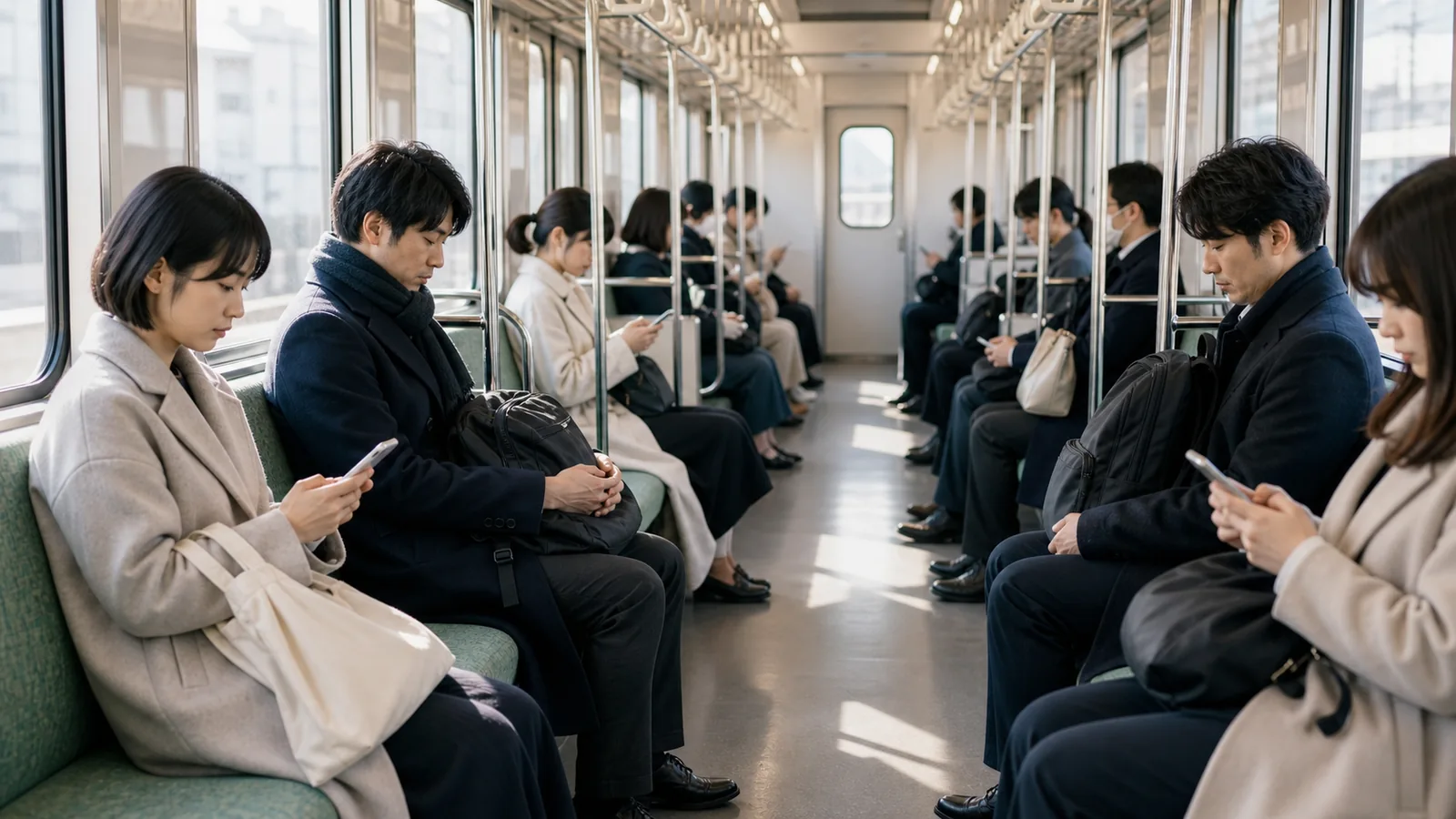
Step into a Japanese train car and the silence will hit you — "huh, no one is talking?" It is not that Japanese people are unfriendly, but trains have a full set of unspoken rules. Break any one and the people around you will not yell, but they will quietly file you under "rude tourist". This guide breaks down the 9 most commonly tripped wires.
Rule 1: no phone calls Phone calls are prohibited inside train cars. Texting, scrolling social media, and watching videos (muted with earphones) are fine, but talking on the phone is an absolute no. Phones are usually set to manner mode (silent), with ringers and vibration kept low. LINE calls and FaceTime count too. If you absolutely must answer, say a quick sumimasen, nochihodo kakenaoshimasu (sorry, I will call back) and hang up.
Rule 2: backpacks in front or at your feet During rush hour, cars are crushed full — a backpack on your back takes up the space of the person behind you. Japanese passengers either swing the bag to their chest or set it at their feet. A tourist with a giant camera bag not flipped to the front is 100% silently resented. Handbags and suitcases go at your feet or under the seat, not in the aisle.
Rule 3: do not eat No eating on short-haul trains (JR Yamanote, subway, private lines), and even drinks should be kept minimal. Long-haul Shinkansen and Limited Express trains are an exception — those with fold-down tray tables are designed for ekiben (station bento), which is exactly why ekiben culture exists. Quick test: is there a tray table, and is the seat designed like long-haul business class?
Rule 4: priority seats really must be ceded Both ends of each car have priority seats, marked with dark-colored upholstery and pictograms of seniors, pregnant women, parents with infants, and people with disabilities. Do not sit there even when empty, unless the car is nearly deserted. When a senior or pregnant passenger boards, occupants of priority seats automatically vacate — a tourist clinging to a priority seat without yielding will get glared at.
Rule 5: makeup, eating, nail clipping — all no-go Putting on makeup, eating, clipping nails, or touching up hair dye in the train car — all prohibited. Japanese media still occasionally debates "is doing makeup on the train rude?" as a long-running question, and the mainstream verdict remains that it is not okay. Do makeup in the station restroom or wait until you arrive.
Rule 6: let passengers off first, board after The instant the doors open, people inside the car must step off before anyone on the platform boards. Do not block the doorway. If you are standing near the door but not getting off, step aside slightly when the doors open to let people exit, then move back. Japanese passengers form this flow naturally — a tourist barging straight in cuts against the current.
Rule 7: car positions and boarding points Lines on the platform mark the position of each door for each car, so passengers can queue. Align with the lines and form two columns, leaving the middle clear for exiting passengers when doors open. Shinkansen and Tokyo Metro signage is especially clear. Do not stretch sideways and block the entire doorway.
Rule 8: seat width — no manspreading, no leg crossing Long bench seats mark each position with width indicators (color blocks or pattern divisions). Sit within your own slot. Men, do not spread your legs (the term "manspreading" comes up regularly in Japanese social commentary). Crossing your legs easily bumps the person beside you, so avoid it.
Rule 9: drunk passenger threw up? Japanese will handle it If you see an intoxicated or unwell passenger in the car, the conductor emergency button (the round button by the door) can be pressed, but only in genuine emergencies. For everyday small situations, Japanese passengers will quietly handle it — you do not need to step in.
Pro tip: women-only cars and avoiding rush hour Mornings from 7:30 to 9:00 are commuter hell — JR Yamanote, Tokyo Metro Marunouchi Line, and Ginza Line warp under the crush. Avoid these windows or switch to the rear cars. Also, some lines run women-only cars in the morning (marked with a pink Joseisenyousha sign outside the door), and any man who boards by accident will be politely escorted off. Before your Tokyo trip, check which lines run them in the morning — Keio, Tokyu, and most Tokyo Metro lines all do.
Frequently Asked Questions
Can I talk on the phone on Japanese trains?
Avoid calls in ordinary cars. If urgent, say you will call back later and hang up. Messaging, maps, and silent phone use are fine.
Can I eat on Japanese trains?
Avoid eating on local trains and subways. Shinkansen, limited express, and sightseeing trains are usually fine for ekiben and simple meals.
Can I sit in a priority seat if it is empty?
In an empty car it is usually fine, but stay alert and give it up immediately. If the car gets crowded or you are unsure, stand.
Are women-only cars all day?
Usually no. They often apply only at specific times, directions, or lines. Check signs, and use the next car if unsure.