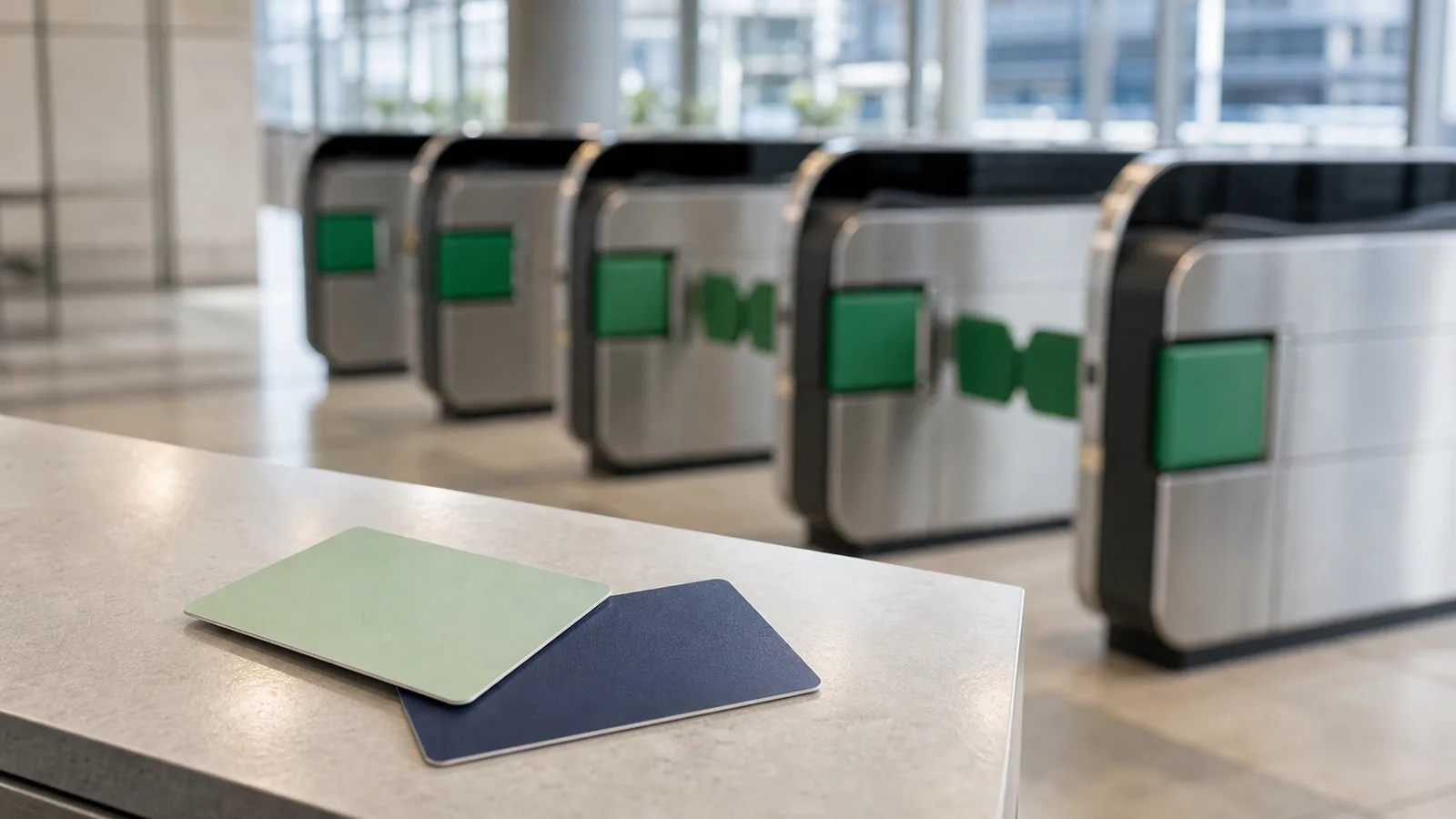
Many travelers assume Japanese IC cards mean "buy Suica in Tokyo, buy ICOCA in Osaka." In fact, since 2013, the ten major IC cards have been fully interoperable nationwide. Wherever you purchase your card, it works at over 90% of train stations, convenience stores, and vending machines across the country. The real selection logic is nothing like what most travelers assume.
The bottom line: short-term visitors should buy a "Welcome Suica" or an "ICOCA & HARUKA" combo
Japan currently has ten major IC cards: Suica (JR East), PASMO (Kanto private railways), ICOCA (JR West), PiTaPa (Kansai private railways), TOICA (JR Central), manaca (Nagoya), SUGOCA (JR Kyushu), nimoca (Nishitetsu), Hayakaken (Fukuoka subway), and Kitaca (JR Hokkaido). All ten cards are mutually compatible. A Suica bought in Tokyo works in Osaka, Fukuoka, and Sapporo, and vice versa.
So where do they differ?
1. Deposit and refund rules. Suica, ICOCA, PASMO and similar named cards charge a 500-yen deposit. To refund the card, you must return to its original issuing region (a Suica can only be refunded at JR East stations). The refund deducts a 220-yen handling fee from the remaining balance. If you are only visiting Japan once, just keep the 500 yen as a souvenir — it works out better than refunding.
2. Visitor-only variants. JR East offers "Welcome Suica" (since 2019), with no deposit and a 28-day validity, ideal for short-term visitors. Available at JR service counters at Narita / Haneda Airport or at Tokyo Station. JR West offers the "ICOCA & HARUKA" combo, bundling the ICOCA card with a discounted HARUKA limited express ticket from Kansai Airport to Osaka / Kyoto, saving 1,000 yen or more.
3. PiTaPa is different. The other cards are "prepaid stored-value" cards; only PiTaPa is "postpaid," requiring a Japanese credit card to apply, so visitors cannot use it.
Maximum balance 20,000 yen; top up in increments of 1,000 / 2,000 / 3,000 / 5,000 / 10,000 yen
IC cards have a 20,000-yen balance ceiling. Top-ups happen at ticket vending machines. Note: most machines accept only 1,000-yen bills, not 10,000-yen notes. Convenience store staff can also process cash top-ups, though limits apply.
Mobile versions — Apple Pay and Google Pay both work
iPhone users can add Suica / PASMO / ICOCA directly through Wallet, no physical card needed. Android users need a phone with Japanese-spec NFC (Felica). Most Taiwan / Hong Kong / US-market phones do not support it. Check your phone’s specifications. Mobile Suica only works on Android phones purchased in Japan.
More use cases than you would expect
- JR / subway / private railways / buses: skip ticket queues, tap in and tap out, fares calculated automatically.
- Convenience stores: 7-Eleven, Lawson, Family Mart all accept.
- Vending machines: almost all newer machines support IC cards.
- Station lockers: newer lockers replace keys with IC card touch points.
- Yodobashi, Bic Camera and similar electronics chains: accept it as electronic payment.
When IC cards do not work: long-distance trains
Cross-city shinkansen and limited expresses, such as Osaka to Tokyo, cannot use IC cards. You need a paper ticket (or a JR Pass). IC cards have per-tap limits tied to local commuter networks, and crossing regions fails. Shin-Osaka to Kyoto, a short hop, is fine, but the Tokyo-Kyoto shinkansen requires the ticket window.
What if you lose it? Named versus unnamed
Welcome Suica is unnamed. Losing it is like losing cash — there is no way to report and recover the balance. A standard Suica / ICOCA can be registered with a name ("My Suica"); if lost, the balance can be replaced via report, but only within Japan. Most travelers buy the unnamed version and simply keep it safe until departure.
Suica is being redesigned starting in 2024
JR East has announced that from 2026-2028, Suica will become "mobile-first," with physical card functionality changing and the balance cap potentially raised to 30,000 yen. Check the latest official announcements before departure (these figures are from 2024 and continue to evolve).
Before your next trip, consider buying a Welcome Suica through an official reseller in Taiwan / mainland China / Hong Kong. You can tap straight after landing and skip the 30-minute airport queue to obtain a card.
Frequently Asked Questions
Should I buy Welcome Suica or TOURIST PASMO in Tokyo?
Use whichever is easier to buy. Both are visitor cards with no deposit, 28-day validity, no balance refund, and similar everyday transport and small-payment use.
Do I need ICOCA for Kansai?
Not always, but if you arrive through Kansai Airport for Osaka, Kyoto, or Kobe, ICOCA is the most natural choice and works in most interoperable areas.
Can IC cards be used for shinkansen?
Ordinary IC cards are not shinkansen reserved-seat tickets and not JR Passes. Long-distance limited express and shinkansen rides often require separate tickets or special setup.
Can I refund Welcome Suica or TOURIST PASMO balance?
Visitor cards generally do not refund remaining balance. Avoid overcharging near the end and spend small leftovers at convenience stores or vending machines.