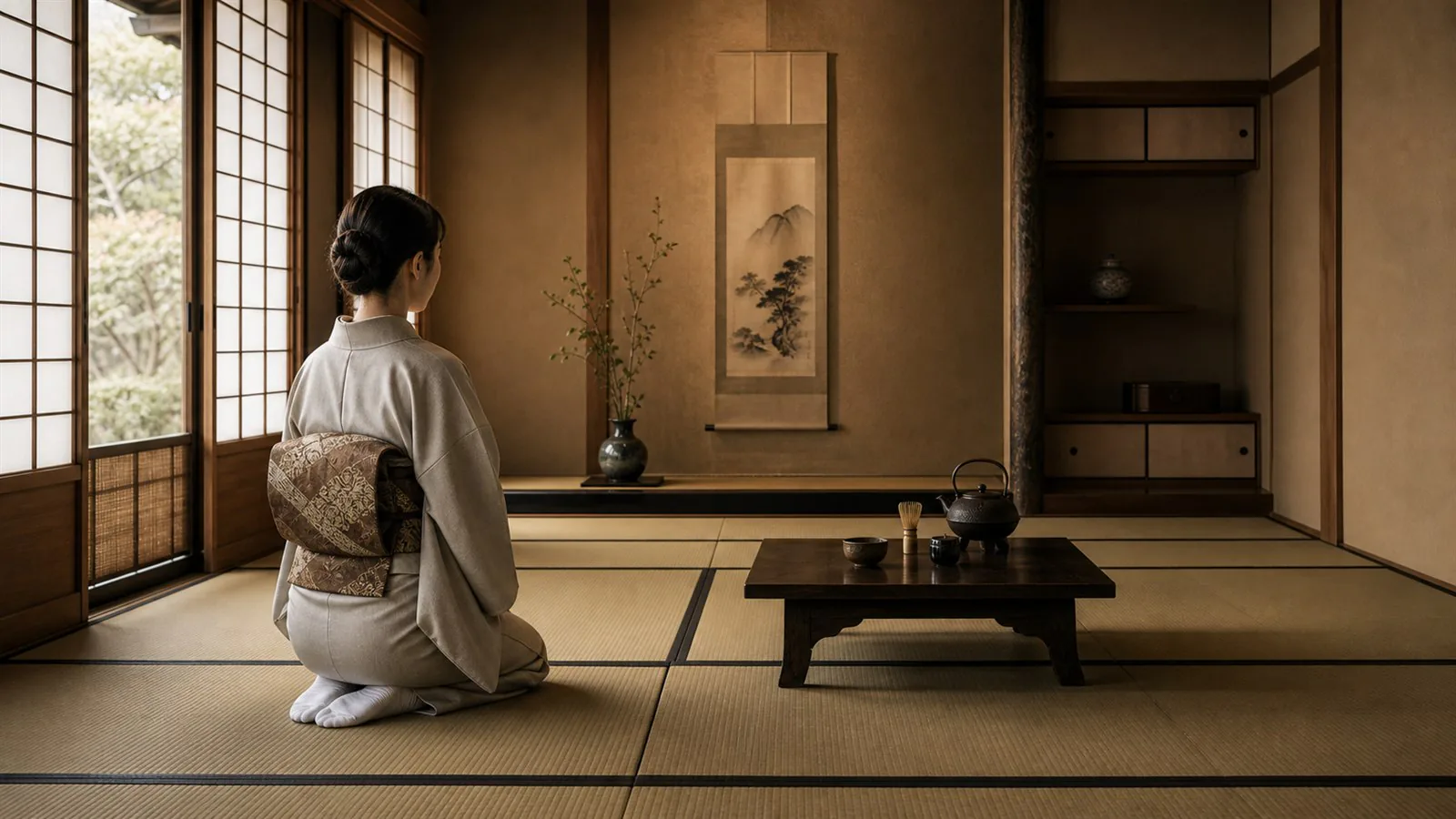
You might think kneeling on your knees (seiza) is just a Japanese habit. In fact, not sitting seiza in certain situations is a breach of etiquette. Which settings require seiza, which allow cross-legged sitting (agura), and which allow stretched legs — there are clear rules. Tourists most often trip up on the tatami-room norm of “no one tells you, but everyone sits this way.”
What is seiza?
「正坐」 (seiza) — kneeling with both knees on the ground, buttocks resting on the heels, hands placed on the thighs, back straight. Different from generic kneeling: knees bent at 90 degrees, with toes pointing back (not flat against the floor).
Situations requiring seiza
1. Tea ceremony: nearly the entire ceremony is in seiza, with moves to the tea bowl, accepting the utensils, and expressing thanks all done in seiza. Exception: elders or those with knee injuries may switch to 「割り座」 (wariza, slightly sideways).
2. Prayer at a Buddhist altar or kamidana: ancestral worship at a household Buddhist altar requires seiza. You must be seated in seiza before joining your hands in prayer, rising afterward.
3. Formal tea-school practice: students must sit in seiza during instruction, and bowing at standing involves rising from a seiza angle (knees bend first, then rise).
4. Certain wedding and funeral rituals: at Shinto weddings and Buddhist funerals during the ceremony itself, family and key guests must sit seiza.
5. Receiving important clients or elders in a tatami room (first meetings, formal business settings): both parties sit seiza.
Situations where seiza is optional or not required
1. Izakayas and Japanese restaurants with horigotatsu (sunken tatami seating): legs go into the well, no seiza required. This is Japan’s most common “tatami-room compromise” — it looks like a tatami room, but your legs can stretch under the table.
2. Ordinary friend gatherings at home: everyone can sit cross-legged or stretch out. Only when the host is very traditional is seiza enforced.
3. Ryokan guest rooms: a brief seiza may occur during check-in while listening to the service explanation, after which inside your own room you can sit cross-legged, lie down, or do as you please.
4. Worship at modern temples: standing with hands joined is sufficient. Only certain traditional temples’ zen sessions require seiza.
Why persist with such an exhausting position?
For foreigners seiza is torture — feet numb at five minutes, knees aching at twenty minutes, unable to stand at one hour. Japanese adapt from childhood, but long seiza is tiring for Japanese too.
Why persist? Historical reasons:
1. Bushido: Edo-era samurai knelt to signal “I have no weapon, I respect you,” with hands resting on the outer thighs equaling a no-sword-drawn posture.
2. Zen meditation: in Kamakura-era Zen practice, seiza is the basic meditation posture.
3. Ritual of equal status: seiza puts everyone at the same height, with no one “standing and looking down” on another. Ritual status is equal.
4. Tatami-room spatial design: the tatami floor is low, so a standing person sees the ceiling while a seated person’s view is at the horizontal. All furniture (tea tables, low stands) is designed around the seiza line of sight, and standing feels “out of harmony.”
Gender differences in agura (cross-legged)
「あぐら」 (agura) — cross-legged sitting. Traditionally only men sit agura, and women sitting agura is considered impolite (exposing the legs). Women should sit wariza (legs to one side) or seiza.
The younger generation is less strict, and women sitting agura is common (especially among friends). But in formal settings or before elders, women should still sit seiza or wariza.
Tachihiza is a no
「立ち膝」 (tachihiza) — one knee raised, one knee flat. In a Japanese tatami room this is rude, and historically samurai only sat this way when drawing their swords on the battlefield (signaling “I can rise to fight at any moment”). In modern social settings it sends the signal “I am ready to fight” and is taboo.
If you cannot maintain seiza and want to shift, the best substitute is wariza (legs to one side), not tachihiza.
Advanced seiza techniques
If you must sit seiza for over 30 minutes, here are practical tips:
1. Cross the toes: stack the big toes slightly to ease circulation.
2. Subtle weight shifts: shift weight very slightly side to side, unnoticeable but stress-reducing.
3. When numb, do not stand immediately: forcing yourself up at the moment of numbness leads to falls. First gently slap the calves, stretch the soles, then rise. Many Japanese people have fallen too — this is a “normal accident” in tatami rooms.
4. Use a zabuton (cushion): most formal occasions provide cushions, and placing one under the knees makes a huge difference.
Bowing angles synchronize with seiza
When bowing from seiza, hand position moves from the thighs to the floor (fingertips touching to form a triangle), with the head lowering to the same level as the hands.
- Eshaku (15 degrees): hands move from the outside of the knees to halfway to the floor.
- Keirei (30 degrees): hands rest on the floor, head slightly below the hands.
- Saikeirei (45 degrees): fingertips touch, head nearly touching the floor. Used at funerals and for profound thanks.
The complete motion from knee bend to lowered head takes three to five seconds, and must not be too fast (like a nod) or too slow (like falling asleep).
Real tourist scenarios
First, experiencing tea ceremony: seiza is required. Inform the host you may have knee pain, and they will prepare a low chair or permit wariza.
Second, visiting a Japanese friend’s home: enter and greet in seiza first, then the friend will say 「楽にして下さい」 (please relax), after which cross-legged or stretched legs are fine.
Third, at a Japanese restaurant: modern establishments mostly use horigotatsu, where legs go in the well. In a true tatami room (fully flat tatami), people should naturally sit seiza or cross-legged.
Fourth, attending a Shinto wedding or funeral: seiza throughout. If your knees are an issue, inform the organizers in advance, and they will typically provide a chair.
Pro tip: practice method
If you have a formal Japan event coming up in the next few months, practice seiza at home for 10 minutes daily. After a week you can hold 30 minutes. Start on a carpet, then graduate to hard flooring. The key is straight knees, an upright back, and the head aligned with the spine. Foot numbness is normal at first; circulation adapts after three to four weeks.
Closing: seiza is body memory
Seiza looks like “a rule of the body,” but it is actually a rule of the mind — through bodily discipline, achieving mental focus. Tea ceremony, Zen, bushido, and Noh theater all use seiza because it forces you to “stop, here and now.”
Next time you are in a Japanese tatami room, try seiza for 10 minutes. You will find that the tatami room, the woven mats, the sliding paper doors, the tea fragrance, the low ceiling — the entire spatial design centers on the seiza line of sight. Seiza is not “a rule.” It is the key to the spatial grammar of the Japanese tatami room.
Frequently Asked Questions
What is seiza?
Seiza is the formal kneeling posture of sitting on your heels. It appears in tea ceremony, tatami rooms, and traditional settings.
Do travelers have to sit in seiza?
Usually no. You may encounter it in tea ceremony or traditional inns, but many places understand that visitors may not be used to it.
What if your legs go numb in seiza?
Explain politely or shift posture at a suitable moment. Do not force yourself until standing becomes unsafe.
Is sitting cross-legged rude in Japan?
It depends. Casual settings are more flexible, but formal tea rooms, ceremonies, or elder-facing situations call for more restraint.